Free shipping £150+ Orders
Vitamins for Hair Loss Prevention A UK Guide
When it comes to preventing hair loss, the conversation often starts with genetics, but it’s what’s on your plate that provides the building blocks for healthy hair follicles. A diet packed with the right vitamins and minerals creates the perfect internal environment for your hair to grow strong and resilient. This food-first approach is one of the most powerful and controllable factors in keeping your hair thick and healthy.
Why Nutrition Is Your First Line of Defence
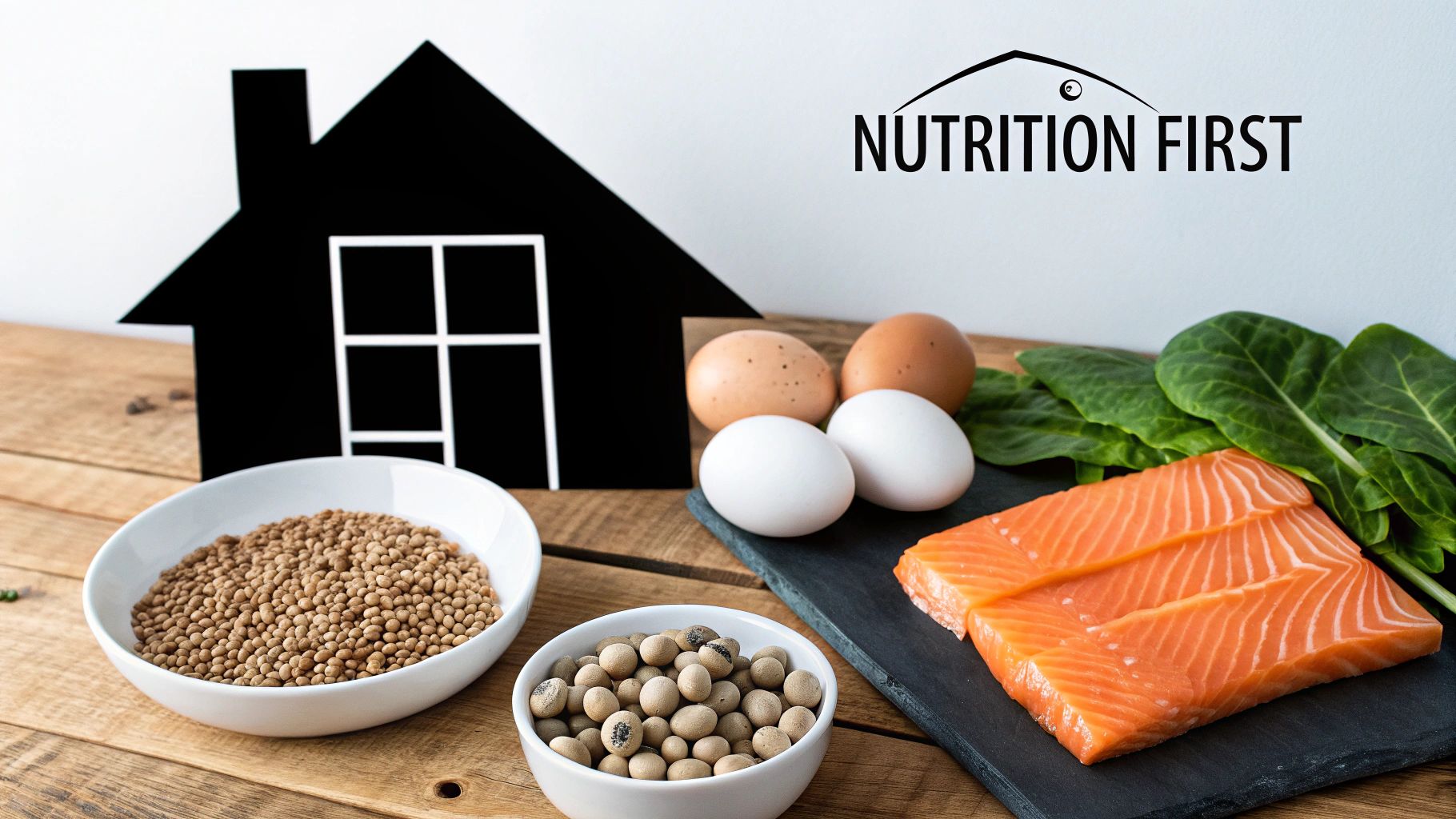
Think of it like building a house. You wouldn’t use shoddy materials and expect a solid structure to last. It’s the same with your hair; your body simply can’t produce strong, healthy strands without the right raw materials. Vitamins and minerals are those fundamental components, crucial for everything from cell division in the follicle to producing keratin—the very protein that makes up over 90% of each strand.
This idea is really catching on, as more of us look for proactive ways to manage our health. Instead of waiting for a problem to appear, we’re focusing on preventative care, and nutrition is right at the centre of that strategy. You can’t change your genes, but you can absolutely control what you eat, giving your hair the best possible shot at thriving.
The Growing Focus on Nutritional Solutions
Here in the UK, awareness of the diet-hair health connection has exploded. You can see this reflected in the market itself: the UK hair thinning market was valued at USD 54.8 million and is expected to hit USD 97.7 million by 2030. A huge part of this growth comes from vitamin supplements, with more than 60% of UK adults dealing with hair loss having tried them. You can dig deeper into these hair thinning market trends to see the full picture.
This trend underscores a simple truth: what you put into your body shows on the outside. A diet lacking in key nutrients can throw the hair growth cycle out of whack, leading to weaker strands and more shedding. On the flip side, a well-balanced diet supports your follicles, making sure they have everything they need to do their job properly.
Your diet is one of the few factors in hair health that is completely within your control. By focusing on a food-first approach, you are actively participating in your hair loss prevention strategy every single day.
Setting the Stage for Healthy Hair
Getting your nutrition right lays the foundation for everything else you do for your hair. It gets your body ready for healthy growth, which can make other treatments you might try even more effective.
In this guide, we’ll dive into the specific vitamins that help prevent hair loss, explaining exactly what they do and how you can get more of them into your daily life. We’ll go from understanding why nutrition matters to pinpointing which nutrients are most vital for keeping a full, healthy head of hair.
Understanding Your Hair’s Natural Growth Cycle
Before we can really get into how vitamins help prevent hair loss, we need to talk about how hair actually grows. It’s not a steady, constant thing. Instead, each hair on your head goes through a sophisticated cycle—a bit like the seasons of a plant, moving from active growth to rest and finally renewal.
This entire sequence is called the hair growth cycle, and it’s broken down into three main phases. Each one has a specific job and timeline, and the health of your hair relies on this rhythm running like clockwork. When you’re missing key nutrients, this delicate process can get thrown off balance, leading to changes you can see and feel.
The Anagen Phase: The Growing Season
First up is Anagen, the growth phase. This is essentially “summer” for your hair—a long period of energetic activity. Deep inside the follicle, cells in the hair bulb are dividing rapidly, working hard to build new hair.
You can picture a tiny factory at the base of each follicle, churning out the keratin protein that makes up the hair strand. This factory runs 24/7, and it’s incredibly demanding, needing a constant pipeline of fuel—vitamins, minerals, and protein—to keep production going strong.
At any given time, about 85-90% of the hairs on your head are in this active Anagen phase. It can last anywhere from two to seven years, which is what determines the maximum length your hair can achieve.
If essential nutrients run low during this critical time, it’s like a power cut at the factory. Production slows right down. The hair that is produced might be weaker and more brittle, and the follicle might even be signalled to shut down the growth phase ahead of schedule.
The Catagen Phase: The Transition Period
After the long growth phase comes a much shorter transitional stage called Catagen. This is the “autumn” of the hair cycle. Growth stops, and the follicle prepares to rest. This entire phase is over in just two or three weeks.
During Catagen, the hair follicle shrinks and detaches from its blood supply, the dermal papilla. The hair strand is now cut off from the nourishing pipeline that fed it throughout the Anagen phase. It’s no longer growing, but it’s not quite ready to fall out yet. You’ll only find about 1-2% of your hairs in this in-between state at once.
The Telogen Phase: The Resting Season
Finally, we hit the Telogen phase, the resting or “winter” period. This lasts for about three months. The now-detached hair, called a club hair, simply sits dormant in the follicle while, underneath, a brand new hair starts to form.
Roughly 10-15% of your scalp hairs are in the Telogen phase at any one time. At the end of this rest period, the old hair is shed—often pushed out by the new hair coming up behind it. This is why you see hair in your brush or in the shower drain. Losing 50 to 100 hairs a day is a completely normal and healthy part of this process.
So, to recap the cycle quickly:
- Anagen (Growth): The active phase where hair is built. It’s energy-intensive and needs lots of nutrients.
- Catagen (Transition): A brief interlude where the follicle shrinks and cuts itself off from its blood supply.
- Telogen (Rest): The follicle lies dormant before the old hair is shed to make way for a new one.
Seeing it laid out like this makes it crystal clear why getting the right nutrients is so fundamental. A vitamin deficiency can shorten the Anagen phase or trigger a mass-exodus of hairs into the Telogen phase prematurely—a condition known as Telogen Effluvium. This leads to widespread shedding and thinning. By giving your body the right nutritional building blocks, you’re helping to keep each and every follicle in its “growing season” for as long as possible.
The Essential Nutrients for Stronger Hair
Now that we understand the natural rhythm of your hair’s growth, it’s obvious just how demanding the Anagen (growth) phase is. Think of it like a high-performance engine that needs premium fuel to run properly. In this case, that “fuel” is a specific group of vitamins and minerals. Each one plays a distinct and vital role in building strong, resilient hair from the inside out.
When we talk about vitamins for hair loss prevention, we’re really talking about the essential micronutrients that keep our follicles healthy, support keratin production, and promote good scalp circulation. If you’re missing even one of these, it’s like trying to build a brick wall with weak mortar—the whole structure is at risk. Let’s break down the key players.
The A-List Vitamins for Follicle Function
Some vitamins are simply non-negotiable for a healthy scalp and the intense cellular activity that hair growth requires. You can think of them as the architects and project managers for your hair follicles.
- Vitamin A: This vitamin is essential for cell growth, and hair cells are the fastest-growing tissues in the human body. It also helps your skin glands produce sebum, the natural oil that moisturises the scalp and keeps hair healthy.
- Vitamin C: A powerful antioxidant, Vitamin C is needed to create collagen, a protein that adds strength and integrity to your hair strands. It also has a crucial side job: helping your body absorb iron, another critical mineral for hair growth.
- Vitamin E: Much like Vitamin C, this antioxidant helps fight off oxidative stress, which can cause hair follicles to break down over time. By protecting the scalp’s cells, it creates a much better foundation for hair to grow.
The B-Complex: The Energy and Building Crew
The B-vitamin family is a true powerhouse for metabolic processes that directly impact the health of your hair. They’re the on-site crew, making sure energy gets delivered and all the building materials are put together correctly.
Perhaps the most famous of the group is Biotin (Vitamin B7). Its reputation is well-earned, as it’s a key player in producing keratin—the very protein hair is made of. While a true deficiency is rare, not having enough biotin can lead to thinning hair and increased brittleness.
Other important B-vitamins include:
- Folate (Vitamin B9): Absolutely vital for healthy cell growth, folate works at the most fundamental level of your hair follicles. It supports the rapid cell division needed during that all-important Anagen phase.
- Vitamin B12: This vitamin helps create red blood cells, which are the delivery trucks carrying oxygen and nutrients to the scalp and follicles. Without enough B12, hair follicles can quite literally be starved of what they need to thrive.
The infographic below illustrates the different phases of the hair growth cycle, which all these nutrients work together to support.
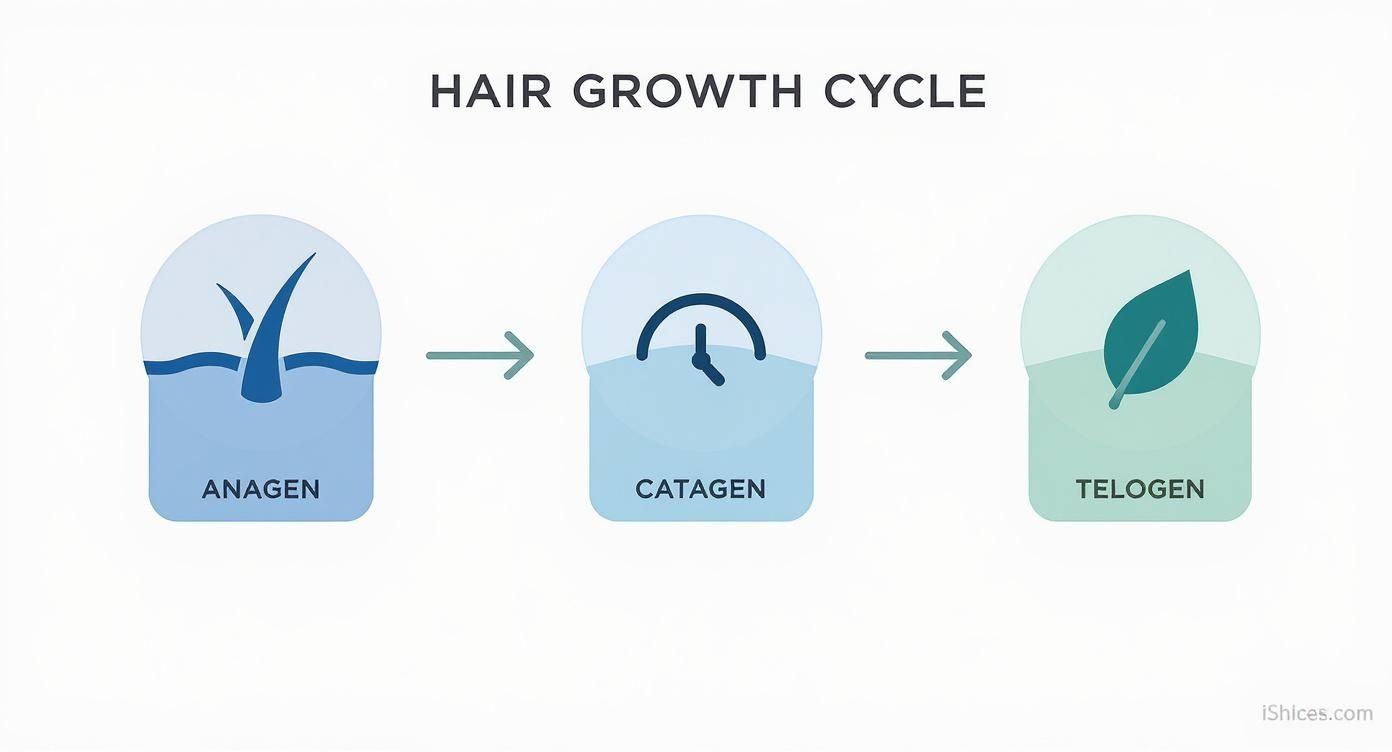
This visual shows how hair moves from active growth (Anagen) through transition (Catagen) and into a resting state (Telogen). It really drives home why consistent nutritional support is so important for keeping this cycle healthy.
Essential Minerals: The Unsung Heroes
While vitamins tend to get all the glory, certain minerals are just as critical for preventing hair loss. They are the logistical and structural support team, making sure everything behind the scenes runs smoothly.
Iron is arguably one of the most important minerals for your hair. It’s the primary oxygen delivery service for your entire body, helping red blood cells transport oxygen everywhere, including your hair follicles. Low iron levels can lead to anaemia, and a very common symptom of that is hair loss, specifically a type called telogen effluvium.
Another key mineral is Zinc. Think of Zinc as the follicle’s dedicated repair and maintenance crew. It plays a vital role in hair tissue growth and repair, and it also helps keep the oil glands around the follicles working as they should. A zinc deficiency is a well-documented cause of hair shedding.
To give you a quick-reference guide, here’s a summary of the most important nutrients we’ve discussed.
Table: Essential Nutrients for Hair Health and Their Primary Roles
| Nutrient | Role in Hair Health | Common Deficiency Signs |
|---|---|---|
| Vitamin A | Supports cell growth and sebum production for a moisturised scalp. | Dry, brittle hair; dry scalp. |
| Biotin (B7) | Essential for producing keratin, the protein that makes up hair. | Hair thinning, brittleness, and potential hair loss. |
| Vitamin C | Builds collagen for hair strength and helps the body absorb iron. | Dry, splitting hair; weakened hair shafts. |
| Vitamin D | Helps create new hair follicles and may regulate the hair growth cycle. | Increased hair shedding and potential for alopecia. |
| Vitamin E | An antioxidant that protects scalp cells from oxidative stress and damage. | Dry scalp and brittle hair. |
| Iron | Crucial for red blood cells to carry oxygen to hair follicles. | Diffuse hair thinning, shedding (telogen effluvium). |
| Zinc | Aids in hair tissue growth, repair, and keeps oil glands around follicles functioning properly. | Hair loss, slow growth, and dandruff. |
This table highlights just how interconnected these nutrients are in maintaining a healthy head of hair. A shortfall in any one area can have a noticeable impact.
Vitamin D: The Master Regulator
Often called the “sunshine vitamin,” Vitamin D deserves a special mention. Its role in bone health is common knowledge, but its impact on hair is profound. Vitamin D actually helps to create new follicles—the tiny pores in the scalp where new hair can grow.
When the body is low on Vitamin D, the growth cycle can get thrown off track. Research even suggests a link between low vitamin D levels and more severe cases of hair loss, including alopecia areata. This makes it a crucial nutrient to consider in any hair health plan. Delving deeper, it’s clear that certain vitamins for hair growth are more effective than others, with Biotin, Vitamin D, Vitamin C, and Iron consistently highlighted as key players.
Bringing It All Together for Optimal Growth
The most important takeaway is that no single vitamin or mineral works in a vacuum. Healthy hair is the result of a synergistic relationship between all these nutrients. Iron needs Vitamin C to be absorbed properly, Biotin works best alongside other B-vitamins, and Zinc supports the overall integrity of the follicle structure.
This is why a balanced, nutrient-rich diet is the absolute cornerstone of preventing hair loss. While a deficiency in any one of these can cause problems, making sure you have an adequate supply of all of them creates the ideal internal environment for your hair to flourish. For those looking to support this process with advanced topical solutions, exploring options like our XTRA Hair Restorer Vials can complement a nutrient-rich diet by delivering targeted support directly to the scalp where it’s needed most.
Getting Your Nutrients: Food Versus Supplements
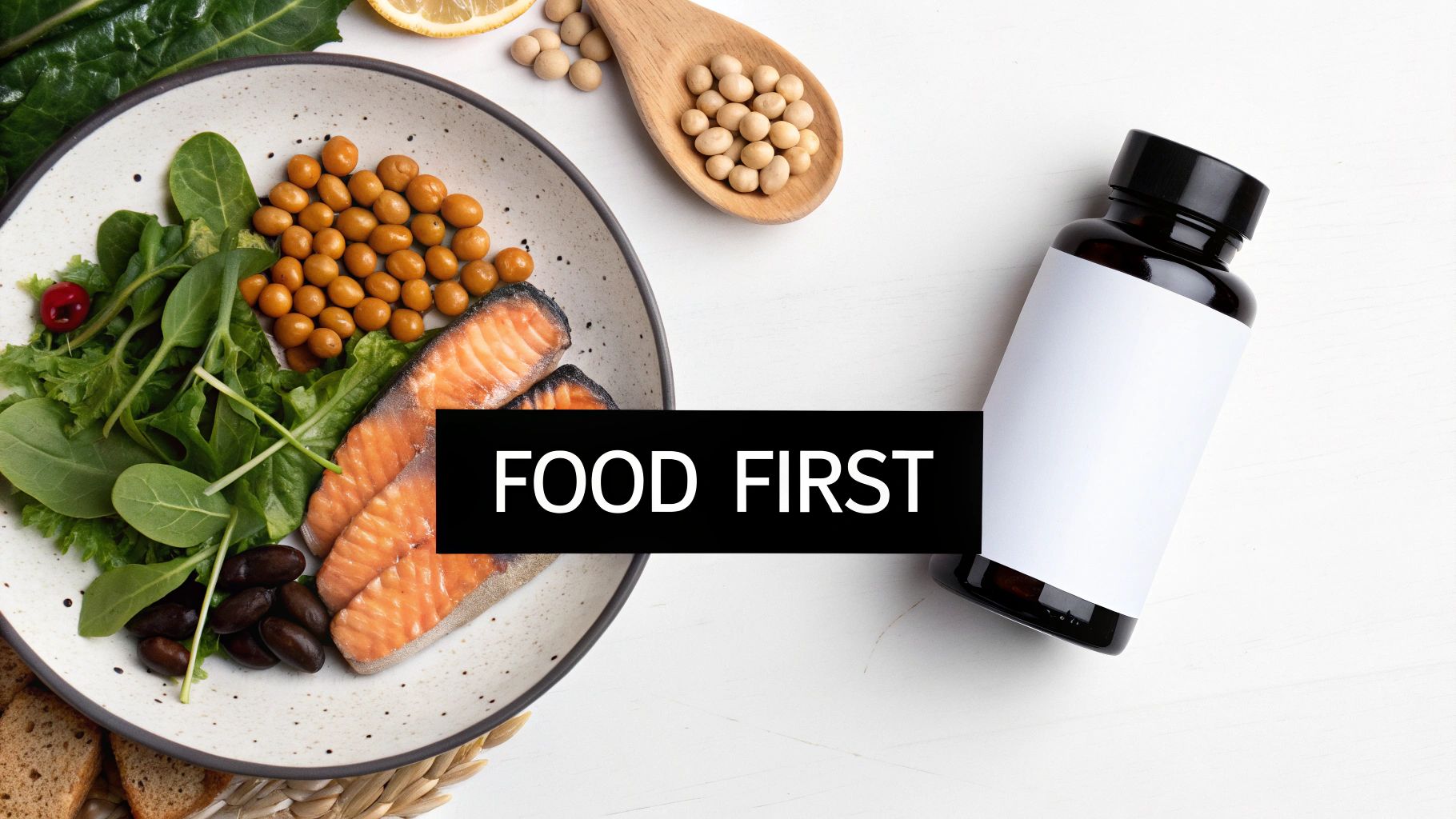
Knowing which vitamins and minerals your hair needs is one thing, but figuring out the best way to get them into your system is where the real work begins. We always advocate for a food-first philosophy. Think of your diet as the foundational fuel for your follicles, providing a complex and synergistic blend of nutrients that a single pill can rarely match.
A balanced diet gives you these essential compounds in their natural form, often bundled with other beneficial elements like fibre and phytonutrients. This is the bedrock upon which strong, healthy hair is built. Before you even think about reaching for a supplement bottle, your first port of call should always be your plate.
Championing the Food-First Approach
Prioritising whole foods isn’t just about ticking off a list of vitamins. It’s about how your body recognises and uses those nutrients. For instance, eating iron-rich spinach alongside a vitamin C-packed bell pepper significantly boosts how much iron your body absorbs—far more effectively than an isolated iron tablet ever could.
This natural teamwork is crucial for maximising the benefits for your hair. A diet rich in lean proteins, colourful vegetables, fruits, and healthy fats provides a steady supply of the building blocks needed for that energy-intensive Anagen growth phase.
To make things easier, we’ve put together a quick guide to some of the best dietary sources for those key hair nutrients, all of which are readily available here in the UK.
Top Dietary Sources of Hair-Boosting Nutrients
| Nutrient | Excellent Food Sources (UK availability) | Serving Size Suggestion |
|---|---|---|
| Biotin | Eggs, salmon, almonds, sweet potatoes, avocados | 2 large eggs or a handful of almonds |
| Iron | Red meat (beef, lamb), lentils, spinach, fortified cereals | A 100g portion of lean beef or a cup of cooked lentils |
| Zinc | Oysters, beef, pumpkin seeds, chickpeas, cashews | A small portion of lean red meat or a handful of seeds |
| Vitamin C | Oranges, bell peppers, strawberries, broccoli, kiwis | One medium orange or a cup of sliced bell peppers |
| Vitamin D | Oily fish (salmon, mackerel), red meat, egg yolks | A 100g fillet of salmon a few times a week |
Incorporating a variety of these foods into your weekly meals is a powerful, practical step towards building healthier hair from the inside out.
Navigating the World of Supplements
While a balanced diet is always the goal, supplements can play a valuable role. They act as a targeted backup, helping to fill specific nutritional gaps that can be difficult to bridge with food alone. This is especially true for certain people.
A supplement might be a smart move for:
- Those with Dietary Restrictions: Vegans and vegetarians can sometimes find it challenging to get enough iron, vitamin B12, and zinc from plant-based foods alone.
- People with Malabsorption Issues: Conditions like coeliac disease or Crohn’s can hinder the body’s ability to absorb nutrients properly from what you eat.
- Individuals with a Confirmed Deficiency: If a blood test from your GP shows you’re low in a specific nutrient like iron or vitamin D, a supplement is the most direct way to get your levels back on track.
It’s vital to see supplements as a targeted intervention, not a replacement for good nutrition. As we explore in our guide to choosing the right supplements for you, a focused approach based on a genuine need is always more effective than taking a scattergun approach.
The Risks of Over-Supplementation
When it comes to vitamins, more is definitely not better. It’s a bit like watering a houseplant—it needs just the right amount to thrive. Too little and it wilts, but too much will drown the roots and cause serious harm. Your body operates on a similar principle of balance.
Over-supplementing, especially with fat-soluble vitamins like A and E, can build up in your system and lead to toxicity. In a cruel twist of irony, excessively high levels of vitamin A have been linked to increased hair loss, completely defeating the purpose.
This is why self-diagnosing and prescribing supplements based on something you’ve read online can be a risky game. Without knowing your body’s actual nutrient levels, you could be taking something you don’t need or, even worse, a harmful amount.
The only way to be certain if you have a deficiency is to get a proper medical diagnosis. A simple blood test ordered by your GP can give a clear picture of your iron, vitamin D, B12, and ferritin levels. This data-driven approach removes all the guesswork, allowing for a truly informed decision. Consulting a professional is a non-negotiable first step before starting any new supplement regimen.
Knowing When to Seek Professional Help
While sorting out your diet is a fantastic first step in looking after your hair, it’s important to be realistic. Vitamins and minerals build the ideal foundation for healthy hair growth, but they can’t stop every cause of hair loss in its tracks. Think of nutrition as preparing fertile soil for a garden; it makes growth possible, but it won’t stop a hailstorm.
For instance, conditions like androgenetic alopecia (what we commonly call male or female pattern baldness) are mainly down to our genes and hormones. In these situations, even the most perfect diet won’t reverse the root cause. Likewise, hair loss stemming from autoimmune issues or certain medications needs a targeted medical plan that goes way beyond just eating well.
The Synergistic Power of Nutrition and Treatment
This is where things get interesting. It’s crucial to see nutrition and clinical treatments as partners, not competitors. When your body is well-nourished, it’s primed to respond brilliantly to professional hair restoration therapies. Your nutritional baseline can genuinely make a huge difference in how effective these established treatments are.
Take a common topical solution like Minoxidil. For it to work, your hair follicles need a ton of energy and building blocks to answer those growth signals. Having plenty of iron, zinc, and B-vitamins on board gives them the fuel they need to kickstart the growing (Anagen) phase.
The key takeaway is that vitamins create the optimal internal environment for professional treatments to work their best. Nutrition isn’t a replacement for clinical care; it’s a vital component that makes that care more successful.
This way of thinking positions your diet as a critical part of a complete hair restoration plan, rather than a standalone solution.
Identifying When You Need an Expert
So, when is it time to look beyond your kitchen and consult a professional? Certain red flags suggest your hair loss might be due to something more complex than a simple vitamin gap.
It’s time to book an appointment with your GP or a trichologist if you notice:
- Sudden or Rapid Shedding: Losing handfuls of hair over a short period is definitely not typical and needs checking out.
- Patchy Hair Loss: The sudden appearance of smooth, bald patches (a sign of alopecia areata) requires a proper medical diagnosis.
- A Receding Hairline or Thinning Crown: These are the classic calling cards of pattern baldness, which responds best to early medical intervention.
- Scalp Issues: If hair loss comes with an itchy, red, flaky, or painful scalp, a specialist needs to rule out underlying skin conditions.
If you think a deficiency is the culprit, a professional can guide you towards specific blood tests for vitamins and minerals) to get a clear picture of your nutritional status. This data-driven approach means any supplement plan is built just for you.
How Professional Treatments Complement Nutrition
Once you have a diagnosis, a professional can recommend treatments that work hand-in-hand with your nutritional efforts. These might range from prescription medications to advanced in-clinic procedures that give a more direct, powerful boost to your hair follicles.
It can be really helpful to understand how these procedures work. For example, our guide on the shocking truths about hair mesotherapy explains how it fits into a wider treatment strategy.
By combining a nutrient-dense diet with proven clinical solutions, you create a powerful, two-pronged attack for getting the best possible results for your hair.
Your Action Plan for Healthier Hair
Knowing which vitamins might help your hair is one thing, but putting that knowledge into practice is what really counts. Let’s break it down into simple, actionable steps. The aim here isn’t to chase a miracle cure, but to build a solid nutritional foundation for stronger, healthier hair.
Think of this as your personal checklist. It will walk you through everything from taking a look at your plate to knowing when it’s time to call in the professionals.
Your Five-Step Checklist
- Take a Hard Look at Your Diet
First things first, get honest about what you’re eating. Spend a week tracking your meals and snacks. Are you getting enough iron from leafy greens? What about zinc from seeds and nuts, or B vitamins from foods like eggs and salmon? Pinpointing the gaps is always the right place to start. - Get Tested, Don’t Guess
If you’re noticing significant shedding or just suspect something is off, don’t rely on guesswork. A quick chat with your GP or a qualified trichologist can make all the difference. A simple blood test can give you concrete answers on your iron, vitamin D, and B12 levels, so you know exactly what you’re dealing with.
A crucial reminder: supplements are meant to correct a specific, confirmed deficiency. They are not a substitute for a balanced diet, and taking them without a clear need can be ineffective or even risky.
- Focus on Food First
Once you know where you stand, start filling those nutritional gaps with whole foods. Consciously add things like lentils, oily fish, citrus fruits, and nuts into your weekly routine. The ‘food-first’ approach is always best because you get a whole host of supporting nutrients that a single pill just can’t offer. - Supplement Smartly (If You Need To)
If testing confirms you’re low on something, follow the advice of your healthcare professional to the letter. Stick strictly to the recommended dosage. It’s easy to think more is better, but overdoing it with certain vitamins can cause more problems than it solves. Precision is key. - Pair Nutrition with Topical Support
A great diet is the bedrock of hair health, but sometimes it needs a helping hand. For more stubborn hair thinning, combining your nutritional efforts with a targeted scalp treatment can really amplify your results. Products like an advanced Xtra Hair Restorer Lotion work from the outside in, giving your follicles direct support while you work on your health from the inside out.
Frequently Asked Questions
It’s natural to have questions when you’re exploring how vitamins can help prevent hair loss. Let’s tackle some of the most common ones to give you a clearer picture for your hair health journey.
Can a Multivitamin Alone Stop Hair Loss?
A good multivitamin is a great starting point, especially if your diet has a few gaps. Think of it as preparing the soil before you plant a garden—it creates a healthy foundation for growth. But it’s rarely the complete solution on its own.
If your hair loss is tied to genetics, hormonal shifts, or an autoimmune issue, a multivitamin plays a supporting role, not the lead. It should be one part of a bigger plan, which often includes specific treatments guided by a healthcare professional.
How Long Until I See Results?
When it comes to seeing changes from vitamins, patience really is a virtue. Hair grows slowly, usually only about half an inch per month. Because of this, you’ll need to stick with your routine for at least three to six months before you can expect to see a real difference.
Why the wait? Your body has to top up its own nutrient levels first before it can send any of the good stuff to your hair follicles. The improvements will be gradual, affecting the new hair that’s just starting to grow from your scalp.
Keep in mind that you’re trying to influence the hair growth cycle. This is a biological process that takes time, and any visible results in hair thickness or less shedding will reflect that long-term timeline.
Is It Possible to Take Too Many Vitamins?
Yes, absolutely. Going overboard with supplements, especially the fat-soluble ones like vitamins A, D, and E, can backfire badly. Your body stores these vitamins, and they can build up to toxic levels. Ironically, this can actually cause or even worsen hair loss.
It’s crucial to stick to the recommended daily amounts and have a chat with your GP before starting any high-dose supplements. This makes sure you’re safely and effectively meeting a real need. For those also considering clinical treatments, understanding how they pair with good nutrition is key. For instance, learning about options like exosomes for hair restoration can show you what a comprehensive approach looks like.
At Beauty Page, we provide professional-grade aesthetic and skincare solutions to support your hair health from every angle. Explore our collection of targeted treatments today.