The best hair growth supplements tackle the problem from the inside out, filling nutritional gaps with power-players like biotin, iron, zinc, and vitamin D. Think of these nutrients as the raw materials your body needs to build strong, healthy hair. They create the internal foundation for your hair’s entire growth cycle.
Why Supplements Are a Cornerstone of Hair Health
Finding a concerning amount of hair in your brush is a feeling most of us know, and it’s easy to feel helpless. But the truth is, the solution often starts on your plate—or, more realistically, with what’s missing from it. The link between what you consume and the health of your hair is direct and undeniable. Your hair follicles are metabolic powerhouses, constantly working and demanding a steady stream of fuel.
Let’s break it down with an analogy. Picture your scalp as a garden. For lush plants to thrive, the soil needs to be packed with the right nutrients. If the soil is poor, no amount of fancy watering cans will make up for it; the plants will be weak and wilted. In the same way, your hair follicles need a consistent supply of vitamins, minerals, and proteins to construct strong, resilient hair strands.
The Hair Growth Cycle and Tipping the Scales
Hair doesn’t just grow continuously; it follows a three-part cycle: anagen (the growth phase), catagen (a brief transition), and telogen (the resting phase). When your body is missing key nutrients, it can throw this delicate balance off-kilter. This disruption often forces hairs out of the growth phase and into the resting phase prematurely, leading to more shedding and noticeable thinning.
This is exactly where a good supplement steps in. They aren’t magic pills that sprout new follicles overnight. Instead, they act as a targeted support system, filling the specific nutritional voids in your diet that are holding back your hair’s natural potential.
A well-formulated supplement is like ensuring your hair follicles get a priority delivery of essential building materials, right when they need them. It helps create the perfect internal environment for a healthy growth cycle, empowering your body to produce stronger, more vibrant hair.
The Shift Towards an Inside-Out Approach
The idea of treating external beauty from within isn’t just a fleeting trend—it’s a major shift in how we approach wellness. People are finally realising that creams and serums can only do so much. The market data backs this up. In the UK, the hair growth supplement market hit USD 41.2 million in 2024 and is expected to climb to USD 100.5 million by 2030. You can dive deeper into the UK’s growing appetite for hair health solutions and see the full analysis on Grandview Research.
The nutrients in these supplements often act as vital cofactors in the complex biological reactions needed for hair production. For instance, minerals like silicon are crucial for collagen synthesis, which directly impacts hair strength and elasticity. You can explore how organic silicon supports hair structure in our detailed guide. By addressing potential deficiencies, you’re giving your body the complete toolkit it needs to maintain hair health from the inside out. This makes supplements a fundamental part of any serious hair care routine.
The Core Nutrients Your Hair Needs to Thrive
To get to the heart of what makes a hair supplement effective, we need to look at the individual building blocks your body uses to construct strong, healthy hair. Think of these nutrients as a specialist construction crew for your scalp. Each vitamin and mineral has a distinct, non-negotiable job, and if one team member is missing, the entire project can grind to a halt.
It’s about connecting the dots between an ingredient and its specific role. This approach helps you see past the marketing hype and truly understand what your hair is crying out for. It also explains why vitamin and mineral-based products are so dominant in the UK market. In 2024, this segment alone was valued at £43.37 million, and it’s set to grow as more people recognise the undeniable link between nutrition and hair health.
This visual guide breaks down how nutrients, follicles, and supplements all work together to support healthy hair from the inside out.
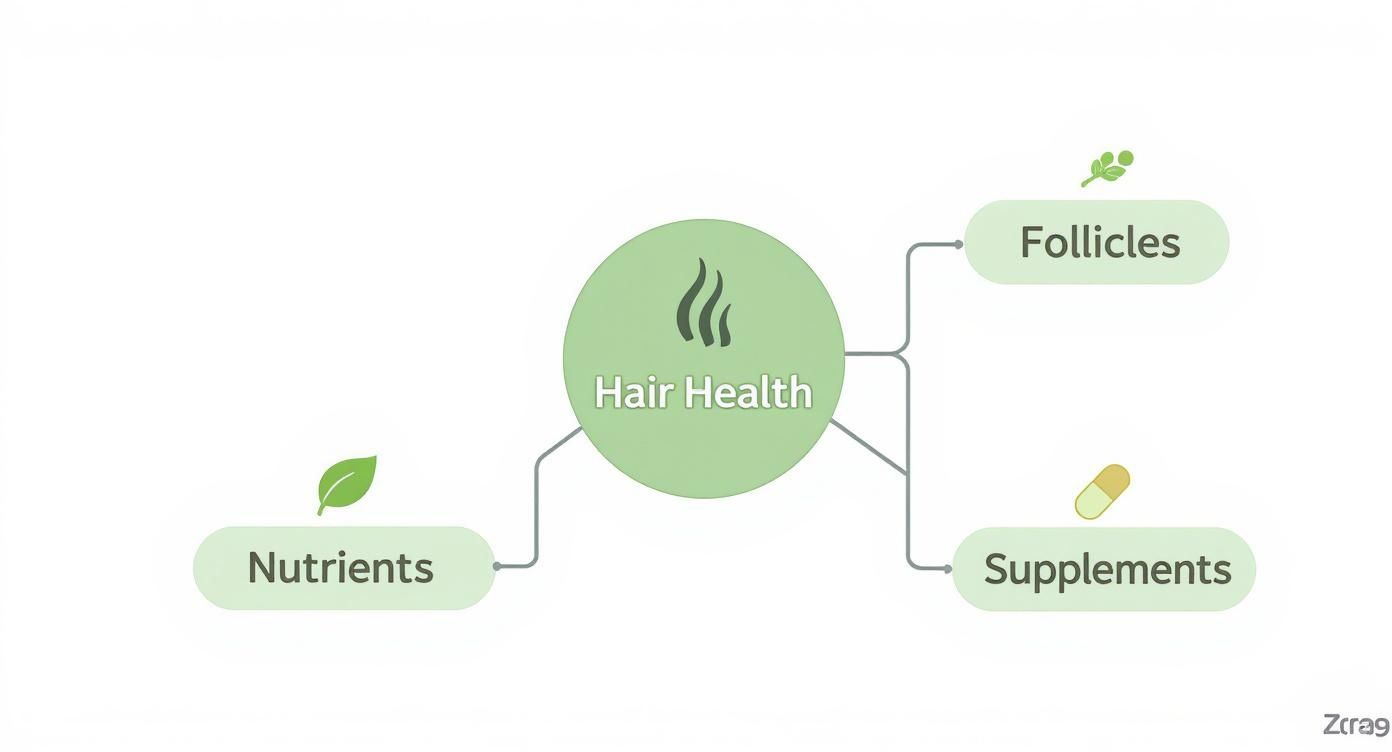
As you can see, healthy hair isn’t just about one thing—it’s a system. Targeted supplements provide the essential fuel that follicles need to do their job properly.
Biotin: The Keratin Producer
Biotin, or vitamin B7, is probably the most famous player in the world of hair health. Its main job is to help produce keratin, the very protein that gives your hair, skin, and nails their structure. If you don’t have enough biotin, your body simply can’t manufacture this critical material efficiently.
While a true deficiency is rare, it can directly lead to thinning hair and brittle strands. A targeted supplement just ensures your internal keratin production line is always running at full capacity.
- Its Role: Essential for synthesising keratin, the protein that makes up over 90% of your hair.
- Signs of Deficiency: Can include hair thinning, skin rashes, and brittle nails.
- Find It In: Eggs, salmon, avocados, and nuts.
Iron: The Oxygen Transporter
Iron has a crucial mission: it helps create haemoglobin, the protein in your red blood cells that ferries oxygen around your body. Your hair follicles are incredibly active and demand a constant supply of oxygenated blood to fuel the growth cycle. When iron levels dip too low—a condition known as iron deficiency anaemia—this vital delivery service is compromised.
Your body is clever; it will always prioritise sending oxygen to essential organs over your hair follicles. This can trigger a type of shedding called telogen effluvium, where an unusual number of hairs enter the resting phase and fall out. For many, unexplained hair loss is one of the very first signs of low iron.
Zinc: The Master Repairer
Think of zinc as your hair’s dedicated maintenance and repair specialist. This mineral is fundamental for hair tissue growth and repair. It also helps keep the oil glands around the follicles working as they should, which is vital for maintaining a healthy scalp environment.
Much like iron, a zinc deficiency can lead directly to hair loss. That’s because zinc is needed for protein synthesis and cell division—two processes that are non-negotiable for producing new hair. Supplementing with zinc helps ensure these critical repair and growth functions are properly supported.
Zinc is a foundational mineral for the hair growth cycle. It’s not just about building new hair, but also about repairing the microscopic damage that occurs daily and maintaining the health of the follicle itself.
Vitamin D: The Follicle Creator
While most vitamins work to support existing hair, Vitamin D has a unique and powerful role: it helps create new follicles. These are the tiny pores in your scalp from which new hairs can sprout. Without enough Vitamin D, your scalp’s ability to generate new growth is seriously hampered.
Low levels of Vitamin D have been linked to alopecia areata, an autoimmune condition that causes hair loss, and may also play a part in other forms of shedding. Given that many people in the UK have insufficient levels due to limited sun exposure, a supplement is often a very practical solution.
To help you keep track, here’s a quick summary of the key players we’ve discussed.
Essential Vitamins and Minerals for Hair Health
This table provides a simple overview of the most important nutrients, what they do for your hair, and where you can find them in your diet.
| Nutrient | How It Helps Your Hair | Find It In These Foods |
|---|---|---|
| Biotin | Acts as a key player in producing keratin, the structural protein of your hair. | Eggs, nuts, salmon, avocado, sweet potatoes |
| Iron | Transports oxygen to hair follicles, which is essential for growth and energy. | Red meat, spinach, lentils, fortified cereals, oysters |
| Zinc | Supports hair tissue growth, repair, and keeps scalp oil glands working properly. | Beef, pumpkin seeds, chickpeas, cashews, lamb |
| Vitamin D | Helps create new hair follicles, the pores from which new hairs can grow. | Fatty fish (salmon, mackerel), fortified milk, sunlight |
While a balanced diet is always the best starting point, supplements can provide a targeted boost to ensure your body has everything it needs.
By understanding these core components, you can start to see how a well-formulated supplement does more than just feed your hair. It provides the precise tools your body needs to run its complex hair-building machinery efficiently. For a deeper dive into specific nutritional components, you can explore guides on essential vitamins for thinning hair.
Exploring Advanced Hair Growth Ingredients
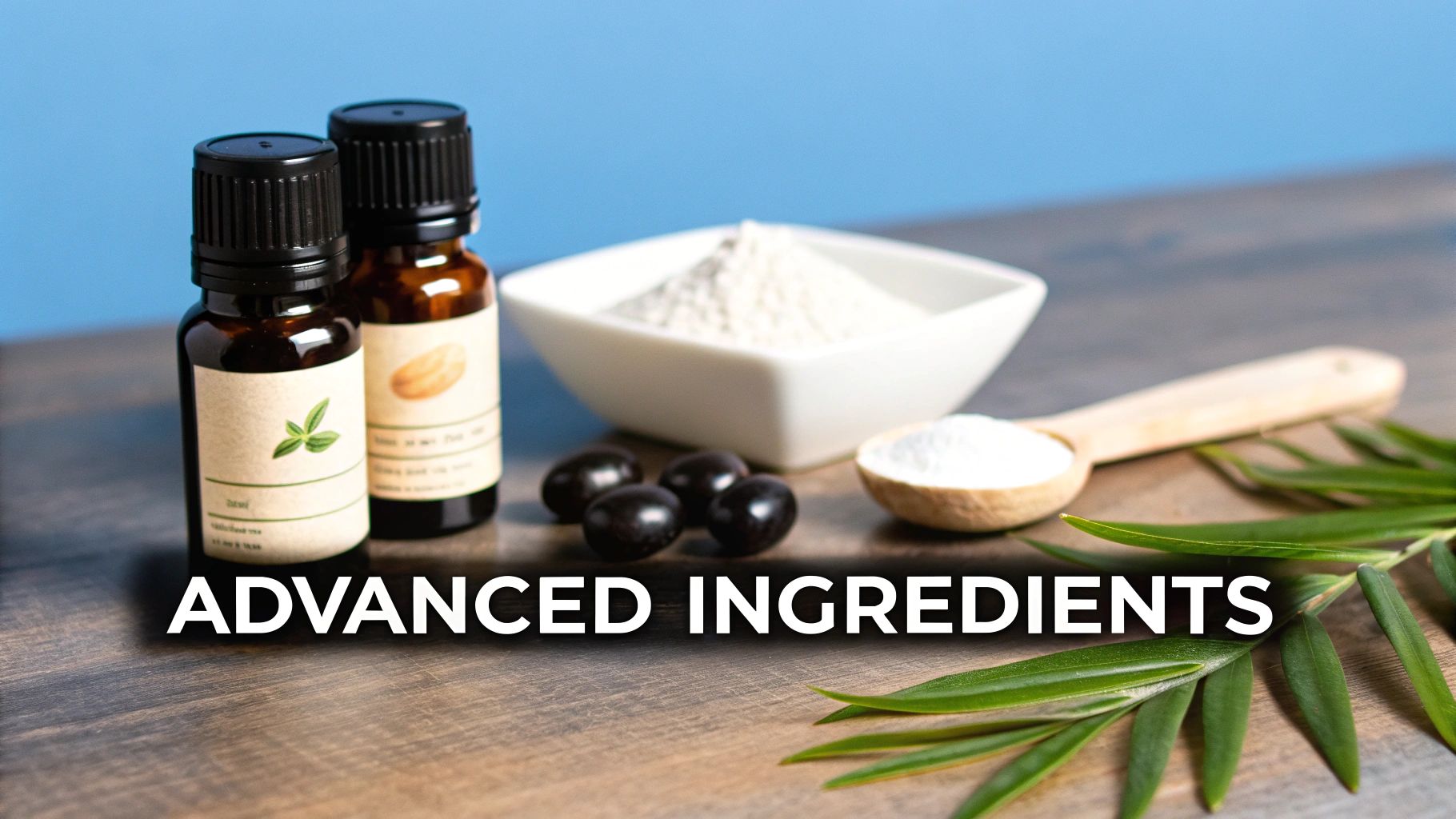
Once the basics—vitamins and minerals—are in place, you can dial in a more targeted approach with specialised compounds. These ingredients zero in on the root causes of thinning: be it hormones, weakened hair shafts or stress-related fallout. Essentially, they’re the expert support team you call in after laying your nutritional groundwork.
Many of these advanced players fall into three camps:
- Botanicals that influence hormone or cellular pathways
- Structural proteins that form the hair matrix
- Adaptogens that help balance stress hormones
Saw Palmetto For Hormonal Balance
Hormonal ups and downs often show up first as thinning along the hairline or crown. In androgenetic alopecia, DHT levels spike and shrink follicles, dragging the growth phase to a premature close.
Saw Palmetto extract, sourced from the berries of Serenoa repens, acts as a natural DHT regulator by inhibiting the enzyme 5-alpha-reductase. Studies suggest it can:
- Lower scalp DHT concentrations
- Slow down follicle miniaturisation
- Support thicker strands over time
It remains one of the most celebrated botanicals for anyone dealing with pattern hair loss.
Collagen And Keratin: The Structural Proteins
Building robust hair is much like constructing a sturdy wall. Think of keratin as the bricks and collagen as the mortar and foundation.
| Protein | Primary Role |
|---|---|
| Keratin | Provides 95% of the hair’s structural framework; supplies key amino acids |
| Collagen | Strengthens the dermis and offers proline and glycine for keratin synthesis |
By supplementing both, you ensure your body has the raw materials and support system it needs to build resilient, long-lasting hair strands. To dive deeper, explore the amazing benefits of collagen.
Ashwagandha For Stress Management
Chronic stress floods your system with cortisol, nudging hair follicles into the resting (telogen) phase en masse. The result? A noticeable uptick in shedding, known as telogen effluvium.
Ashwagandha, a time-honoured adaptogen, helps:
- Calm cortisol surges
- Sustain follicles in the active (anagen) stage
- Reduce daily hair fallout
Because potent herbal extracts can interact with medications, it’s always best to check with a healthcare professional before starting any new routine.
For a truly comprehensive hair regimen, consider pairing these internal boosters with advanced in-clinic treatments. You can learn more about how exosomes for hair restoration work to regenerate follicles at a cellular level, completing a holistic strategy for optimal hair health.
How to Choose a High-Quality Hair Supplement
Stepping into the supplement aisle can feel overwhelming. With countless bottles all promising thicker, healthier hair, how do you separate the genuinely effective formulas from just clever marketing? The truth is, making an informed choice is critical if you want a product that’s both safe and actually works.
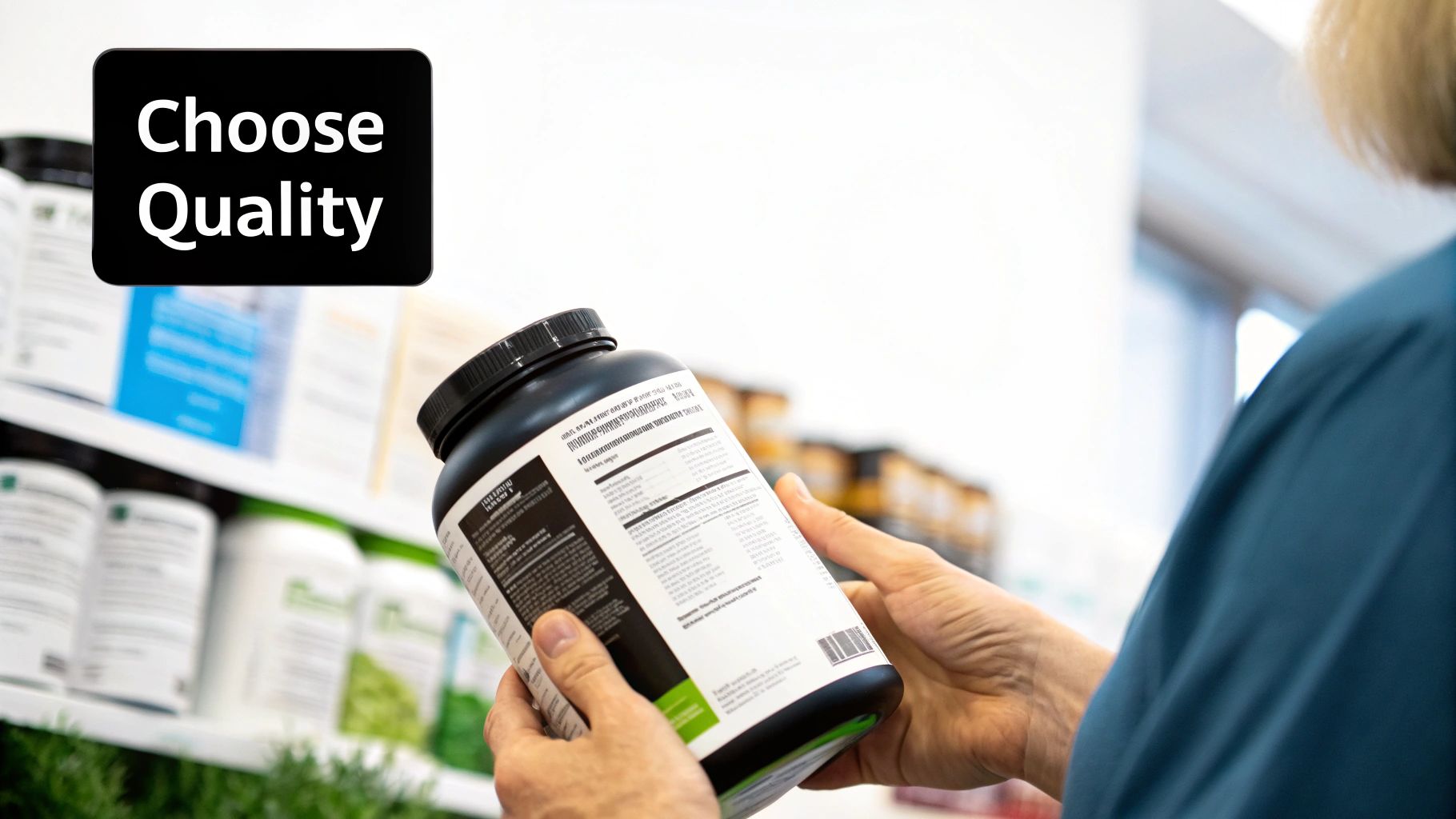
The key is learning to read the label like a pro. Think of it as decoding a product’s real identity—getting past the flashy promises on the front to see what’s truly inside. It’s this skill that empowers you to spot the best supplements for hair growth and avoid wasting your money.
Scrutinise the Ingredient List and Dosages
Your first stop should always be the “Supplement Facts” panel on the back. A top-tier product will list every single active ingredient clearly, right alongside its precise dosage per serving. This level of transparency is absolutely non-negotiable.
Be very wary of vague terms like “proprietary blend.” While some companies use this to protect a unique formula, it often serves to hide underwhelming—and ineffective—dosages of the important ingredients. If you can’t see exactly how much biotin or saw palmetto you’re getting, you have no way of knowing if the dose is enough to make a real difference.
You want to see ingredients at dosages that are actually backed by scientific research. For instance, many clinical studies showing biotin’s benefits for hair use daily doses between 2,500 to 5,000 mcg. If a supplement only contains a tiny fraction of that, you can’t expect it to deliver meaningful results.
Prioritise Bioavailability
Here’s something many people overlook: not all forms of a nutrient are created equal. Bioavailability is a term for how well your body can absorb and actually use an ingredient. The best supplements will always use forms of vitamins and minerals known for their superior absorption.
Let’s look at a couple of practical examples:
- Zinc: Zinc picolinate or zinc gluconate are much better absorbed by the body than the cheaper, less effective zinc oxide.
- Iron: Ferrous bisglycinate is a fantastic form of iron. It’s not only more bioavailable but also much gentler on the stomach, meaning it’s less likely to cause the constipation often linked with other forms like ferrous sulphate.
Choosing bioavailable forms means more of the good stuff actually reaches your hair follicles to do its job. It’s a simple switch that makes a huge difference in how effective the supplement will be.
Choosing a supplement is like hiring a team for a critical job. You need to know who is on the team (the ingredients), how much work they can do (the dosage), and if they have the right tools to be effective (bioavailability). A transparent label gives you all this information upfront.
Look for Third-Party Certifications
The supplement industry isn’t regulated as tightly as pharmaceuticals, which makes independent verification incredibly important. Think of third-party certifications as an unbiased stamp of approval, confirming that what’s on the label is what’s actually in the bottle.
Before you buy, flip the bottle over and look for these key logos:
- Good Manufacturing Practice (GMP): This is a foundational mark of quality. It certifies that the product was made in a facility following strict standards for purity, strength, and composition.
- NSF International or USP (U.S. Pharmacopeia): These organisations go a step further by testing supplements to verify that the ingredients are pure, potent, and free from harmful contaminants.
These logos are a clear signal that the company has invested in independent testing to guarantee its product’s safety and integrity. If you’re looking for professional-grade options, you can explore a curated selection of supplements for your hair and wellness needs that meet these high standards. Choosing certified products gives you peace of mind, knowing your supplement is both clean and accurately dosed.
To make things even easier, here’s a quick checklist you can use next time you’re shopping for a hair supplement.
Your Supplement Quality Checklist
This quick-reference table will help you evaluate the quality and safety of any hair growth supplement before you buy.
| Quality Factor | What You Should Look For | Why It’s Important |
|---|---|---|
| Ingredient Transparency | A clear “Supplement Facts” panel listing every active ingredient and its specific dose. Avoids vague “proprietary blends.” | You need to know exactly what you’re taking and ensure the doses are clinically effective, not just “fairy dust.” |
| Effective Dosages | Doses that align with levels used in scientific studies (e.g., 2,500-5,000 mcg of biotin). | An under-dosed supplement won’t deliver the results you’re paying for, no matter how good the ingredients are. |
| High Bioavailability | Nutrient forms known for excellent absorption, such as zinc picolinate (not oxide) or ferrous bisglycinate (for iron). | Ensures your body can actually absorb and utilise the nutrients, maximising their impact on your hair follicles. |
| Third-Party Certifications | Seals from organisations like GMP, NSF, or USP on the label. | Provides independent verification of the product’s purity, potency, and safety, giving you confidence in its quality. |
By keeping these points in mind, you can cut through the noise and confidently select a supplement that will genuinely support your journey to healthier, stronger hair.
Pairing Supplements With Professional Treatments

Taking high-quality supplements for hair growth is an excellent starting point, but it’s just one piece of a larger puzzle. When you combine this internal support with in-clinic treatments, the benefits multiply. Imagine preparing nutrient-rich soil before planting seeds; your body becomes more responsive to external therapies.
Professional methods such as PRP Therapy, LLLT (Low-Level Laser Therapy) and Topical Minoxidil are built to kickstart dormant follicles. Yet their effectiveness depends on having the right building blocks in place. If your iron stores or biotin levels are low, newly stimulated hairs often emerge thin and fragile.
By optimising your nutrient status first, you ensure these targeted treatments have everything they need to perform at their best. It’s a simple, but crucial, concept: signal the follicles to grow and then feed them the raw materials they need to thrive.
Creating The Ideal Environment For Growth
A well-nourished body responds more vigorously to professional interventions. With key vitamins and minerals at optimal levels, follicles can fully capitalise on external stimulation.
- PRP Therapy: Growth factors in platelet-rich plasma rely on healthy red blood cells. Adequate iron boosts oxygen delivery to the scalp, enhancing the healing environment PRP creates.
- LLLT: Light energy jump-starts cell activity in follicles. Zinc is essential for cell division and protein synthesis, allowing follicles to use that extra energy effectively.
- Topical Minoxidil: While minoxidil enhances blood flow and extends the anagen (growth) phase, it doesn’t supply nutrients. Pairing it with a broad-spectrum supplement ensures freshly activated follicles are well-fed and strong.
For a closer look at how these therapies fit into a holistic plan, our guide reveals some shocking truths about hair mesotherapy and how it integrates with other restoration strategies.
A Two-Pronged Strategy For Salons And Clinics
When salons and clinics recommend a tailored supplement alongside in-office treatments, it’s not just an add-on — it’s a cornerstone of client success. This approach:
- Sets clear, realistic expectations
- Empowers clients to take an active role in their results
- Improves compliance and satisfaction
By combining internal nutritional support with external clinical treatments, you create a powerful, two-pronged strategy. You’re not just treating the scalp; you’re nourishing the entire system responsible for hair growth, leading to more resilient and visible results.
Turning hair restoration into a partnership transforms the client journey. When people understand why their internal health matters, they’re more invested and more likely to stick with the programme. This holistic perspective showcases genuine expertise and paves the way for sustainable success.
Answering Your Hair Supplement Questions
Deciding which supplements truly support hair growth can feel overwhelming. This FAQ cuts through the noise, offering straightforward, expert-backed advice.
How Long Until You See Results
Supplements work beneath the surface rather than sitting on top of your scalp, and you’ll often notice firmer texture around 6 to 8 weeks as new hairs shift into their growth phase. Visible thickness usually follows after 3 to 6 months of consistent use.
Consistency Is Key When Using Nutritional Support For Hair Health.
Think of biotin-rich blends: by week eight, shedding often tapers off, and by month four, strands look noticeably fuller. Remember, your age, diet and hormones all influence the timeline.
Key Timeline Checkpoints:
- Weeks 1–4: Scalp health stabilises; breakage decreases.
- Weeks 6–8: Hair feels stronger, texture improves.
- Months 3–6: Noticeable density gains and reduced shedding.
Combining Hair Supplements Safely
Stacking formulas is a bit like mixing paints—too much of one shade throws off the balance. Blends featuring biotin, zinc and vitamin D generally get along well, but beware of exceeding safe daily limits.
Follow These Guidelines:
- Check your total intake for each nutrient.
- Stay under tolerable upper limits, such as 40 mg of zinc or 100 mcg of selenium.
- Space out mineral-heavy supplements by at least two hours to boost absorption.
Interested in a clinic-focused option? Read our guide on Xtra Hair Restorer Vials for detailed insights.
Mixing extractions and minerals is like seasoning a dish – balance is essential to avoid overpowering flavours.
Understanding Potential Side Effects
Hair supplements are usually gentle, but high doses can trigger mild reactions like digestive upsets, headaches or skin redness. Serious complications are rare, though fat-soluble vitamins carry higher risks.
| Nutrient | Side Effect Risk | Mitigation Strategy |
|---|---|---|
| Vitamin A | Toxicity with > 3 000 mcg daily | Keep under the recommended upper limit |
| Iron | Constipation, nausea | Opt for gentler forms like bisglycinate |
| Zinc | Metallic taste, nausea | Split doses or take alongside meals |
| Vitamin D | Hypercalcaemia in excess | Monitor blood levels and adjust dosage |
If you experience persistent or severe symptoms, pause supplementation and seek medical advice. Overdoing it won’t speed up results—it could harm your health.
Tips For Smart Supplement Use
A little organisation goes a long way in keeping your hair plan on track:
- Track intake in a journal or mobile app.
- Rotate brands every few months to prevent plateaus.
- Pair nutrients wisely, such as vitamin C with iron for better uptake.
- Store supplements in a cool, dry place to maintain potency.
A concise daily checklist can turn sporadic use into a reliable habit.
When To Consult A Doctor
Before launching high-dose regimes, ask your GP for a blood test. This reveals genuine deficiencies in iron, vitamin D or B12 and ensures you take the right dosage. If you’re pregnant, on prescription medications or have chronic conditions, professional guidance is essential.
Proactive checks help craft a safe, personalised plan—no waiting for warning signs.
Balancing Supplements And Diet
Supplements shine brightest alongside a nutrient-rich diet. Key building blocks include:
- Lean proteins (chicken, fish and legumes) for keratin synthesis.
- Spinach, beans and liver for naturally occurring iron.
- Nuts and seeds for healthy fats, vitamin E, B-complex and trace minerals.
Hydration is equally vital—water transports nutrients to your scalp. Combining sound dietary advice with supplements in salon or clinic settings leads to more consistent outcomes.
Tracking Progress And Adjusting Dosage
Logging your hair journey reveals what truly works. Snap monthly photos to track volume, hairline shifts and shedding patterns. Note any changes in texture or scalp comfort.
If you hit a plateau after six months, compare your intake against clinical benchmarks—5 000 mcg of biotin or 2 000 IU of vitamin D, for example. A small dosage tweak or brand swap can spark fresh results without safety risks.
This evolving approach makes sure your supplement strategy adapts alongside your hair’s changing needs.
Beauty Page offers a curated selection of professional-grade hair growth supplements to support your journey to fuller, healthier hair. Visit Beauty Page to explore our range and shop with confidence.