Free shipping £150+ Orders
How to Treat Thinning Hair A UK Guide
Tackling thinning hair isn’t about guesswork; it’s about a clear, methodical plan. A successful strategy always starts with figuring out the root cause, which then informs a consistent routine using proven treatments. For many, this will be a blend of dedicated at-home care and professional guidance, leading to the most effective, long-lasting results.
Your Starting Point for Treating Thinning Hair
Seeing more hair in the sink or noticing your parting looks a little wider can be alarming. I’ve seen it time and time again in my clients. But the first move isn’t to grab the first “miracle” product you see online. The best thing you can do is become a bit of a detective and understand what’s really going on with your scalp.
Why? Because the cause of your hair thinning dictates the entire treatment path. It’s far from a one-size-fits-all problem, and often, there’s more than one factor at play. Gaining clarity on your specific situation is the most powerful first step you can take.
Identifying the Potential Causes
Before you can treat thinning hair, you have to get to grips with the ‘why’. Different causes demand completely different solutions, so this initial assessment is crucial. Let’s look at the usual suspects:
- Androgenetic Alopecia: This is the big one. Better known as male or female pattern baldness, it’s driven by genetics and hormones. For men, it often shows up as a receding hairline and thinning on the crown. For women, it’s typically a more diffuse thinning all over the scalp.
- Telogen Effluvium: This is a temporary but often dramatic shedding that follows a major shock to your system. Think major illness, surgery, significant weight loss, or a period of intense emotional stress. The hair fall usually kicks in a few months after the event itself.
- Nutritional Deficiencies: Your hair needs fuel. A lack of key nutrients like iron, zinc, vitamin D, and certain B vitamins can seriously disrupt the hair growth cycle.
- Styling Habits: Constant pulling from tight hairstyles (traction alopecia), harsh chemical treatments, and relentless heat styling can physically damage the hair follicles over time, leading to thinning.
This decision tree infographic gives a great overview of the typical journey, from assessing the cause right through to choosing a treatment path with a professional.
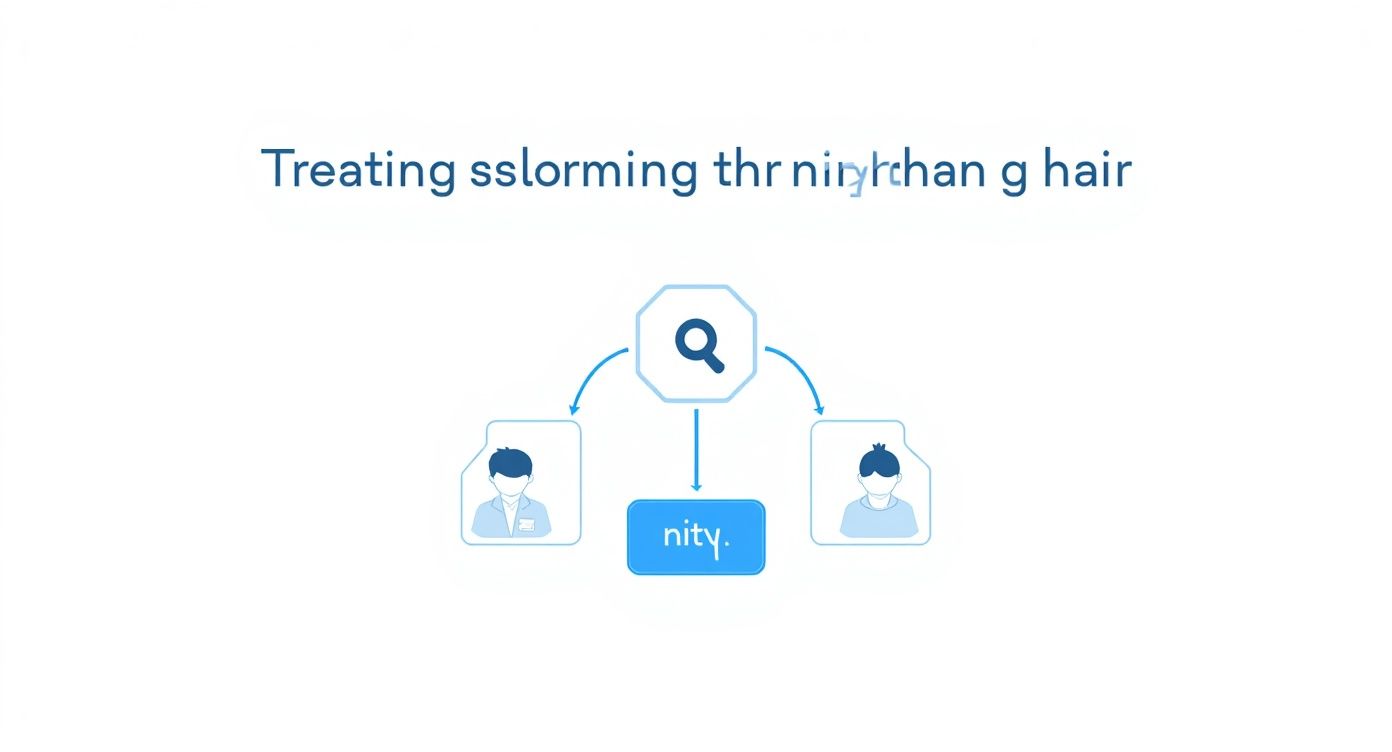
As you can see, a proper diagnosis isn’t just a suggestion—it’s the foundation for everything that follows. It’s what makes the difference between a treatment that works and one that doesn’t.
Conducting a Practical Self-Assessment
Before you even book an appointment with a doctor or trichologist, you can gather some incredibly useful information that will make that consultation far more productive. Start by thinking about your personal hair story.
Ask yourself these simple but important questions:
- What’s the pattern? Is the thinning happening all over, or is it concentrated at your temples or on the crown?
- What’s your family history? Does hair loss run in your family? If so, who had it, and what did it look like for them?
- What’s changed recently? Think back over the last 3-6 months. Have you started any new medications, gone through a stressful event, or made a major change to your diet?
Key Takeaway: Your hair loss pattern, timeline, and family history are the most important clues you have. Jotting these details down helps a professional pinpoint the cause much faster and get you on a targeted treatment plan.
The scale of this issue in the UK is huge. Hair loss affects roughly 6.5 million men and 8 million women, with androgenetic alopecia being the primary driver for the vast majority. Yet, despite this, surprisingly few people seek professional help. For example, only about 11% of UK men ever consult a professional after noticing their hair is thinning. You can dive deeper into these UK hair loss statistics on aventusclinic.com. This delay can mean missing the best window for effective intervention, which is exactly why taking control early on is so important.
Building Your At-Home Topical Treatment Routine

Real, lasting results often start right in your own bathroom, not in a clinic. The absolute cornerstone of managing thinning hair is a consistent at-home routine. This isn’t about finding one miracle product, but about creating a multi-pronged attack using proven, active ingredients that work together to wake up follicles and encourage growth.
You have to be patient. Think of it less like a quick fix and more like a long-term fitness plan for your scalp. It’s the small, daily actions that compound over time to deliver visible improvements.
Your Core Topical Arsenal
When you’re building a routine from the ground up, start with the heavy hitters—the ingredients with the most solid science behind them. These are the workhorses of at-home hair care, each tackling hair loss from a slightly different angle.
Data from the UK shows that combining treatments is a common and effective strategy. For example, about 56.8% of people use a 5% minoxidil foam, and 25% incorporate ketoconazole shampoo into their routines. This highlights just how powerful a multi-faceted approach can be.
Here’s what your foundational routine could look like:
- Minoxidil: This is usually the first port of call for a reason. It’s a vasodilator, which is a technical way of saying it widens blood vessels. Better blood flow means more oxygen and nutrients can reach the follicles, which can help push them into, and keep them in, the anagen (growth) phase.
- Ketoconazole: While you might know it as an anti-dandruff ingredient, this shampoo has some brilliant anti-inflammatory and anti-androgenic properties. It helps create a healthier scalp by calming inflammation and fighting the effects of DHT, a hormone directly linked to pattern baldness.
A common mistake I see is people giving up too soon. Topical treatments like Minoxidil demand diligence. You’re looking at a minimum of three to six months of consistent, daily use before you can really judge if it’s working for you.
Before starting any new topical, it pays to be informed. When adding a product like Minoxidil, it’s worth reading up on understanding and managing side effects of topical minoxidil.
To give you a clearer picture, here’s a quick comparison of the most popular options you’ll encounter.
Comparing Popular At-Home Topical Treatments
When deciding on the right topical treatment, it’s helpful to see how they stack up against each other. Each has a unique way of working and suits different types of hair loss.
| Treatment | Mechanism of Action | Best For | Typical Time to See Results |
|---|---|---|---|
| Minoxidil | Vasodilator; increases blood flow to follicles and prolongs the anagen (growth) phase of the hair cycle. | Androgenetic alopecia (pattern baldness) in both men and women. | 3–6 months |
| Ketoconazole | Anti-fungal with anti-inflammatory and anti-androgenic properties; reduces scalp inflammation and combats DHT. | Hair thinning associated with dandruff, scalp inflammation, and DHT. | 3–6 months |
| Caffeine | Stimulates hair follicles and may counteract the suppressive effects of DHT on hair growth. | General hair thinning and as a supportive treatment alongside others. | 4–6 months |
| Saw Palmetto | Natural DHT blocker; inhibits the 5-alpha-reductase enzyme that converts testosterone to DHT. | Early-stage androgenetic alopecia, often used as a natural alternative. | 4–6 months |
This table is just a starting point. The key takeaway is that consistency is what drives results, regardless of which treatment you choose.
Layering Supporting Actives
Once your core products are in place and you’ve established a solid routine, you can start layering in other beneficial ingredients. These supporting actives can really boost the effectiveness of your primary treatments and give your scalp extra nourishment.
Consider adding serums or lotions containing a smart blend of components. For instance, a powerful, multi-ingredient approach like our XTRA Hair Restorer Lotion is specifically formulated to revitalise follicles with a complex of actives designed to support hair density and health.
Here are a few other fantastic ingredients to look for:
- Caffeine: When applied topically, it can help stimulate follicles and counter some of the negative effects of DHT on hair growth.
- Biotin: An essential B-vitamin that plays a huge role in producing keratin, the protein your hair is made of. Topical application can help strengthen the hair shaft.
- Saw Palmetto: This natural botanical extract is thought to work in a similar way to finasteride by blocking the enzyme that turns testosterone into hair-thinning DHT.
Optimising Application For Maximum Impact
How you apply your treatments is just as important as what you apply. To get the most out of every drop, you need a clean, receptive scalp.
Always start by applying treatments to a clean, towel-dried scalp. This gets rid of any sebum or product build-up that could act as a barrier. If you’re using a liquid or serum, part your hair in sections and apply it directly to the skin, not the hair itself.
Gently massage it in with your fingertips for a minute or two. This doesn’t just feel good; it boosts circulation and helps the product absorb properly. Find a time that works for you every single day—morning or night—and stick to it religiously. That dedication is what turns a good product into a great result.
When to Consider In-Clinic Treatments
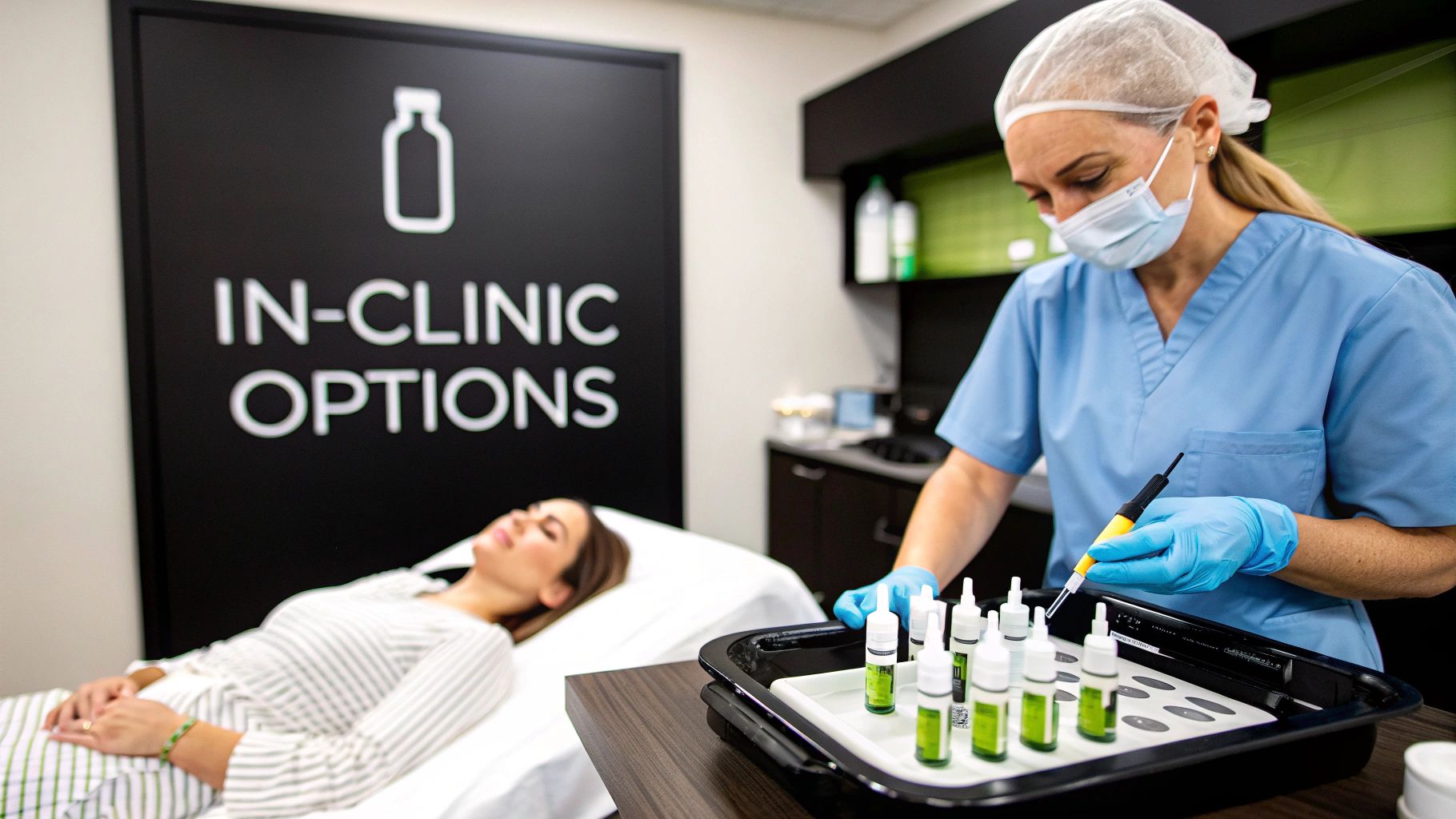
While a solid at-home routine is the cornerstone of any plan to tackle hair thinning, there often comes a point where you want to see more significant results or give your efforts a real boost. This is exactly where in-clinic treatments come in. These procedures are designed to work on a much deeper level, stimulating follicles and creating an ideal environment for hair growth in ways that topical products simply can’t.
Deciding to explore clinical options is a personal one. It’s often the right move if you’ve been sticking to your home care for at least six to nine months but aren’t quite seeing the improvement you hoped for. Or maybe you just want to be more proactive. These treatments are a bigger investment, both in time and money, but for many, the results are absolutely worth it.
Harnessing Your Body’s Own Growth Factors with PRP
One of the most talked-about options right now is Platelet-Rich Plasma (PRP) therapy. It’s a clever approach that uses the healing and regenerative power of your own blood to wake up dormant or underperforming hair follicles. The science behind it is as simple as it is effective.
The process is quite straightforward. A clinician takes a small sample of your blood, just like a standard blood test, and places it in a centrifuge. This machine spins at high speed to separate the blood’s components, isolating the platelet-rich plasma—a golden-coloured liquid packed with powerful growth factors. This concentrated plasma is then carefully injected into the areas of your scalp where thinning is most noticeable.
These growth factors are like a powerful signal, telling your follicles it’s time to get back to work. They help to:
- Stimulate cell regeneration within the follicle itself.
- Increase blood supply to the area, delivering vital nutrients.
- Prolong the anagen (growth) phase of the hair cycle.
PRP has become a go-to for those looking for a more natural yet potent solution. In fact, research shows that 43.5% of people have tried platelet-rich plasma therapy, with studies confirming it can significantly increase scalp hair density after just three months. This makes it a compelling option if you’re looking for a clinically-backed, non-surgical method to treat thinning hair.
The Power of Scalp Microneedling
You might have heard of microneedling for facial rejuvenation, but it’s also an incredibly effective tool for stimulating the scalp. The principle is the same: a device with very fine, short needles creates tiny, controlled micro-injuries on the scalp’s surface.
This controlled ‘damage’ kicks the body’s natural wound-healing response into gear. Your system floods the area with collagen and elastin to repair the skin, and this process also helps to stimulate dormant hair follicles. Think of it like tilling a garden to prepare the soil for new growth.
The dual benefit of microneedling is what makes it so valuable. Not only does it stimulate the follicles directly, but it also dramatically increases the absorption of any topical treatments you’re using. The micro-channels created allow serums and foams to penetrate deeper, making them far more effective.
Exploring Other Advanced Clinic Options
PRP and microneedling are front-runners, but they aren’t the only advanced treatments out there. Other procedures use different mechanisms to support hair growth and are often combined for a multi-layered approach.
For instance, Low-Level Laser Therapy (LLLT) uses medical-grade lasers to deliver safe, low-level light energy directly to the scalp. This light gets absorbed by the cells in your follicles, which can help increase energy production and kick-start the metabolic processes needed for hair growth. It’s a completely painless, non-invasive option.
Another effective technique is mesotherapy, which involves injecting a customised cocktail of vitamins, minerals, and other active ingredients directly into the mesoderm (the middle layer) of the scalp. This delivers a potent dose of nutrients exactly where they are needed most. You can learn more by reading about the 7 shocking truths about hair mesotherapy you need to know now.
A chat with a specialist is the best way to figure out which of these advanced options is the right fit for your specific pattern of hair loss.
How Diet and Lifestyle Impact Your Hair
While we have some incredibly effective topical treatments and clinical procedures at our fingertips, they can only do so much if your internal environment isn’t properly supported. Simply put, you can’t out-treat a poor diet or a chronically stressed lifestyle.
Think of your hair follicles as tiny, complex factories. To produce strong, healthy hair, they need a constant supply of the right raw materials and optimal operating conditions. Everything you eat, your daily stress levels, and how well you sleep directly influences how well these little factories function.
Neglecting these foundations is like trying to build a house on shaky ground. Sooner or later, the cracks will start to show—and for many, that’s right on their scalp. It’s a non-negotiable part of any successful plan to get your hair back on track.
Fuelling Your Follicles from Within
Your hair is made of a protein called keratin. For your body to synthesise it effectively, it needs a steady stream of specific vitamins and minerals. When these are in short supply, hair production is one of the first non-essential processes the body dials back. It needs to conserve those precious resources for more critical functions.
What’s on your plate, therefore, has a direct and profound impact on the health of your hair. A crucial first step is addressing underlying mineral deficiencies, which are more common than you might think.
Here’s a look at some of the most critical nutrients for healthy hair:
- Iron: Absolutely essential for producing haemoglobin, which carries oxygen to cells for growth and repair. This includes the cells that stimulate hair growth. Low iron (ferritin) is a very common culprit behind hair shedding, especially in women.
- Zinc: This mineral plays a key role in hair tissue growth and repair. It also helps keep the oil glands around the follicles working as they should.
- Biotin (Vitamin B7): Famous for its role in hair health, biotin is vital for producing keratin. While a true deficiency is rare, making sure you have enough is key.
- Vitamin D: Often called the sunshine vitamin, low levels of Vitamin D have been linked to alopecia. It helps create new follicles—the tiny pores where new hair can grow.
The best way to get these is through a balanced diet full of lean proteins, leafy greens, nuts, seeds, and colourful vegetables.
The Role of Targeted Supplementation
Even with the best intentions, it can be tough to get optimal levels of every single nutrient your hair needs from diet alone. This is where targeted supplementation can make a real difference, bridging the gap and giving your follicles a concentrated dose of the building blocks they’re crying out for.
It’s a strategy many people are already using. In fact, 32% of people use vitamins and 27% take biotin specifically to combat thinning hair. These figures show a growing understanding that what happens inside your body is a massive piece of the hair-health puzzle.
Choosing the right supplement isn’t about grabbing any generic “hair, skin, and nails” bottle off the shelf. It’s about understanding what your body might be lacking and providing a high-quality, targeted solution.
A good supplement provides a synergistic blend of vitamins, minerals, and amino acids designed to support the hair growth cycle. To learn more about what to look for, check out our guide on finding the best supplements for you.
To help you get started, here is a breakdown of the key nutrients you should be looking for.
Key Nutrients for Healthy Hair Growth
This table summarises the essential vitamins and minerals that are crucial for maintaining healthy hair, outlining their specific roles and where you can find them in your diet.
| Nutrient | Role in Hair Health | Good Food Sources |
|---|---|---|
| Iron | Carries oxygen to hair roots, promoting growth. Deficiency is a major cause of hair loss. | Red meat, spinach, lentils, fortified cereals, oysters. |
| Zinc | Essential for hair tissue growth and repair. Helps keep oil glands around follicles working properly. | Beef, pumpkin seeds, lentils, chickpeas, oysters. |
| Biotin (B7) | Stimulates keratin production in hair and can increase the rate of follicle growth. | Eggs, almonds, cheese, sweet potatoes, salmon. |
| Vitamin C | An antioxidant that helps produce collagen, a protein that strengthens hair. Also aids iron absorption. | Citrus fruits, strawberries, bell peppers, broccoli. |
| Vitamin D | Helps create new follicles where new hair can grow. Low levels are linked to alopecia. | Fatty fish (salmon, mackerel), fortified milk, sunlight. |
| Vitamin E | A powerful antioxidant that can help prevent oxidative stress and support a healthy scalp. | Sunflower seeds, almonds, spinach, avocados. |
| Protein | Hair is made almost entirely of protein. Inadequate intake can lead to weak, brittle hair. | Chicken, fish, eggs, dairy, legumes, tofu. |
Incorporating these foods into your diet is a powerful step towards building healthier, stronger hair from the inside out.
How Stress and Sleep Sabotage Your Hair
Chronic stress is one of the biggest enemies of healthy hair. When you’re constantly on edge, your body pumps out high levels of the stress hormone cortisol. Over time, elevated cortisol can disrupt the hair growth cycle, pushing a large number of follicles prematurely into the shedding (telogen) phase.
This condition, known as telogen effluvium, often leads to noticeable, diffuse shedding a few months after a particularly stressful period. It’s the body’s physical reaction to being in a constant state of “fight or flight.”
Poor sleep is just as damaging. It robs your body of its prime restorative time. During deep sleep, your body gets to work on cellular repair and regeneration, and that absolutely includes your hair follicles. Skimping on sleep consistently can disrupt crucial growth hormones and impair this vital repair process.
To fight back, find stress-management techniques that actually work for you, whether that’s mindfulness, exercise, or just carving out some quiet time each day. And make it a priority to get 7-9 hours of quality sleep per night. This gives your body—and your hair—the chance it needs to properly recover and grow.
Tracking Progress and Maintaining Your Results

Starting a treatment plan for thinning hair is a huge step, but the journey doesn’t stop there. Regaining your hair is one challenge; keeping it is another entirely. Long-term success really comes down to consistent monitoring and a smart maintenance strategy, making sure the results you’ve worked so hard for are here to stay.
This final phase is all about being methodical and, honestly, patient. Progress can feel incredibly slow, especially in the early days, which is why having objective ways to measure change is so important for staying motivated. It helps you see the small victories that build up over time.
How to Effectively Monitor Your Progress
Guesswork won’t cut it when you’re trying to figure out if a treatment is really working. You need a simple, repeatable system to track what’s happening on your scalp. This gives you concrete evidence and helps you and your specialist make informed decisions about your routine.
Here are the methods I always recommend to my clients:
- Consistent Monthly Photos: This is your most powerful tool, hands down. Once a month, on the same day, take a series of well-lit photos of your scalp. Try to use the same lighting, angle, and camera each time to keep things consistent. Key shots to get are your hairline, crown, and your parting.
- Shedding Observation: Just keep a mental note of how much hair you’re losing daily. Are you finding less hair on your pillow, in the shower drain, or tangled in your brush? A drop in shedding is often one of the very first positive signs that things are moving in the right direction.
- Texture and Density Checks: Run your hands through your hair. Does it feel fuller at the roots? Are you noticing new, shorter hairs (what we often call “baby hairs”) sprouting along your hairline? These are fantastic, tangible indicators of new growth.
The peak effect of many treatments, like minoxidil, often occurs around the one-year mark. Patience isn’t just a virtue in this process; it’s a necessity. Don’t get discouraged if you don’t see dramatic changes in the first few months.
This consistent tracking helps you understand what’s happening on your scalp, turning a subjective feeling into objective data.
Understanding Realistic Treatment Timelines
Managing your expectations is absolutely crucial if you want to stick with your plan. Hair growth is a slow biological process, and different treatments deliver results on different schedules.
Here’s a general idea of what you might expect to see and when:
- Months 1-3: You probably won’t see much visible new growth yet. In fact, with some treatments like minoxidil, you might even notice a temporary increase in shedding. This is completely normal—it’s just old hairs making way for new, stronger ones. The main goal here is simply consistency.
- Months 4-6: This is often when the first real signs of progress appear. You might notice less shedding and the emergence of fine, new hairs. Your hair may start to feel a bit thicker and denser at the roots.
- Months 7-12: By this point, you should see more noticeable improvements in density and coverage. The new hairs will have had time to grow longer and thicker, contributing to a fuller overall appearance. This is a great time to pull out your photos from month one for a comparison.
Transitioning to a Long-Term Maintenance Plan
Once you’ve achieved results you’re happy with, the focus shifts from recovery to maintenance. You can’t just stop your treatments cold. If you do, the hair you’ve regained will likely shed over the following months. Instead, you need to ease into a sustainable, long-term plan.
This usually means adjusting the frequency of your treatments. For instance, you might cut back your use of a topical solution from twice a day to once a day, or space out in-clinic sessions to every four to six months. Powerful treatments, like those in our XTRA Hair Restorer Vials, can be excellent for these targeted maintenance phases.
The goal is to find the minimum effective dose that maintains your results without being too much of a hassle. From here on out, it’s all about vigilance and consistency. Keep up with your monthly photos and stay in touch with your specialist to ensure your hair remains healthy, strong, and full for years to come.
Your Hair Treatment Questions, Answered
Stepping into the world of hair loss treatments can feel like navigating a maze. There’s a lot of information out there, and it’s completely normal to have questions as you work out the best path forward. Here, I’ll tackle some of the most common queries we get from clients in the UK, offering some clear, straightforward advice to help you feel more confident.
How Long Until I Actually See Results?
This is the big one, and the honest answer is that patience is non-negotiable. Hair growth is a slow biological process, so you won’t see a change overnight. It’s really important to set realistic expectations from the start to stay motivated.
Here’s a rough timeline of what to expect:
- Months 1–3: Don’t expect to see much new growth yet. In fact, some treatments like minoxidil can cause a bit of initial shedding. Don’t panic! This is often a good sign that old, weaker hairs are making way for new, healthier ones to come through.
- Months 4–6: This is when you can start looking for the first encouraging signs. You might notice less hair fall, and you could see some fine, soft vellus hairs—what people often call “baby hairs”—popping up along your hairline or parting.
- Months 7–12: This is where the magic really starts to happen. Those new hairs will have had time to mature, growing thicker and longer. This is when you’ll start to see a real difference in your overall density and coverage. For many treatments, the peak effect often comes around the one-year mark.
The takeaway here is that consistency is everything. If you skip applications or miss appointments, you’ll only delay or reduce your results. Sticking with your routine is the only way to know if a treatment is truly working for you.
Will I Be Stuck Using These Treatments Forever?
It’s a fair question. When we’re talking about genetic conditions like androgenetic alopecia (male or female pattern baldness), the short answer is usually yes. These treatments work by actively counteracting the genetic and hormonal triggers behind the hair loss.
If you stop, the follicles will likely return to their previous state, and any hair you’ve regained will probably be lost over the next few months. It’s better to think of it not as a “cure” but as ongoing management—much like you would for any other chronic condition. The aim is to find a sustainable maintenance routine that fits into your life.
Are Advanced Treatments like Exosomes Worth the Investment?
As the science of hair restoration moves forward, we’re seeing some genuinely exciting new options. While PRP and microneedling are well-established and incredibly effective for many, some of the newer therapies are showing huge potential for even better results. Exosome therapy is one of the most promising.
Exosomes are tiny messengers that travel between cells, carrying vital proteins and genetic information that can effectively “wake up” dormant hair follicles and signal them to get back into a growth phase. It’s a much more targeted way of encouraging cellular regeneration. For a deeper dive, you can learn more about how exosomes for hair revitalisation work in our detailed guide. For anyone who hasn’t seen the results they hoped for with other treatments, or for those looking for the next level in regenerative care, they are definitely worth discussing with a specialist.
Can I Combine Different Hair Loss Treatments?
Absolutely! In fact, a multi-pronged attack is often the most effective strategy you can adopt. Different treatments work on different pathways, so when you combine them, you can create a powerful synergistic effect that tackles the problem from all sides.
A classic and highly effective combination might look something like this:
- Topical Minoxidil: To boost blood flow and keep hair in the growth phase for longer.
- Ketoconazole Shampoo: To help manage scalp inflammation and reduce the effects of DHT.
- In-Clinic PRP: To deliver a powerful cocktail of growth factors right where they’re needed—at the follicle.
- Dietary Supplements: To make sure your body has all the essential building blocks for producing strong, healthy hair.
A comprehensive plan like this gives you the best possible chance of achieving and, just as importantly, maintaining fantastic results. Just remember to always talk it through with a professional before you start combining treatments to make sure the plan is right for your specific situation.
At Beauty Page, we offer a curated range of professional-grade solutions to support your hair revitalisation journey. From advanced topical formulas to specialised clinic supplies, explore our collection to build a powerful and effective treatment plan. Discover our full range of products at https://beautypage.co.uk.