Free shipping £150+ Orders
A Calming Skincare Routine for Sensitive Skin
A solid skincare routine for sensitive skin starts with one simple truth: your skin isn't "bad," it's just a bit overprotective. The goal isn't just to sidestep irritation but to actively calm its reactivity by rebuilding its natural defences. Getting this mindset right is the first, most important step in choosing products that will actually soothe, support, and strengthen your skin for the long haul.
Getting to Know Your Sensitive Skin
Before you can put together an effective routine, you need to understand what’s actually going on beneath the surface. Sensitive skin is more than just a bit of occasional redness; it’s a clear sign of a compromised skin barrier.
Picture your skin barrier as a sturdy brick wall. The skin cells are the bricks, and the lipids (natural fats) are the mortar holding everything together. With sensitive skin, that mortar has gaps. This allows precious moisture to escape far too easily and, just as importantly, lets irritants sneak in.
This is precisely why your skin flares up in response to triggers that most people wouldn't even notice. Everyday things like pollution, a sudden change in temperature, or even stress can be enough to set it off, leaving you with a host of uncomfortable symptoms.
Spotting the True Signs of Sensitivity
It’s easy to confuse a temporary bout of irritation with genuine sensitivity. But if your skin is truly sensitive, you’ll likely notice a consistent pattern of reactions. Watch out for these tell-tale signs:
- A feeling of tightness: Your skin might feel uncomfortably taut, especially right after cleansing, because it's losing moisture too quickly.
- Persistent itching or stinging: This can happen even without a visible rash and often pops up right after you've applied a product.
- Visible redness or flushing: You might notice blotchiness or a flushed appearance after being in the heat, eating spicy food, or using certain ingredients.
- Rough or flaky patches: When the barrier can't hold onto hydration, you'll see dry areas and an uneven, rough texture.
This growing awareness around skin sensitivity has fuelled a huge demand for gentle, supportive skincare. In the UK alone, the market for sensitive skincare products is booming, showing a real shift towards more considered formulations. The market pulled in around USD 1.86 billion in revenue and is expected to climb to USD 3.42 billion by 2030. This isn't just a trend; it's a clear signal that people want products that put skin health first. You can dig deeper into this market shift and what's driving it in the full report.
Changing Your Skincare Philosophy
The cornerstone of a successful skincare routine for sensitive skin is moving from a mindset of "fighting" your skin to one of supporting it. The aim is to gently rebuild and protect its natural defences, not blast it with harsh actives. This means picking products specifically formulated to calm inflammation and replenish the lipids that make up that all-important protective barrier.
The ultimate goal is to bring your skin to a state of balance, where it’s resilient enough to fend for itself against daily stressors without overreacting. It's about building long-term health, not just searching for a quick, temporary fix.
By focusing on barrier repair, you give your skin the tools it needs to become less reactive over time. Ingredients like ceramides, hyaluronic acid, and niacinamide become your new best friends. Calming botanicals also have a huge part to play; for instance, a soothing product like a Centella and Orange Blossom Gel can help dial down redness and offer gentle hydration without a hint of irritation. When you take this supportive approach, your routine stops feeling like a chore and becomes a truly restorative ritual.
Your Protective Morning Skincare Routine
Think of your morning routine as putting on a comfortable, protective shield before you head out for the day. For sensitive skin, the two main jobs are defence and hydration. The goal is to calm your skin and protect it from environmental triggers like UV rays and pollution, which can easily cause a flare-up.
When it comes to sensitive skin, a simple, consistent plan is always more effective than an elaborate one filled with potential irritants. The entire process should feel soothing, never stripping or stressful. By sticking to a few high-quality steps, you’re setting your skin up for a calm day, reducing the chances of that tight, uncomfortable feeling or midday redness.
To Cleanse or Not to Cleanse?
This is often the first, and most debated, decision of the day. For many people with sensitive or dry skin, the answer is a gentle "no." Your skin does its best repair work overnight, producing natural oils that are crucial for a healthy barrier. Washing them away first thing can leave your skin feeling vulnerable and stripped before the day has even begun.
Often, a simple splash of lukewarm water is all you need to refresh your skin and prepare it for what’s next. This approach respects your skin’s natural recovery process.
However, if your skin is on the oilier side, prone to breakouts, or you just wake up feeling a bit greasy, a very gentle cleanse is a better option. Just be sure to avoid foaming cleansers, as they often contain harsh surfactants like sodium lauryl sulphate (SLS).
Instead, look for these gentler alternatives:
- A pH-balanced cream cleanser: These are formulated to cleanse without disrupting your skin's natural acidity, which is vital for a strong barrier.
- A milky or gel-based cleanser: The texture here is key. These formulas provide a gentle cleanse with less friction, soothing the skin as they work.
- Micellar water on a soft cotton pad: This is an excellent compromise. It lifts away excess oil and residue without needing a full, stripping wash. To understand how they work so gently, you can explore the science behind a quality micellar cleansing water and see if it's the right fit for you.
Layering Lightweight Hydration
Right after rinsing or cleansing, you want to immediately add moisture back in. This is where toners and essences shine. Forget those old-school, alcohol-based astringent toners; modern hydrating formulas are designed to be the first calming layer of moisture, helping all your other products absorb more effectively.
Look for a toner or essence packed with soothing, anti-inflammatory ingredients. Think of them as your skin's best friends for stopping redness before it even starts.
Pro Tip: Always apply your hydrating toner or essence to slightly damp skin. This simple trick helps to lock in that initial surface water, boosting hydration levels far more than applying it to a completely dry face.
Ingredients to seek out include:
- Centella Asiatica (Cica): Famous for its incredible wound-healing and anti-inflammatory properties.
- Chamomile: A classic soothing agent that helps to calm down irritated skin.
- Hyaluronic Acid: A humectant that draws moisture deep into the skin, leaving it feeling plump and hydrated.
- Glycerin: Another brilliant humectant that helps maintain the skin's moisture balance.
Serum and Moisturiser: The Barrier Support Duo
With your skin prepped and hydrated, it’s time for a lightweight serum. In the morning, you want to focus on antioxidants and hydration, not potent, potentially irritating actives. A simple hyaluronic acid or niacinamide serum can work wonders to support your skin barrier and calm inflammation throughout the day.
Follow this up with a nourishing moisturiser. Your morning moisturiser doesn't need to be thick or heavy. Its main job is to lock in the hydration from the previous steps and create a smooth base for your sunscreen. Look for formulas containing ceramides, fatty acids, and cholesterol—these are the three key components of your skin's natural barrier and will actively help repair and reinforce its defences.
The Non-Negotiable Final Step: Sunscreen
If you only do one thing for your sensitive skin in the morning, make it this. Sun exposure is one of the biggest triggers for inflammation and can seriously compromise an already delicate skin barrier. For sensitive skin, mineral-based sunscreens are almost always the superior choice.
Mineral sunscreens use physical blockers like zinc oxide and titanium dioxide. These ingredients sit on top of the skin and physically reflect UV rays away. This makes them far less likely to cause irritation compared to chemical filters, which work by absorbing UV radiation and converting it into heat within the skin.
When choosing a mineral sunscreen, look for formulas that are fragrance-free, non-comedogenic, and offer broad-spectrum SPF 30 or higher. Thankfully, modern formulations are much more elegant than their chalky predecessors and often blend into the skin without leaving a heavy, white cast. This final step is the most crucial piece of armour in your skincare routine for sensitive skin, providing an essential shield against daily damage.
Your Restorative Evening Skincare Routine
As the day winds down, your skin’s most important work is just beginning. Night-time is its natural recovery period, a crucial window for repair and regeneration. For sensitive skin, an evening routine needs to do two things really well: gently wash away the day's grime and deliver restorative ingredients to help that healing process along.
The whole ritual should feel calming and purposeful. This isn’t about piling on countless products, but about choosing a few effective steps that work in harmony with your skin’s overnight cycle. The goal is to wake up to a complexion that feels comfortable, nourished, and visibly less reactive.
The Gentle Double Cleanse Method
Getting makeup, daily pollutants, and—most importantly—sunscreen off sensitive skin calls for a thorough yet gentle touch. This is where the double-cleanse method really shines. It’s a two-step process that gets your skin perfectly clean without that stripped, tight feeling.
First, you’ll start with an oil-based cleanser or a soft cleansing balm. Oil is brilliant at dissolving other oils, so it effortlessly melts away stubborn makeup, sebum, and SPF. You simply massage it onto dry skin, letting it break everything down, then add a little water to emulsify it before rinsing it all away.
The second step is to follow up with a simple, water-based cleanser. This could easily be the same creamy, pH-balanced cleanser from your morning routine. Its job is to wash away any lingering residue from the oil cleanser and purify the skin itself, leaving you with a clean, soft canvas ready for what comes next.
This two-step process is a cornerstone of a supportive skincare routine for sensitive skin. It prevents the harsh rubbing and scrubbing that can trigger irritation, making sure cleansing is a soothing, not stressful, experience.
Introducing Targeted Treatments Carefully
With your skin clean and still slightly damp, it’s the ideal time to apply targeted treatments. This is your chance to address specific concerns like uneven tone, fine lines, or that persistent redness. For sensitive skin, however, the key is to choose your active ingredients wisely and introduce them slowly.
Potent actives like high-strength retinoids or aggressive AHAs (think glycolic acid) can often be too much for reactive skin. Instead, it’s better to focus on gentler but equally effective alternatives that deliver results without the drama.
Consider these sensitive-skin-friendly actives:
- Azelaic Acid: A fantastic multi-tasker that helps reduce redness, calm inflammation, and gently exfoliate to improve skin texture. It's particularly great for anyone managing sensitivity alongside rosacea or acne.
- Bakuchiol: Often called a natural retinol alternative, bakuchiol offers similar anti-ageing benefits—like improving skin elasticity and softening fine lines—but with a much lower risk of irritation.
- Polyhydroxy Acids (PHAs): These are the gentler cousins of AHAs. Their larger molecular size means they don't penetrate as deeply, providing surface-level exfoliation that’s much better tolerated by sensitive skin. To learn more about how they work, you can explore our detailed guide on gentle exfoliation for sensitive skin.
Whenever you introduce a new active, always patch-test first. Start by using it just two or three nights a week, applying it before your moisturiser. As your skin gets used to it, you can gradually build up how often you use it.
Sealing Everything with a Barrier-Repair Moisturiser
The final, and arguably most crucial, step of your evening routine is a rich, nourishing moisturiser. Its job is to lock in your treatment serum and, most importantly, give your skin the building blocks it needs to repair its protective barrier while you sleep.
Your night cream should be richer than your daytime one. Look for formulas packed with ingredients that mimic the skin’s natural structure, helping to fill in those "gaps in the mortar" we talked about earlier.
Key ingredients to look for in a night moisturiser include:
- Ceramides: These lipids make up over 50% of your skin's barrier. Topping them up is absolutely essential for reducing water loss and keeping irritants out.
- Shea Butter: A wonderful emollient that soothes and moisturises the skin, providing a protective seal that lasts all night.
- Niacinamide (Vitamin B3): A true skincare hero. Niacinamide helps calm inflammation, supports ceramide production, and improves overall barrier function.
- Squalane: A lightweight, non-comedogenic oil that gives excellent hydration and helps prevent ongoing moisture loss.
Applying a generous layer of a well-formulated night cream creates a cocoon of nourishment for your skin. This simple act supports its natural healing rhythm, allowing you to wake up to a complexion that is not just soothed, but stronger and more resilient.
Decoding Ingredients for Sensitive Skin
Trying to read a skincare ingredient list can feel a bit like trying to solve a puzzle, can't it? But once you get the hang of what to look for, that tiny print on the back of the bottle becomes your best ally in building a skincare routine for sensitive skin. The real secret isn't a complicated, 10-step process; it's about making simple, smart choices with your products.
This is exactly why you're seeing so many people move towards stripped-back, transparent formulas. It's not just a trend; the numbers back it up. A huge 81% of UK skincare consumers now say they prefer fragrance-free products, which tells you everything you need to know about the shift to gentler skincare.
What's more, a YouGov poll found that 39% of UK adults who use skincare actually prefer a simple routine of just one to three products. This minimalist mindset is a game-changer because it automatically lowers the risk of irritation.
A focused evening routine, for instance, doesn’t need to be complex. It just needs to be clever.
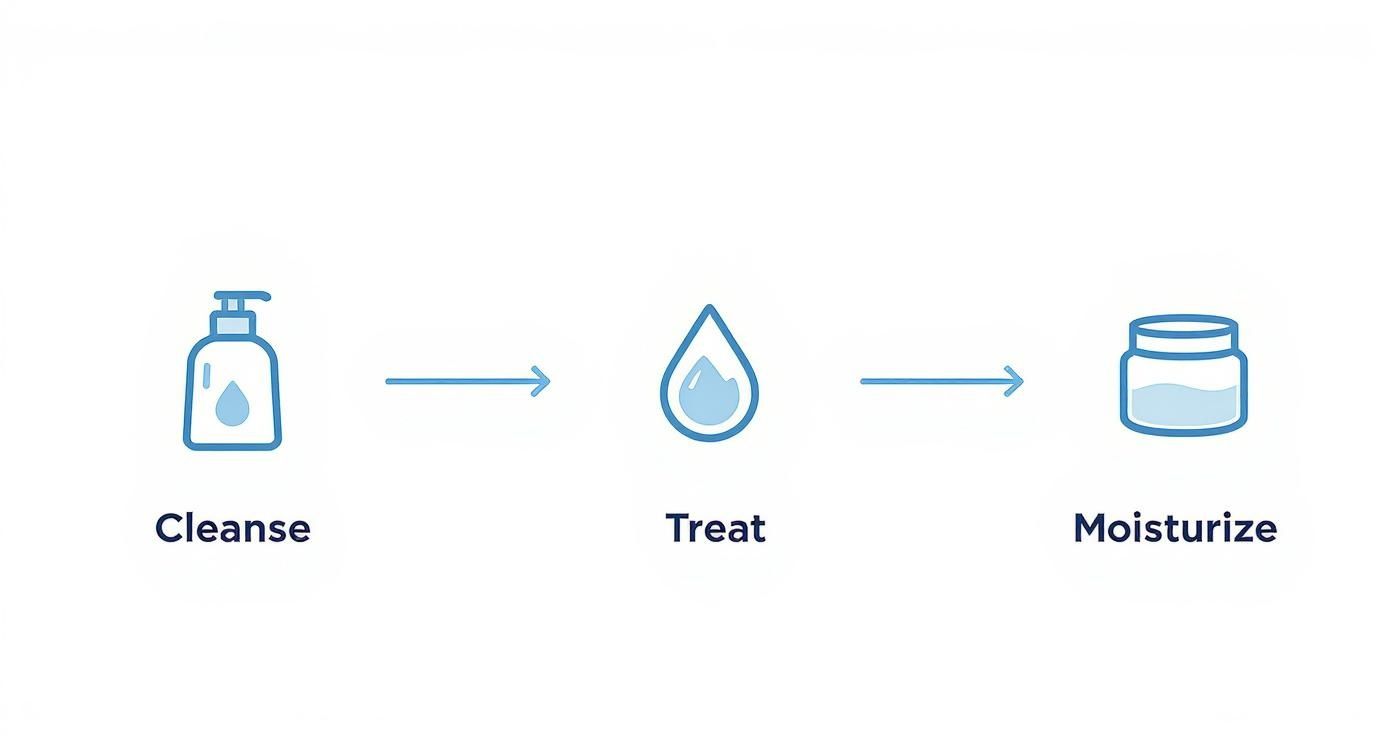
As this guide shows, a good night-time routine is about quality, not quantity. A gentle cleanse, a well-chosen treatment, and a comforting moisturiser are all you need to help your skin repair and reset overnight.
To help you become a pro at scanning labels, I’ve put together a quick guide on what to look for—and what to steer clear of.
| Ingredient Category | What to Use (Gentle & Soothing) | What to Avoid (Potential Irritants) |
|---|---|---|
| Moisturisers & Hydrators | Ceramides, Hyaluronic Acid, Squalane, Glycerin | Mineral Oil, Lanolin (can be occlusive/allergenic) |
| Soothing Agents | Centella Asiatica (Cica), Niacinamide, Panthenol, Allantoin | Fragrance/Parfum, Essential Oils (Lavender, Citrus, Mint) |
| Cleansers | Cocamidopropyl Betaine, Decyl Glucoside | Sodium Lauryl Sulphate (SLS), Sodium Laureth Sulphate (SLES) |
| Exfoliants | Mandelic Acid, Lactic Acid (low %), PHAs (Gluconolactone) | Glycolic Acid (high %), Physical Scrubs (nutshells, beads) |
| Antioxidants/Actives | Green Tea Extract, Curcumin, Bakuchiol | Drying Alcohols (SD Alcohol, Denatured Alcohol), Retinoids (high %) |
This table is your cheat sheet. Use it when you're shopping or decluttering your current routine to make choices that will truly support your skin.
Ingredients to Embrace
When you're scanning a product label, you want to find ingredients that signal calm, hydration, and repair. These are the ones that will actively soothe inflammation, boost moisture, and fortify that all-important skin barrier. Think of them as the heroes in your skincare story.
These are the ingredients that form your skin's support system:
- Ceramides: These are the natural fats in your skin that hold everything together. Topping them up helps lock in moisture and keep irritants out.
- Hyaluronic Acid: A master hydrator that can hold up to 1,000 times its weight in water. It delivers a serious dose of moisture without feeling greasy or heavy.
- Niacinamide (Vitamin B3): This is a true multi-tasker. It’s brilliant for calming redness, strengthening the skin barrier, and even helping with excess oil.
- Centella Asiatica (Cica): Famous for its healing and anti-inflammatory powers, Cica is a lifesaver for skin that’s feeling angry, red, and reactive.
Ingredients to Approach with Caution
Knowing what to avoid is just as critical as knowing what to use. Certain ingredients are well-known triggers for redness, stinging, and that tight, dry feeling we all want to avoid. Spotting these on a label is your first line of defence against a flare-up.
These common culprits often cause more trouble than they're worth for a compromised skin barrier. When you know how to spot them, you can confidently sidestep products that are likely to cause a reaction, saving your skin a whole lot of stress.
The goal isn't to fear all chemicals, but to be informed. Understanding why an ingredient might be a problem is what empowers you to make smarter, kinder choices for your skin.
Here are some of the main ingredients to be wary of:
- Fragrance (Parfum): This is one of the most common culprits for irritation and allergic reactions. Always look for "fragrance-free" rather than "unscented," as the latter can still contain masking scents.
- Sulphates (SLS and SLES): You'll often find these in foaming cleansers. They’re harsh detergents that can strip your skin of its natural oils, leaving it feeling tight and vulnerable.
- Drying Alcohols: Watch out for names like SD alcohol, denatured alcohol, or isopropyl alcohol, especially if they’re high on the ingredient list. They can be incredibly dehydrating.
- Certain Essential Oils: Just because they're "natural" doesn't mean they're gentle. Many essential oils like lavender, citrus, and peppermint can be potent irritants for sensitive skin.
- Aggressive Exfoliants: High concentrations of some Alpha-Hydroxy Acids (AHAs), like glycolic acid, can be far too much. A gentler option might be a better choice, and our guide can explain how to use mandelic acid for effective exfoliation without the irritation.
Pro Tips for Managing Reactive Skin

A solid daily routine is the bedrock of happy skin, but when you’re dealing with high reactivity, you need more than just the basics. Keeping truly sensitive skin calm involves a bit of detective work and some smart habits to pre-empt flare-ups before they even start.
One of the most powerful tools in your arsenal is patch testing. I can't stress this enough—it's a non-negotiable step that can save you from the misery of a full-face reaction. Think of it as a personal safety check before you commit to a new product.
How to Patch Test Like a Pro
To get it right, you need to be methodical. Rushing the process completely defeats the purpose.
- Pick a discreet spot: Choose a small area of skin where a reaction won't be a major issue. Behind the ear, just under your jawline, or the inside of your wrist are all great choices.
- Apply a tiny amount: Just dab a little bit of the new product onto your chosen spot. You only need enough to see how your skin will respond.
- Wait and watch: This is the most crucial part. For a leave-on product like a serum or moisturiser, you need to give it at least 24 to 48 hours. If it’s a cleanser, use it as you normally would on that small patch and then monitor the area.
- Look for any reaction: Keep an eye out for redness, itching, swelling, or any little bumps. If you see anything, no matter how small it seems, that product is not for you.
Remember, getting the all-clear after one day doesn’t always mean you're home free. Some sensitivities, especially allergic contact dermatitis, can take a few days to show up. Patience is your best friend here.
Navigating Complex Skin Challenges
Sensitive skin rarely travels alone. It often comes hand-in-hand with other challenges like acne or eczema, which can make things feel like a frustrating balancing act. For example, so many acne treatments are potent and drying—the exact opposite of what sensitive skin craves.
If you're juggling both sensitivity and breakouts, the secret is to choose your active ingredients carefully. Instead of reaching for aggressive benzoyl peroxide, you might have better luck with gentler alternatives like azelaic acid. Or, try a low-strength salicylic acid (BHA) just a couple of times a week. Similarly, a Polyhydroxy Acid (PHA) exfoliant is often much better tolerated than a traditional Alpha-Hydroxy Acid (AHA).
When your skin feels especially fragile, sometimes the best thing you can do is pull everything back to the absolute basics for a week or two. That means pausing all actives and focusing only on these essentials:
- A creamy, non-foaming cleanser.
- A simple hydrating serum with ingredients like hyaluronic acid or glycerin.
- A ceramide-rich moisturiser without any fragrance.
- A mineral-based sunscreen.
This "skin reset" gives your barrier precious time to repair itself without any interference. This focus on barrier health is causing major shifts in the skincare world. In the UK, the market is becoming much more cautious, with new regulations even capping over-the-counter retinol at 0.3%. Brands are now pivoting to innovative anti-inflammatory ingredients to give us products that are both gentle and effective.
Professional Treatments and Holistic Care
Managing reactive skin also means being smart about in-clinic treatments. While things like chemical peels can deliver fantastic results, you have to approach them with extreme caution. Always opt for peels with larger molecule acids, such as mandelic or lactic acid, as they penetrate the skin more slowly and are far less likely to cause irritation. To get your skin ready, you can learn more about chemical peels for sensitive skin and make sure you're doing everything right before and after your appointment.
Finally, don’t forget to think beyond what you put on your face. So many external factors play a huge role in skin reactivity—your environment, stress levels, and even the fabrics your skin touches every day. Looking after reactive skin means taking a 360-degree approach, which includes choosing the best fabric for sensitive skin to avoid irritation from your clothes and bedding. It all adds up to keeping your skin calm, comfortable, and happy.
Your Sensitive Skincare Questions Answered
Starting a new routine for sensitive skin always throws up a few questions. That's completely normal. You're trying to figure out what to expect, how to handle the inevitable bumps in the road, and whether you're even on the right track. Getting clear, practical answers is key to feeling confident and sticking with it.
Let's dive into some of the most common concerns I hear and clear up the confusion.
How Long Until I See Results from a New Routine?
This is where patience becomes your best friend. While you might get some instant comfort from a soothing cleanser or a calming moisturiser—that lovely "ahhh" feeling—the real work of reducing redness and reactivity takes time.
Your skin barrier needs about four to six weeks to properly rebuild itself. This isn't a marketing timeline; it's biology. There are no shortcuts. To see what's truly working, introduce new products one at a time. Give each new addition a week or two before bringing in the next, so you can clearly see how your skin is getting on.
A consistent, gentle routine will always outperform a cabinet full of products that are constantly being swapped out in the hope of an overnight miracle.
Can I Still Use Actives Like Vitamin C or Retinol?
Absolutely! You don't have to sit on the sidelines and miss out on the amazing benefits of powerhouse ingredients. The trick is to be smart and selective about it.
For vitamin C, which can be notoriously tingly and acidic, look for gentler derivatives. An oil-soluble form like Tetrahexyldecyl Ascorbate is a fantastic option. It gives you all that brilliant antioxidant protection without the common sting you can get from pure L-ascorbic acid.
When it comes to retinoids, the mantra is "low and slow."
- Choose a low-strength, next-generation formula like a granactive retinoid.
- Consider bakuchiol, a plant-based alternative that’s earned a great reputation for its gentle, retinol-like effects.
- Start by applying it just once or twice a week.
- You can also try the "buffering" technique—applying it over your moisturiser—to create a soft buffer and reduce the chance of irritation.
What Is the Most Important Product for Sensitive Skin?
That's a tough question. A truly effective routine is built on the partnership between a gentle cleanser and a barrier-supporting moisturiser. They're the cornerstones that keep your skin clean, comfortable, and resilient.
But if I had to pick just one non-negotiable product, it would be a broad-spectrum mineral sunscreen with an SPF of 30 or higher. Nothing compromises a fragile skin barrier faster than sun exposure. It’s a major trigger for inflammation. A good mineral sunscreen, formulated with zinc oxide or titanium dioxide, acts like a physical shield, protecting your skin without the potential irritation of chemical filters. It’s the final, most crucial step of every single morning routine.
Is Natural or Organic Skincare Always Safer?
Not always, and this is probably one of the biggest myths in the skincare world. Many ingredients that are perfectly "natural" can be major irritants. Essential oils are a prime example—lavender, citrus, and peppermint oils are notorious for causing reactions in sensitive skin.
The terms "natural" and "organic" aren't regulated for safety or efficacy. It's far more reliable to look for products specifically formulated and tested for sensitive skin. Focus on simple, clean ingredient lists and avoid known irritants, whether they’re man-made or come straight from a plant.
At Avera Cosmetic, we provide advanced aesthetic solutions that blend potency with gentleness, helping you build a routine that truly supports your skin. Explore our professional-grade formulations at https://beautypage.co.uk.