Free shipping £150+ Orders
Your Guide to Skincare for Sensitive Acne Prone Skin
When you’re dealing with both sensitivity and acne, the goal isn’t to blitz your spots with harsh treatments. That’s a battle you’ll likely lose. Instead, the real secret is to first calm the inflammation and rebuild your skin’s protective barrier. Think of it as creating a strong, resilient foundation. Once that’s in place, your skin can actually handle targeted acne treatments without spiralling into a cycle of irritation and new flare-ups. A gentle, consistent routine is your most powerful weapon here.
Understanding Your Sensitive, Acne-Prone Skin
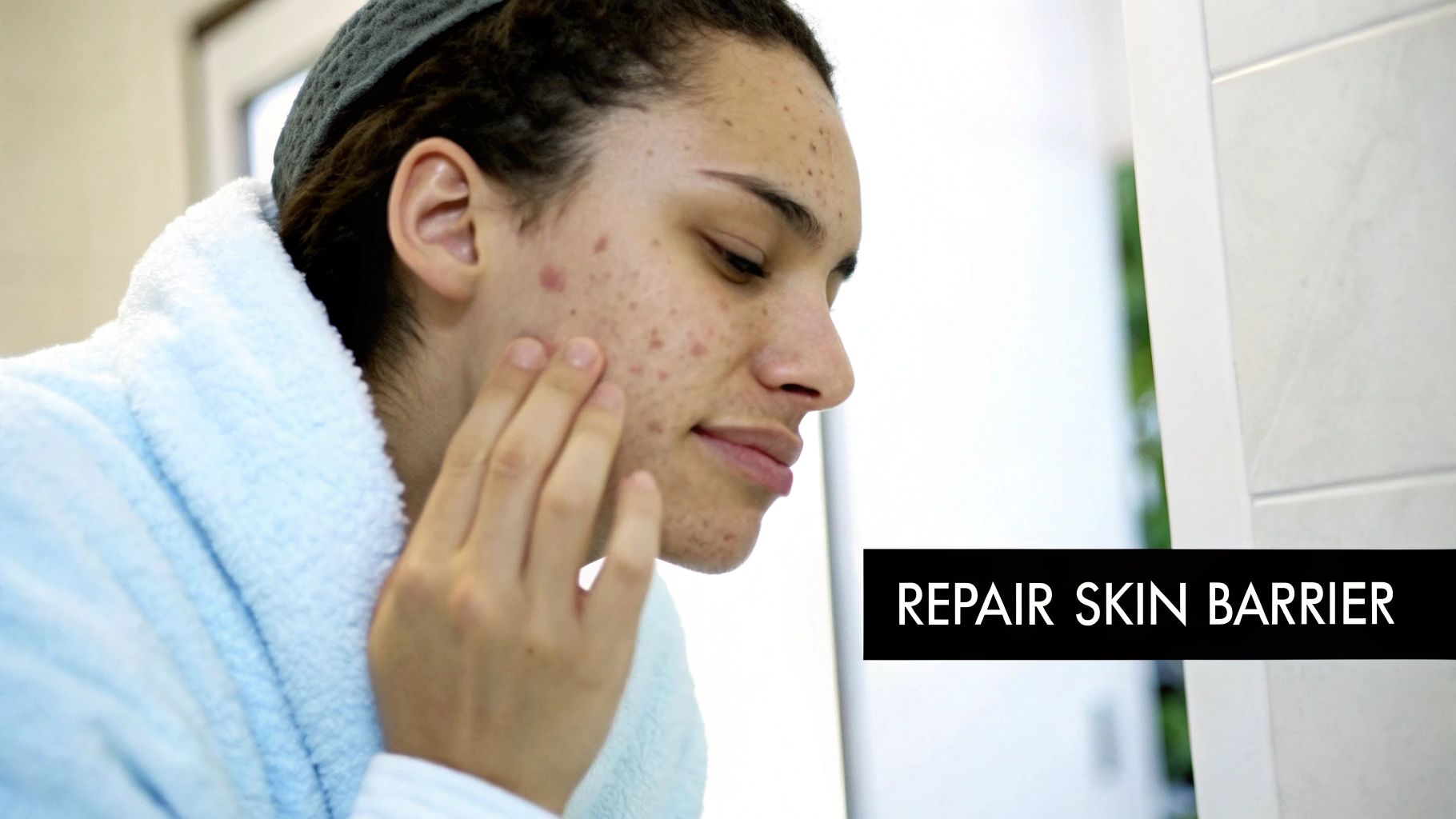
If your skin feels like it’s constantly in a state of conflict, you’re definitely not alone. The root of this frustrating balancing act is almost always a compromised skin barrier. Imagine your skin barrier as a brick-and-mortar wall: it’s designed to keep the good stuff (like moisture) in and the bad stuff (like irritants) out. When that wall is damaged, it can’t do its job properly.
This weakness creates a perfect storm for two major issues:
- Heightened Sensitivity: Without a strong barrier, things like allergens, pollution, and even seemingly harmless skincare ingredients can get in and wreak havoc, causing that all-too-familiar redness, stinging, and general inflammation.
- More Breakouts: A damaged barrier is often a dehydrated one. In a panic, your skin might try to compensate by pumping out even more oil, which in turn clogs pores and feeds the acne cycle.
This dual challenge is incredibly common. In fact, research shows that in the UK, roughly 40-50% of young adults struggle with acne, and a huge number of them also report having sensitive skin. This has thankfully pushed the industry to develop better products that can tackle blemishes without causing a full-blown reaction.
Why Traditional Acne Treatments Often Backfire
Let’s be honest, many of the classic, over-the-counter acne treatments are pretty aggressive. They’re often loaded with drying ingredients like high-strength benzoyl peroxide or stripping alcohols. While they might zap a single spot into oblivion, they also strip your skin of its essential natural oils. For anyone with an already fragile barrier, this approach is a recipe for disaster.
It kicks off a vicious cycle. The harsh product damages the barrier even more, which ramps up sensitivity. Your skin then produces more oil to compensate, leading to more inflammation and, you guessed it, more breakouts. So you reach for the same harsh product again, and the cycle continues.
Key Takeaway: Stop fighting your skin and start working with it. Your top priority should be repairing the barrier and calming inflammation. This doesn’t just soothe sensitivity—it’s the most crucial step you can take for getting acne under control for good.
A New Approach: Calm First, Clear Second
Shifting your mindset to “calm first, clear second” can be a game-changer. When your skin is constantly red and inflamed, it’s in a permanent state of defence. It can’t heal. By focusing on soothing ingredients and gentle habits, you reduce that underlying irritation that makes every spot look and feel so much worse.
Once your skin is calmer and the barrier is healthier, it becomes far more receptive to gentle, targeted acne ingredients. You might even find that you can now successfully introduce something you couldn’t tolerate before, like a low-concentration salicylic acid. This careful approach is also true for things like gentle exfoliation for sensitive skin, which can be incredibly beneficial when done correctly and not overdone.
To simplify this, I’ve put together a table summarising the core principles we’ll be building on. Think of these as the golden rules for your new routine.
Table: Gentle Skincare Principles for Sensitive, Acne-Prone Skin
| Principle | Why It Matters | Practical Application |
|---|---|---|
| Barrier First | A strong barrier is less reactive and better at self-regulating oil production. | Use hydrating, ceramide-rich products. Avoid harsh cleansers and over-exfoliation. |
| Reduce Inflammation | Calming the skin reduces redness and helps breakouts heal faster. | Look for ingredients like niacinamide, centella asiatica, and green tea. |
| Less Is More | A simple routine with fewer products minimises the risk of irritation. | Start with a core routine: cleanser, moisturiser, SPF. Introduce new products one at a time. |
| Patience & Consistency | Skin needs time to heal and adapt. There are no overnight fixes. | Stick with a gentle routine for at least 4-6 weeks before judging its effectiveness. |
Ultimately, building an effective routine for sensitive, acne-prone skin is about playing the long game. It requires patience and moving away from the tempting ‘quick fix’ products towards a more nurturing, sustainable approach that fosters a healthy, balanced complexion.
Building Your Calming Morning Routine
Your morning routine isn’t about throwing a dozen active ingredients at your face; it’s all about protection. Think of it as putting on armour before you head out for the day. The goal is simple: create a calm, hydrated, and shielded canvas that can handle environmental stressors without flaring up.
This protective mindset is crucial, especially when you’re faced with a sea of product choices. Facial skincare is a massive deal in the UK, making up a huge 78.19% of the total skincare market. With the market itself growing by 7.9% recently, it’s clear that finding the right routine is a top priority for many. That just makes it even more important to choose wisely when your skin is both sensitive and prone to breakouts.
To Cleanse or Not to Cleanse?
First thing’s first: do you even need to wash your face? For many people with sensitive skin, skipping a formal morning cleanse can be a game-changer. If you wake up and your skin feels pretty balanced and not particularly oily, a simple splash of lukewarm water is often all you need. It’s enough to refresh your skin without stripping away the natural oils your barrier worked so hard to produce overnight.
Of course, if you wake up feeling greasy or used a heavy-duty treatment the night before, a gentle cleanse is a good idea. The trick is to reach for a pH-balanced, non-foaming, and sulphate-free cleanser. Those sudsy, foaming formulas can be incredibly harsh, leaving your skin feeling tight and vulnerable—exactly what we want to avoid. Look for milky, creamy, or gel-cream textures that get the job done without disrupting your skin’s peace.
Expert Tip: If you do cleanse in the morning, think of it less as a deep clean and more as a gentle refresh. Massage the product onto your skin for no more than 30-40 seconds before rinsing it all off with lukewarm water.
Introduce a Soothing Serum
After gently patting your skin dry, it’s time for a serum. This is your chance to deliver a concentrated dose of calming, hydrating, and protective ingredients directly to your skin. A morning serum should be all about reducing inflammation and providing antioxidant support, not aggressive exfoliation or treatment.
You’ll want a formula that’s lightweight and sinks in quickly without leaving any stickiness behind. The aim here is to hydrate and soothe, creating the perfect base for your moisturiser and sunscreen to go on top of.
Here are a few hero ingredients to look out for:
- Niacinamide (Vitamin B3): An absolute powerhouse for sensitive, acne-prone skin. It’s brilliant for helping to regulate oil, calm down redness, and strengthen your skin barrier.
- Centella Asiatica (Cica): Famous for its wound-healing and anti-inflammatory magic, Cica is fantastic for soothing irritated skin and toning down redness.
- Hyaluronic Acid: While it won’t treat acne directly, it provides that crucial hydration without clogging pores. And remember, well-hydrated skin is happier and less likely to overproduce oil.
- Green Tea Extract: A potent antioxidant that helps shield your skin from environmental damage while also offering some lovely calming benefits.
Lock It In with a Lightweight Moisturiser
Next up, you need to seal in all that serum goodness and provide lasting hydration with a good moisturiser. For morning use, you want something that feels comfortable and light. A heavy, thick cream can feel greasy under sunscreen and makeup, and might even contribute to clogged pores as the day wears on.
Your ideal morning moisturiser should be labelled non-comedogenic, which is just a fancy way of saying it’s formulated not to block your pores. Gel-creams or light lotions are often a perfect match. Look for formulas packed with barrier-supporting ingredients like ceramides, glycerin, and squalane to keep your skin feeling supple and resilient.
The Most Important Step: Sunscreen
If you do only one thing for your skin in the morning, make it this. Sunscreen is completely non-negotiable, especially for sensitive skin that’s more prone to sun damage. On top of that, many of the ingredients we use to fight acne can make your skin more sensitive to the sun, so daily protection is essential for preventing irritation and stopping those post-breakout marks from getting darker.
For skin that’s both sensitive and acne-prone, mineral-based sunscreens are usually the safest bet. These formulas use zinc oxide and/or titanium dioxide to create a physical shield on top of your skin that reflects UV rays. They tend to be far less irritating than their chemical cousins.
Thankfully, modern mineral formulas have come a long way and you don’t have to put up with a thick, white cast anymore. You can explore our complete guide on choosing the best sunscreen for your skin type to find your perfect match.
Creating Your Targeted Evening Routine
Night-time is your skin’s golden hour for repair and renewal. While your morning routine is all about defence against the day, your evening ritual is where you can really get to work on targeting acne—gently and strategically. This is the perfect window to use active ingredients effectively, all while minimising the risk of a sensitivity flare-up.
The key here is a calm, considered approach. A powerful evening routine for sensitive, acne-prone skin isn’t about aggression. It’s about smart cleansing, thoughtful treatment, and deep nourishment to support your skin’s natural healing processes while you sleep.
This visual guide breaks down the core philosophy: a simple, gentle routine built on the essentials of cleansing, treating, and protecting.
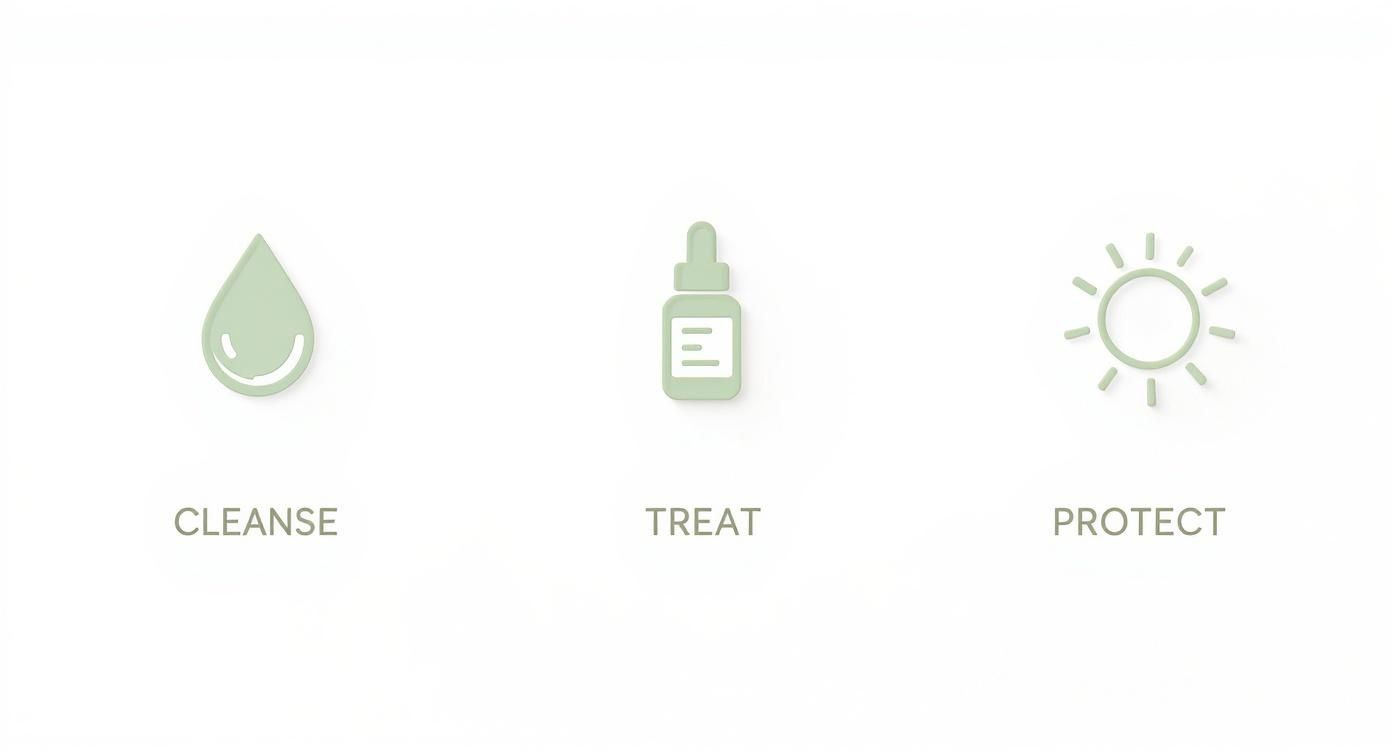
As you can see, a successful routine doesn’t need to be complicated. It just needs to consistently hit these three fundamental pillars to maintain your skin’s health.
The Double Cleanse Difference
If you wear sunscreen (and you absolutely should!), makeup, or just spend your day out and about, a single cleanse often doesn’t cut it. This is where the double cleansing method becomes a real game-changer. It’s a two-step process that ensures your face is perfectly prepped for any treatment serums that follow.
- Start with an Oil-Based Cleanser: Begin with a cleansing oil or a soft balm. These formulas are brilliant at melting away oil-based impurities like SPF, sebum, and makeup without stripping the skin’s natural moisture barrier. Massage it onto dry skin, then add a little water to emulsify it into a milky texture before rinsing clean.
- Follow with a Gentle Water-Based Cleanser: Next, go in with your favourite gentle, non-foaming cleanser. This second step washes away any lingering residue from the first cleanse and any water-based impurities, ensuring your pores are completely clear.
This one-two punch provides a much deeper clean than a single, harsh cleanser ever could, leaving your skin feeling soft and balanced, not tight or irritated.
Introducing Gentle Exfoliants Low and Slow
Exfoliation is non-negotiable for preventing clogged pores, but for sensitive skin, harsh physical scrubs are a definite no-go. Instead, it’s time to embrace gentle chemical exfoliants that dissolve the ‘glue’ holding dead skin cells together, revealing brighter skin without any abrasive friction.
Polyhydroxy Acids (PHAs) are an excellent starting point. Their larger molecular structure means they can’t penetrate the skin as deeply as other acids, making them much less likely to cause irritation. Another fantastic option is mandelic acid, a gentle AHA that’s known for tackling both acne and the post-inflammatory pigmentation it can leave behind. If you’re new to this, our guide on how to use mandelic acid is a great place to start.
The golden rule for introducing any new active is to go ‘low and slow’. Start by using your chosen exfoliant just once or twice a week at night. Pay close attention to how your skin responds. Only think about increasing the frequency if your skin feels completely comfortable and happy.
The Retinoid Sandwich for Sensitive Skin
Retinoids are a gold-standard ingredient for tackling acne, but their reputation for causing dryness and irritation often puts people off. The good news is, you don’t have to miss out. First, choose a gentler form of retinoid. Look for products containing Granactive Retinoid (Hydroxypinacolone Retinoate) or retinaldehyde (retinal), which are known to be far more tolerable than traditional tretinoin or retinol.
Next, you need to adopt the ‘sandwich method’. This simple buffering technique is a lifesaver for incorporating retinoids without the dreaded peeling and redness.
The technique involves just three simple layers:
- Apply a thin layer of a simple, hydrating moisturiser to clean, dry skin.
- Wait a few minutes for it to absorb, then apply your retinoid product.
- Finish by sealing it all in with another layer of your moisturiser.
This clever hack creates a protective barrier that allows the retinoid to work its magic more gently, making it an essential technique for anyone with reactive skin.
Finishing with a Barrier-Repairing Night Cream
The final step in your evening routine is to lock everything in with a nourishing night cream. Your skin does the vast majority of its repair work while you sleep, so this is the time to give it the tools it needs to rebuild and strengthen its natural barrier.
Look for a moisturiser that is rich in ceramides. These are lipids (fats) that are naturally found in your skin and are absolutely fundamental to a healthy barrier function. A cream packed with ceramides, cholesterol, and fatty acids will help replenish what a compromised barrier is so often lacking.
Other brilliant, skin-soothing ingredients to look for include:
- Squalane: A wonderfully lightweight, non-comedogenic oil that provides excellent moisture without feeling heavy.
- Glycerin: A classic humectant that draws water into the skin like a magnet, keeping it plump and hydrated.
- Shea Butter: A rich emollient that soothes and nourishes, making it ideal for a comforting night cream.
By finishing with a robust, barrier-focused moisturiser, you ensure you wake up with skin that feels calmer, looks more rested, and is better equipped to handle the day ahead.
Your Ingredient Guide for Clear, Calm Skin
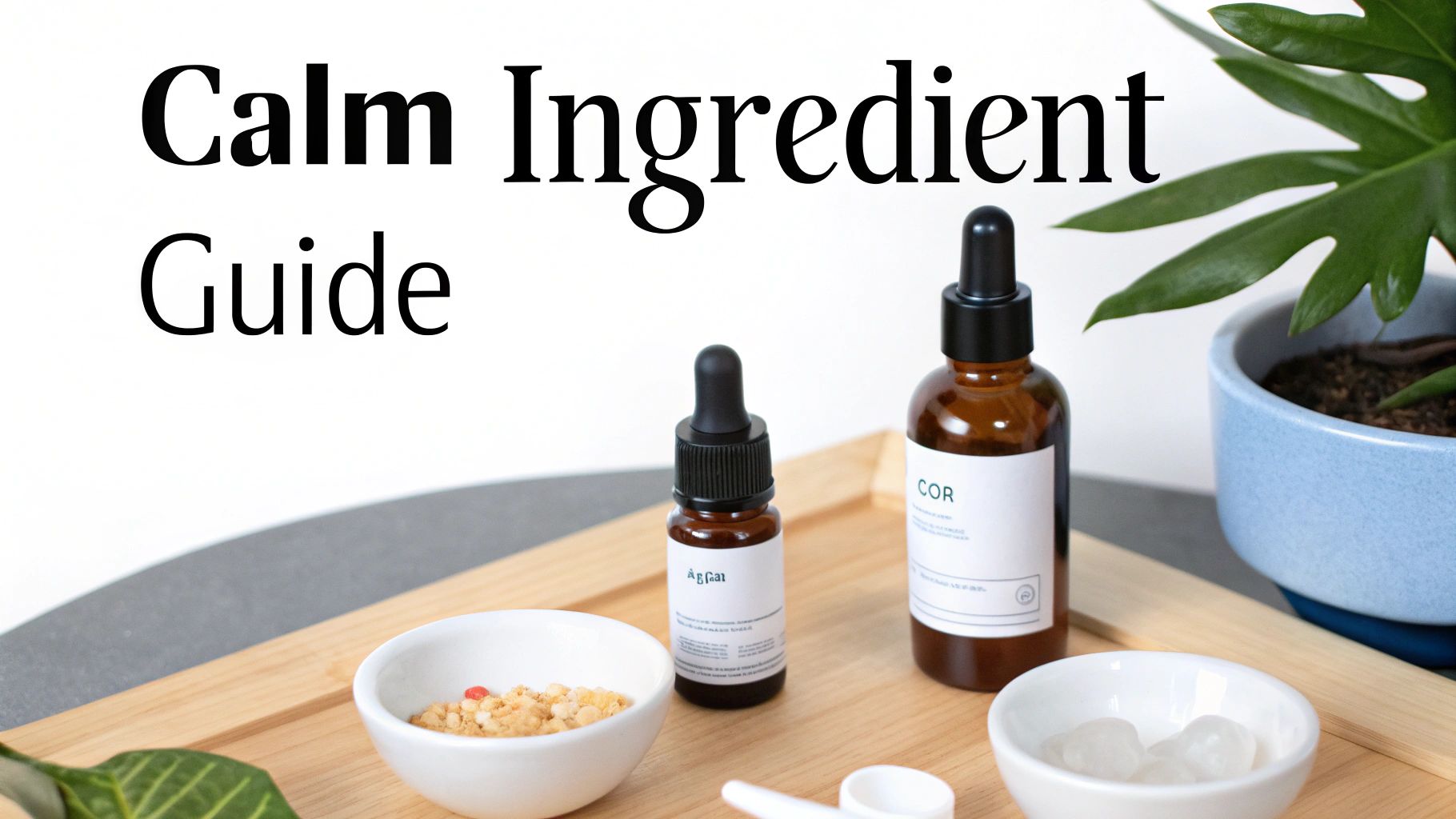
Trying to read an ingredient list can feel like you’re deciphering a secret code. When your skin is reactive, knowing what to embrace—and what to run from—is the key to finally building a routine that works. This guide will help you become a savvy label-reader, so you can choose products that genuinely soothe and clear your sensitive, acne-prone skin.
The good news is, you’re not alone. The demand for gentle yet effective skincare is growing fast. The UK facial care market was valued at around $339.3 million (USD) and is set to climb past $612 million by 2035. This shows a huge shift towards smarter, more targeted solutions, which ultimately means more and better options for us.
Green Flag Ingredients To Look For
Think of these ingredients as your skin’s best mates. They’re proven to tackle the root causes of sensitivity and acne—inflammation, excess oil, and a damaged barrier—without adding to the irritation. When you see these on a label, you can feel much more confident about the product.
- Azelaic Acid: This gentle acid is a real multi-tasker. It calms inflammation and redness, helps to unclog pores, and can even fade those stubborn post-acne marks that hang around long after a spot has gone.
- Niacinamide (Vitamin B3): A total superstar for regulating oil production. Niacinamide also strengthens the skin barrier and has fantastic anti-inflammatory properties, helping to keep your skin balanced and resilient.
- Ceramides: These are literally the building blocks of your skin barrier. Using moisturisers rich in ceramides helps repair damage, lock in precious moisture, and dial down overall sensitivity.
- Centella Asiatica (Cica): Known for its incredible soothing and healing powers, Cica is perfect for calming down angry, inflamed breakouts and taking the edge off persistent redness.
Of course, what you put on your skin is only half the story. Understanding which nutrients nourish your skin from the inside out is also a game-changer. Learning about the best vitamins for skin can beautifully complement your topical routine.
Your Shopping Takeaway: Always prioritise products where these calming ingredients are high up on the list. A serum with niacinamide as the second or third ingredient will be far more effective than one where it’s listed last, after all the preservatives.
Ingredient Guide for Sensitive Acne-Prone Skin
To make things easier, I’ve put together a quick cheat sheet. Think of it as a simple “green flag, red flag” system for scanning ingredient lists when you’re shopping.
| Ingredient Category | Green Flag Examples (Safe & Beneficial) | Red Flag Examples (Potential Irritants) |
|---|---|---|
| Exfoliants | Azelaic Acid, Mandelic Acid, Lactic Acid (low %), PHA (Polyhydroxy Acids) | Glycolic Acid (often too strong), Physical Scrubs (Walnut, Apricot) |
| Hydrators & Soothers | Ceramides, Hyaluronic Acid, Centella Asiatica (Cica), Niacinamide, Glycerin | Fragrance/Parfum, Essential Oils (Lavender, Peppermint, Citrus) |
| Cleansing Agents | Coco-Glucoside, Decyl Glucoside, Cocamidopropyl Betaine (gentle surfactants) | Sodium Lauryl Sulfate (SLS), Sodium Laureth Sulfate (SLES) |
| Alcohols | Cetyl Alcohol, Stearyl Alcohol, Cetearyl Alcohol (fatty alcohols; moisturising) | Alcohol Denat., SD Alcohol, Isopropyl Alcohol (drying alcohols) |
This table isn’t exhaustive, but it covers the most common ingredients you’ll encounter. Getting familiar with these will save your skin a lot of unnecessary stress and help you build a routine that truly supports its health.
Red Flag Ingredients To Avoid
Just as crucial as knowing what to use is knowing what to avoid. Certain ingredients are notorious for triggering irritation, making both sensitivity and breakouts worse. Steering clear of these is a non-negotiable step in getting your skin back on track.
It’s important to remember that not all alcohols are bad news; “fatty” alcohols like Cetyl Alcohol are actually beneficial moisturisers. The ones to watch out for are the short-chain, drying types that strip your skin.
Likewise, while harsh physical scrubs are out, you can still get amazing results from gentle chemical exfoliation. A professional might even recommend a carefully managed https://beautypage.co.uk/chemical-peel-for-sensitive-skin/ using milder acids like mandelic or lactic acid to get the job done without irritation.
No matter what, always patch-test new products on a small area before applying them all over your face. Your skin is unique, and this simple step can prevent a full-blown reaction.
Lifestyle Choices That Impact Your Skin

To get consistently calm and clear skin, you have to look beyond the products you’re patting on your face. Your daily habits and internal environment play a massive part in whether you’re triggering inflammation or creating a state of balance. The very best skincare for sensitive acne prone skin is an approach that connects what you do every day to how your skin behaves.
Many people are surprised to discover a strong link between their diet and their breakouts. While the science is still evolving and is highly individual, some definite patterns have emerged. High-glycaemic foods—think white bread, sugary snacks, and certain processed items—can cause a spike in your blood sugar. This can kick off a hormonal cascade that ramps up oil production and inflammation, creating the perfect storm for acne.
Likewise, some people find that dairy, especially skimmed milk, is a trigger for them. The point isn’t to demonise certain foods, but to become a detective for your own body. If you suspect a connection, try cutting out a potential trigger for a few weeks and just observe your skin. Reintroduce it and see what happens. This mindful approach helps you make smart choices without restricting yourself unnecessarily.
The Undeniable Role of Stress
Stress is one of the biggest, yet most overlooked, triggers for acne. When you’re stressed, your body pumps out more cortisol, the “stress hormone.” A rise in cortisol can send your oil glands into overdrive, leading to greasier skin and clogged pores. It’s a direct physiological response that explains why you might suddenly break out during a hectic week at work or before a big event.
This is why managing your stress is a crucial part of any good skincare routine. It doesn’t mean you need a complete life overhaul; small, consistent practices can make a world of difference.
- Mindful Moments: Even just five minutes of deep breathing or meditation can help lower cortisol levels and bring a sense of calm to your entire system.
- Gentle Movement: Activities like yoga, a brisk walk, or a good stretch release endorphins and reduce stress without putting too much strain on your body.
- Prioritise Sleep: Your skin does most of its repair work overnight. Aiming for 7-9 hours of quality sleep is non-negotiable for healing and taming inflammation.
Even things beyond your direct control, like your bedding, can affect your skin. It’s worth exploring helpful tips on choosing bedding for sensitive skin to minimise potential irritation from friction or trapped bacteria.
A Practical Takeaway: Managing stress isn’t just good for your mental health; it’s a powerful tool for your skin. Integrating small, calming rituals into your day, like a gentle facial massage, can also be incredibly beneficial. You can dive into the world of facial massage rituals to help release built-up tension.
Knowing When to Seek Professional Guidance
While a solid at-home routine and mindful lifestyle changes can get you far, sometimes you need to call in the experts. If your acne is persistent, painful, or is really starting to affect your self-esteem, it’s time to book an appointment with a dermatologist or a qualified aesthetician. They can offer treatments that give your home care a gentle, but effective, boost.
There are fantastic gentle in-clinic options designed specifically to treat acne without making sensitivity worse. These aren’t the aggressive, skin-stripping peels of the past; modern treatments always prioritise your skin’s health and barrier function first.
- LED Light Therapy: This is a non-invasive treatment that uses different wavelengths of light to tackle skin concerns. Blue light is brilliant at killing off acne-causing bacteria, while red light helps to reduce inflammation and speed up healing.
- Mandelic or Lactic Acid Peels: These are much gentler alternatives to stronger acids like glycolic. Their larger molecule size means they don’t penetrate as deeply, so they offer surface exfoliation and decongestion with a much lower risk of irritation.
A professional can put together a personalised plan, helping you navigate your unique skin challenges with real expertise. Think of them as a valuable partner on your journey to achieving a healthy, resilient complexion.
Got Questions? Let’s Get Them Answered
Trying to figure out skincare for sensitive, acne-prone skin can feel like a guessing game. Even when you think you’ve got a routine dialled in, questions inevitably pop up. Here, I’ll tackle some of the most common ones I hear, giving you clear, straightforward advice to help you feel more confident about your skin.
Is This a Breakout or Just Irritation?
This is a brilliant question, and knowing the difference is key. An irritation breakout, which is really a form of contact dermatitis, usually shows up fast after you try a new product. You might see small, uniform red bumps, and the area often feels itchy, burny, or starts to peel.
Acne, on the other hand, usually takes its time to develop. It can look like a mix of things – whiteheads, blackheads, or those deeper, sore cysts.
So, if you tried a new serum last night and woke up to a face full of tiny red bumps, that’s almost certainly your skin telling you it didn’t like an ingredient. It’s a reaction, not a typical acne flare-up.
Should I Power Through a “Skin Purge”?
Ah, the infamous purge. It’s a real thing! When you start using an active ingredient that speeds up skin cell turnover (like retinoids or chemical exfoliants), it can push all the gunk that was brewing under the surface out at once. It looks like a sudden explosion of spots, but typically in the areas where you usually break out anyway. This whole process should calm down within 4-6 weeks.
But here’s the catch: if you’re breaking out in new places, or if your skin is just plain angry – intensely red, itchy, and uncomfortable – that’s not purging. That’s irritation.
My Takeaway: A purge shows an ingredient is working, but it should never feel unbearable. If the reaction is severe or drags on for more than six weeks, it’s time to stop and get some professional advice.
Are Spot Treatments Safe for Sensitive Skin?
Yes, they absolutely can be, but you have to be clever about it. So many classic spot treatments use high-strength benzoyl peroxide or salicylic acid. For sensitive skin, these often do more harm than good, leaving you with a dry, flaky red patch that’s even more noticeable than the original spot.
Your best bet is to look for gentler heroes.
- Azelaic Acid: A fantastic ingredient for calming inflammation and tackling bacteria without being aggressive.
- Sulphur Treatments: These are great for drying out a blemish, often overnight, with a much lower risk of causing irritation.
- Hydrocolloid Patches: Honestly, these are a game-changer. They’re completely non-irritating. They just sit on the spot, drawing out the fluid, protecting it from bacteria (and your picking fingers!), and creating the perfect little healing environment.
How Often Should I Actually Be Exfoliating?
With sensitive skin, this is a classic “less is more” situation. Going overboard with exfoliation is probably the quickest way to wreck your skin barrier, which just leads to more sensitivity and more breakouts. It’s a vicious cycle.
I always recommend starting with a very gentle chemical exfoliant, like a PHA (polyhydroxy acid) or Mandelic Acid, just once or twice a week. That’s it.
Listen to your skin the next day. Does it feel tight, look red, or seem more sensitive than usual? If so, pull back. The goal here is to gently nudge dead skin cells out of the way to keep pores clear, not to aggressively strip your skin. A healthy, calm glow tells you you’ve hit the sweet spot.
At Beauty Page, we get the delicate balance needed to look after reactive skin. Take a look at our curated collection of professional-grade formulas, all designed to give you real results while respecting your skin’s barrier. Find your perfect gentle solution at https://beautypage.co.uk.