Free shipping £150+ Orders
How to Treat Sun Damaged Skin A Dermatologist Guide
When it comes to treating sun-damaged skin, there’s no single magic bullet. It’s a two-pronged attack: a consistent at-home routine packed with powerful ingredients like antioxidants and retinoids, paired with professional treatments to tackle the more stubborn damage.
But none of that matters without the true cornerstone of any successful plan: strict, daily sun protection. This is non-negotiable. It stops further damage in its tracks and gives your skin a fighting chance to repair itself.
What Sun Damaged Skin Actually Looks Like
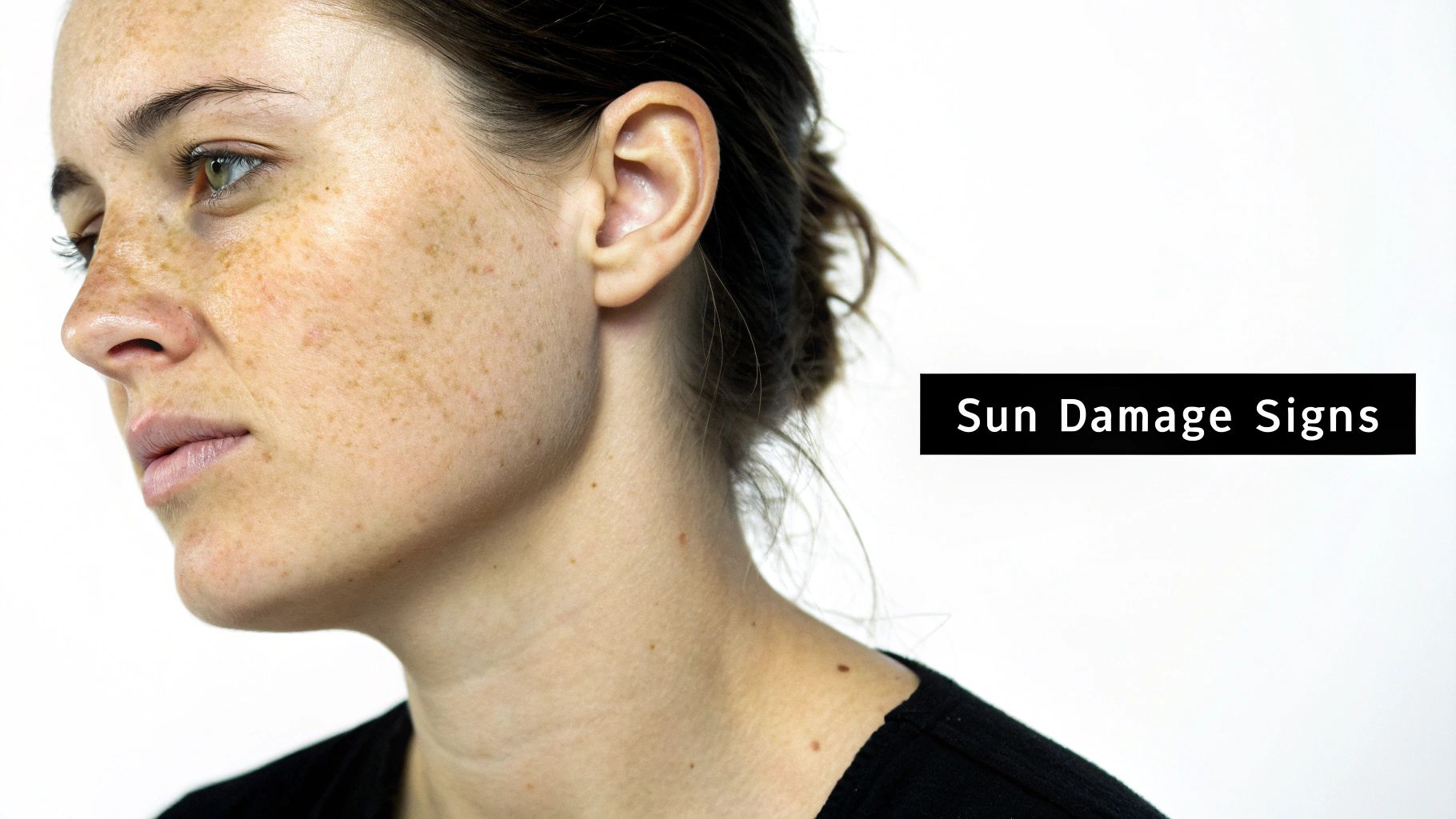
Before we can even think about a treatment plan, we need to know what we’re looking at. The term for this is photoageing, and it goes so much deeper than just a bad sunburn from your holiday. Think of it as the sum total of all the ultraviolet (UV) radiation your skin has soaked up over the years, slowly chipping away at its structure and health.
When we talk about premature ageing, what we’re really talking about, for the most part, is sun damage. It’s the number one culprit behind changes in skin tone, texture, and firmness.
The Visible Signs of Photoageing
The tell-tale signs of sun damage often sneak up on you. You might spot a few subtle changes here and there, but over time, they become much more obvious. These signs are your skin’s distress signal, telling you its vital support system—the collagen and elastin—is in trouble.
Keep an eye out for these key visual cues:
- Uneven Pigmentation: This is the classic sign everyone knows. It can show up as small freckles, larger “sunspots” (solar lentigines), or even blotchy patches of hyperpigmentation on the face, décolletage, and the backs of your hands.
- Fine Lines and Wrinkles: UV rays are notorious for breaking down the collagen and elastin fibres that give our skin its youthful bounce. This leads directly to premature lines and wrinkles, particularly around the eyes and mouth where the skin is thinner.
- A Rough, Leathery Texture: If your skin feels coarse, dry, or bumpy, that’s another red flag. This textural shift is a direct result of cellular damage and a sluggish skin cell turnover rate.
- Loss of Elasticity: As the elastin network degrades, your skin loses that ability to snap back. You might notice this as sagging or laxity, especially around the jawline and on the cheeks.
Quick Guide to Identifying Sun Damage
To help you get a clearer picture, here’s a quick breakdown of what you might be seeing on your skin. Recognising the specific type of damage is the first step in choosing the right treatment path.
| Type of Damage | Appearance | Primary Cause |
|---|---|---|
| Solar Lentigines | Flat, well-defined brown spots (often called “sunspots” or “age spots”) | Chronic UV exposure stimulating melanin production |
| Fine Lines/Wrinkles | Creases and lines, especially around the eyes and mouth | Breakdown of collagen and elastin fibres by UV rays |
| Rough Texture | Uneven, dry, or leathery-feeling skin surface | Slower cell turnover and accumulated cell damage |
| Loss of Firmness | Sagging or loose skin, particularly on the cheeks and jawline | Degradation of the skin’s elastin network |
Knowing what you’re dealing with helps demystify the treatment process and sets you on the right track for real, visible improvement.
Understanding the Deeper Impact
What you see on the surface is just the tip of the iceberg. At a cellular level, repeated sun exposure kicks off an inflammatory cascade and unleashes a swarm of unstable molecules called free radicals. These wreak havoc on healthy skin cells and even damage our DNA.
This isn’t just a cosmetic issue; it’s a significant health concern. In a 2022 YouGov study, a staggering 40% of British people admitted to getting sunburnt at least once during the year. This widespread exposure contributes to over 16,700 new melanoma cases annually in the UK.
Effectively tackling these issues demands a multi-pronged approach. If discolouration is your main concern, it’s worth exploring the top game-changing pigmentation treatments available for more targeted solutions. Recognising the signs early is your best defence and the first step toward building a skincare plan that not only restores your skin but also protects it for the future.
Your At-Home Sun Damage Repair Toolkit
If you’re serious about tackling sun damage, your at-home routine is where the real work happens. This isn’t about chasing a complicated, ten-step regimen you’ll abandon in a week. It’s about being consistent with a few powerhouse ingredients that have the science to back them up.
Think of it as building a small but mighty team, with each product chosen to target a specific aspect of sun damage—from pigmentation and rough texture to a loss of that healthy bounce. Let’s break down the three essentials.
The Antioxidant Shield: Vitamin C
Every morning, you need to arm your skin for the day ahead, and nothing does that better than a good Vitamin C serum. It’s a brilliant antioxidant that acts like a bodyguard, neutralising the free radicals that UV rays generate. These are the nasty little molecules responsible for breaking down your collagen and accelerating ageing.
But Vitamin C is more than just a defensive player. It actively helps to brighten the skin by getting in the way of melanin production. This means it can help fade those stubborn brown spots and prevent new ones from popping up. For real results, look for a well-formulated L-ascorbic acid serum with a concentration between 10-20%. Applied daily, it makes a huge difference to your skin’s overall brightness and clarity.
My Take: I tell my clients to think of Vitamin C as their daily skin insurance. It protects what you have while actively repairing past damage. Applying it right before your sunscreen in the morning is a non-negotiable step for anyone wanting to get a handle on sun damage.
The Resurfacers: Chemical Exfoliants
One of the most common complaints I hear about sun-damaged skin is that it feels rough and looks dull. That’s because sun exposure throws your natural cell turnover process out of whack. Chemical exfoliants are your secret weapon here. They work by gently dissolving the bonds holding old, damaged cells to the surface, revealing the smoother, healthier skin hiding underneath.
For this job, alpha-hydroxy acids (AHAs) are your best bet.
- Glycolic Acid: This one has the smallest molecule, so it can get in deep to really break up pigmentation and kickstart collagen production. It’s my go-to for clients dealing with both texture and sunspots.
- Lactic Acid: A slightly gentler option, lactic acid exfoliates beautifully but also helps hydrate the skin. It’s a fantastic starting point if your skin is on the drier or more sensitive side.
- Mandelic Acid: With its larger molecule size, this is the mildest of the bunch. It’s perfect for skin that gets irritated easily or is prone to discolouration after a breakout.
Try weaving an AHA into your evening routine two or three times a week to start. If your skin is quite delicate, it’s all about finding that sweet spot between effective and overwhelming. You can learn more about finding the right balance by exploring products designed for gentle exfoliation for sensitive skin.
The Gold Standard: Retinoids
When we talk about ingredients with decades of clinical proof for reversing sun damage and signs of ageing, retinoids are in a league of their own. This family of Vitamin A derivatives works on a deep, cellular level to put your skin cell turnover into high gear.
By speeding everything up, retinoids push fresh, healthy cells to the surface while helping you shed the old, pigmented, and damaged ones. More importantly, they’re one of the few ingredients proven to stimulate the production of new collagen—the very protein that UV exposure relentlessly destroys. This is what helps firm up the skin and visibly smooth out the fine lines and wrinkles characteristic of photoageing.
If fine lines are your primary concern, exploring various approaches on how to reduce wrinkles naturally can complement a retinoid-based regimen.
Retinoids come in a few different strengths, which can feel confusing at first:
- Retinyl Esters (like Retinyl Palmitate): The gentlest form, ideal for total beginners or incredibly sensitive skin.
- Retinol: The most widely available over-the-counter option. It hits that sweet spot of being effective without being too aggressive for most people.
- Retinaldehyde (Retinal): A step up from retinol. It works faster because it’s closer to the form your skin can actually use.
- Tretinoin (Retinoic Acid): This is the prescription-strength powerhouse. It delivers the most significant results but also carries the highest potential for irritation.
The golden rule with retinoids is always start low and go slow. Pick a low-concentration retinol and use it just twice a week at night. Give your skin a few weeks to get used to it before you even think about increasing the frequency. This slow, steady approach is the key to getting all the incredible benefits without compromising your skin barrier.
When to Consider Professional Skin Treatments
https://www.youtube.com/embed/PcUnoFCxmsw
A consistent at-home routine is absolutely your first line of defence against sun damage. But let’s be realistic—sometimes, serums and creams just can’t undo what years of sun exposure have done.
When you’re dealing with stubborn pigmentation that won’t fade, significant textural changes, or deeper lines that have settled in, it’s probably time to explore professional treatments. Think of it as calling in the specialists when your daily efforts have hit a plateau. These in-clinic procedures work on a much deeper level to deliver the kind of results topical products simply can’t achieve.
Understanding Chemical Peels for Sun Damage
There’s a good reason chemical peels are a cornerstone of clinical skincare. They use specialised acid solutions to lift away the damaged, outer layers of skin, essentially kick-starting your body’s natural repair process. This prompts a wave of fresh cell turnover, revealing the smoother, more evenly-toned skin that’s been hiding underneath.
The real magic of peels lies in their customisation. A skilled practitioner can select the right type and strength of acid to precisely target your specific concerns.
- Superficial Peels: Using gentle alpha-hydroxy acids (AHAs) like glycolic or lactic acid, these are perfect for tackling mild issues like dullness and faint discolouration with almost no downtime.
- Medium Peels: These typically involve trichloroacetic acid (TCA) and go a bit deeper. They’re highly effective for noticeable sunspots, a rough skin texture, and fine lines.
- Deep Peels: Reserved for severe photoageing, these peels use powerful agents like phenol. The results can be dramatic, but they also come with a significant recovery period.
Before escalating to professional options, this decision tree can help you visualise which at-home active ingredient aligns with your main concern, building a solid foundation first.
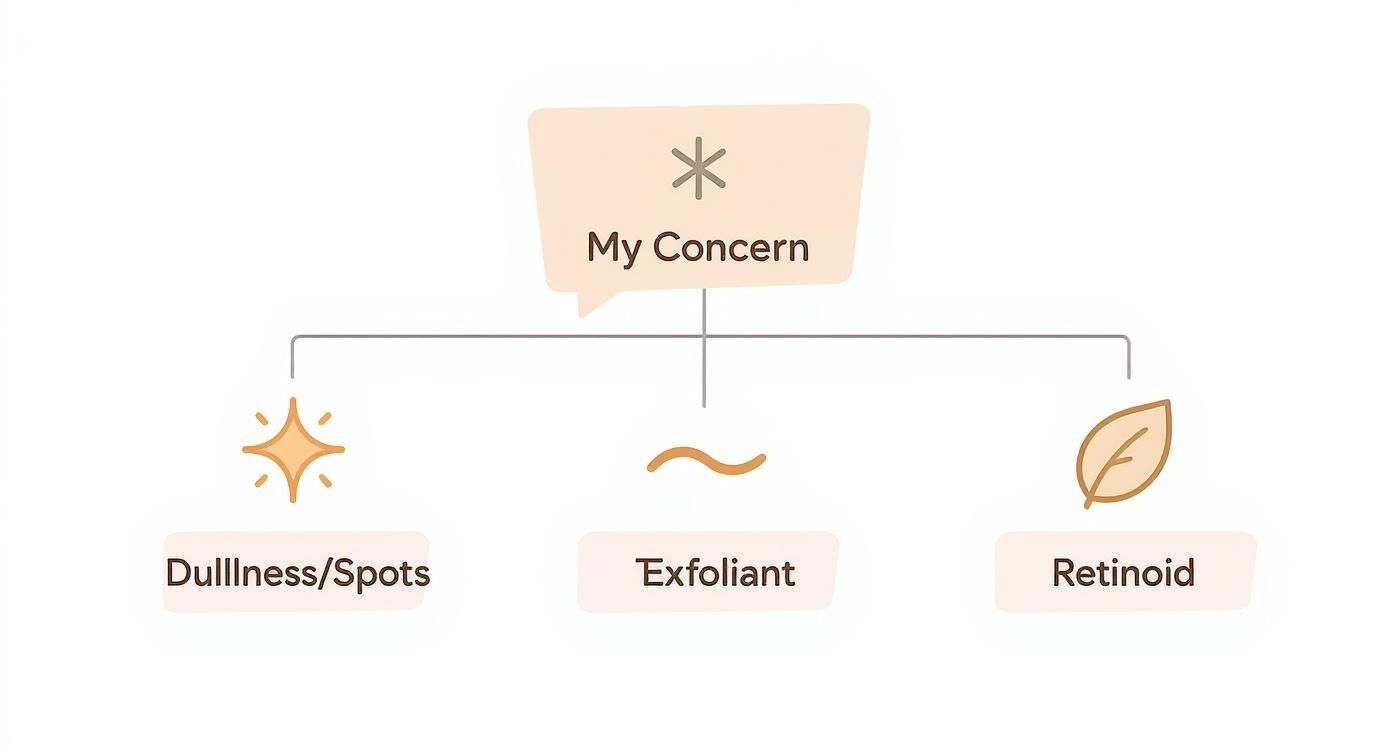
As the graphic shows, for everyday concerns like dullness or fine lines, ingredients like Vitamin C, exfoliants, and retinoids are the go-to first steps in any effective home-care plan.
Laser Treatments and Light Therapy
When pigmentation and texture are your main battles, light-based technologies are incredibly powerful tools. These treatments use focused energy to either shatter unwanted pigment or stimulate collagen renewal with pinpoint accuracy.
The two workhorses in this category are Intense Pulsed Light (IPL) and fractional lasers. They might sound similar, but they address sun damage in very different ways.
Intense Pulsed Light (IPL), often called a photofacial, uses broad-spectrum light to seek out and absorb pigment. Think of it as a targeted flash of light that zaps away brown spots, freckles, and even redness from broken capillaries.
The light energy converts to heat within the pigmented cells, causing them to break down. Over the following week or so, these treated spots darken and then flake off, leaving clearer, more even-toned skin behind. It’s brilliant for surface-level discolouration.
Fractional Lasers, on the other hand, take a completely different approach. They create thousands of microscopic treatment zones deep within the skin, leaving the surrounding tissue untouched. This “fractional” approach triggers a massive healing response, prompting your skin to generate new, healthy collagen from the inside out. This makes it the gold standard for tackling textural issues like wrinkles and loss of firmness.
Comparing Professional Sun Damage Treatments
To help you navigate the options, here’s a look at how these popular in-clinic treatments stack up against each other. Each has its own strengths, so the “best” one really depends on what you’re trying to fix.
| Treatment | Best For | Average Downtime | Estimated Cost (per session) |
|---|---|---|---|
| Superficial Chemical Peel | Dullness, mild discolouration, fine lines | 1-3 days (mild redness/flaking) | £100 – £300 |
| IPL (Photofacial) | Sunspots, freckles, redness, broken capillaries | 3-5 days (darkening of spots, mild swelling) | £200 – £500 |
| Fractional Laser | Wrinkles, poor texture, acne scars, laxity | 5-7 days (redness, swelling, peeling) | £500 – £1,200 |
| Microneedling | Fine lines, texture issues, overall rejuvenation | 1-3 days (redness similar to sunburn) | £200 – £400 |
This table is a starting point, but remember that costs and downtime can vary based on your location and the specifics of your treatment plan. A consultation with a qualified professional is the only way to get a truly accurate picture.
Microneedling: The Collagen Stimulator
Another fantastic option is microneedling, sometimes called collagen induction therapy. The procedure uses a device with ultra-fine, sterile needles to create thousands of tiny, controlled micro-injuries in the skin.
Don’t let the word “injury” scare you. These microscopic channels are just enough to signal your body to switch on its natural wound-healing process. This results in a surge of new collagen and elastin—the very proteins that UV radiation works so hard to destroy.
The outcome? Smoother, firmer, and more resilient skin. Microneedling is particularly brilliant for:
- Softening the appearance of fine lines and wrinkles.
- Refining a rough or uneven skin texture.
- Improving the look of some types of scarring.
Because it harnesses your body’s own regenerative power, the results emerge gradually and look incredibly natural. For many, it’s the perfect way to reset the skin’s texture without heat, light, or chemicals.
Why Tanning Beds Accelerate Skin Damage
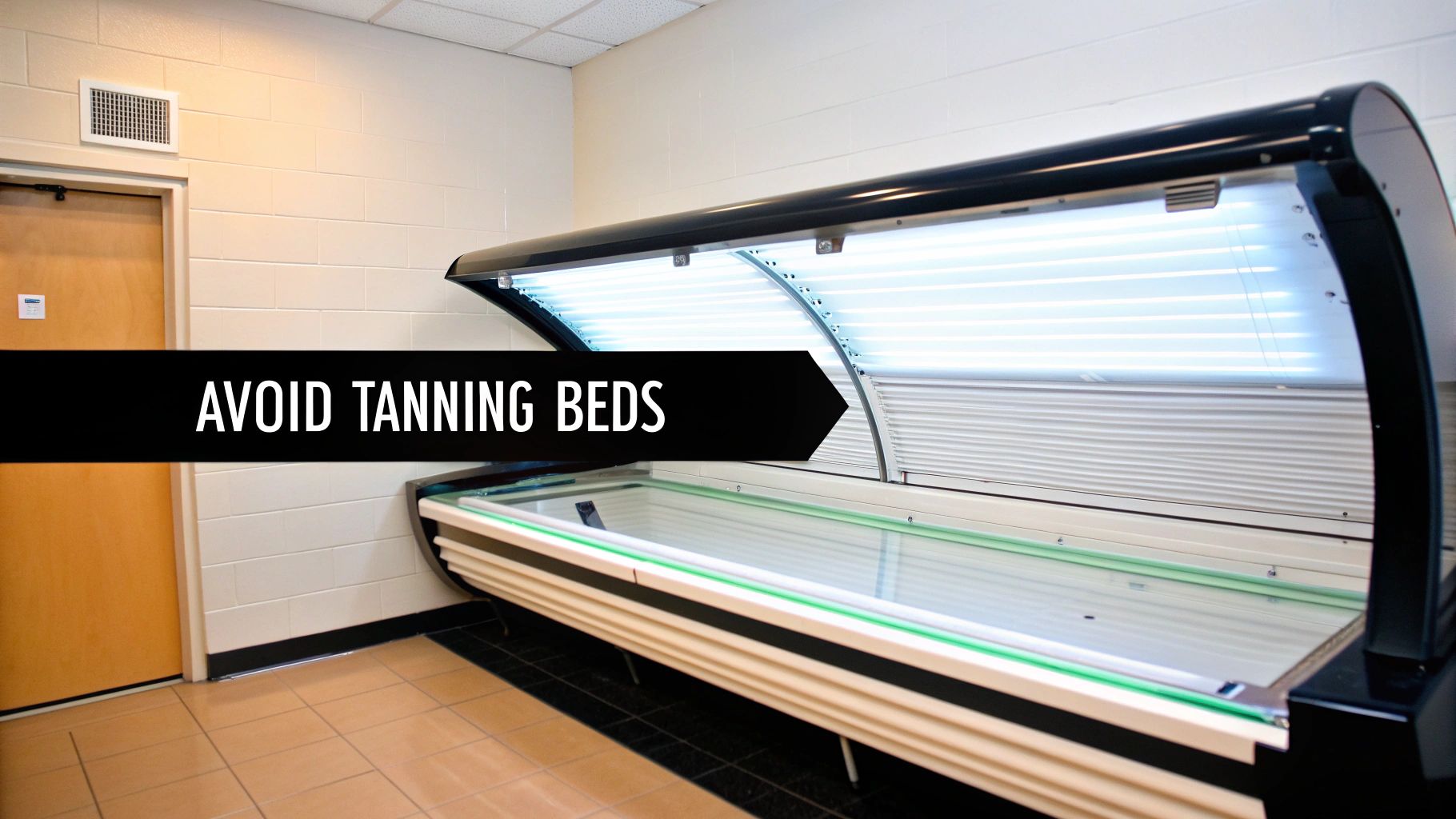
Let’s be blunt: the idea that a “base tan” from a sunbed offers any real protection is one of the most persistent and dangerous myths in skincare. The truth is far more stark. Sunbeds bombard your skin with a highly concentrated blast of ultraviolet (UV) radiation, dramatically speeding up every single aspect of skin damage.
We’re not just talking about a surface-level issue. This is about deep, cellular harm. The intense UV exposure from a single tanning session can be many times stronger than the midday sun, kicking off a massive inflammatory response and causing severe DNA damage within your skin cells.
UVA Rays: The Silent Ageing Accelerant
Unlike the sun, which gives off a mix of UVA and UVB rays, most tanning beds are engineered to pump out almost exclusively UVA radiation. The reason? UVA is incredibly efficient at forcing your skin to produce melanin, which creates that tanned look. But this comes at a steep price.
UVA rays penetrate much deeper into the skin’s dermis than their UVB counterparts. Once they get there, they systematically shred the vital collagen and elastin fibres—the very proteins that give your skin its structure, firmness, and bounce. This targeted destruction leads directly to:
- Premature Wrinkles: As the skin’s support network collapses, fine lines and deep-set wrinkles appear years ahead of schedule.
- Loss of Firmness: Skin loses its ability to snap back, leading to noticeable sagging and a loss of facial contour.
- Leathery Texture: Over time, the cumulative damage results in a coarse, rough texture that is the classic calling card of severe photoageing.
Key Takeaway: A tan from a sunbed isn’t a healthy glow. It’s the visible evidence of your skin’s trauma response to intense DNA damage. There is absolutely no such thing as a “safe” tan from an artificial UV source.
The Overwhelming Cancer Risk
The connection between sunbed use and skin cancer isn’t just a theory; it’s an undeniable, extensively documented fact. This isn’t a minor risk, either. It’s a major public health concern, particularly for younger people.
Research from Melanoma Focus paints a worrying picture, revealing that approximately 28% of UK adults use sunbeds. This habit is a direct contributor to an estimated 440 melanoma cases and 100 deaths each year in the UK alone. You can learn more about the rising rates of skin cancer on the Melanoma Focus website.
Think about this: using a tanning bed before you turn 35 increases your risk of developing melanoma, the most lethal form of skin cancer, by an astonishing 75%. The concentrated UV dose simply overwhelms your skin’s natural ability to repair itself, which allows damaged cells to mutate and multiply out of control.
Avoiding sunbeds is a completely non-negotiable step in any serious plan to treat sun-damaged skin and protect your long-term health. The damage they inflict is often profound, requiring a dedicated combination of at-home care and professional treatments to even begin to manage. Exploring the full range of 10 game-changing skincare treatments for radiant, healthy skin can offer a clearer understanding of the solutions available for reversing the visible signs of this kind of damage.
The Best Treatment Is Smart Sun Protection
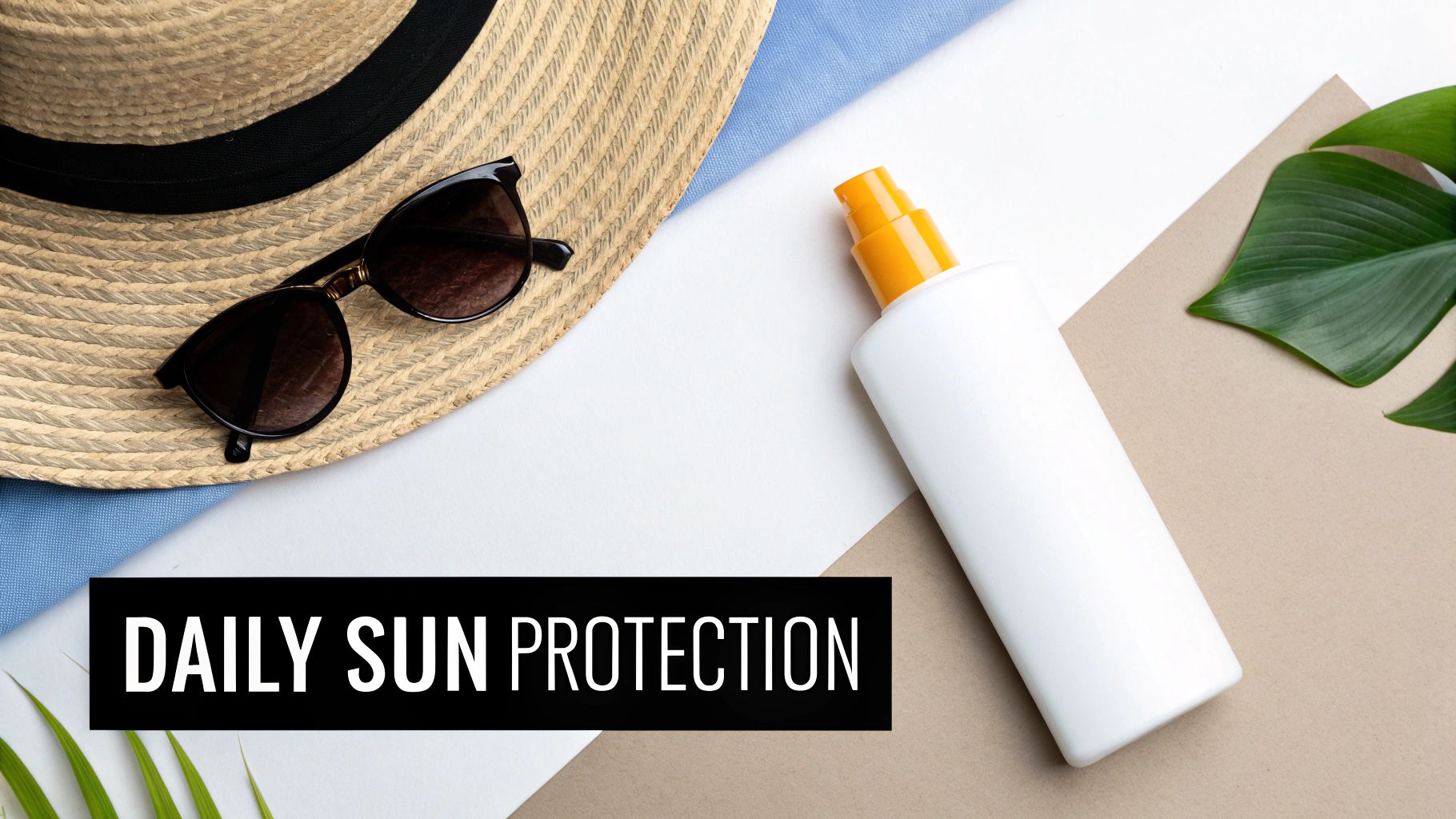
While we’ve walked through some powerful ways to repair your skin, it’s all for nothing if we don’t address the root of the problem. Pouring time and money into reversing sun damage is a losing battle if you aren’t rigorously preventing new damage from happening every single day.
Let’s be clear: the most sophisticated laser or potent serum in the world can’t hold a candle to the effectiveness of consistent, intelligent sun protection. This isn’t about just dodging a burn on your summer holiday; it’s about making sun protection a non-negotiable daily habit. That’s the only way to truly safeguard the results of your treatments and stop the cycle of damage for good.
Decoding Sunscreen Labels
The sunscreen aisle can feel overwhelming, but a little knowledge goes a long way. If you can learn to spot two key terms, you’ll cut through the marketing fluff and find what your skin actually needs.
Broad-Spectrum Protection: This is the most important phrase on the bottle. It’s your guarantee that the formula has been tested and proven to shield you from both UVA and UVB rays. Here’s a simple way I explain it to clients:
- UVB rays are the “burning” rays. They’re shorter, more intense, and are the primary culprit behind sunburn and most skin cancers.
- UVA rays are the “ageing” rays. They penetrate deeper, silently chipping away at your collagen and elastin. This is what leads to wrinkles, laxity, and that leathery texture.
If your sunscreen doesn’t say “broad-spectrum,” you’re leaving your skin wide open to premature ageing, no matter how high the SPF number is.
SPF (Sun Protection Factor): The SPF number tells you how well the product defends against those burning UVB rays. An SPF of 30 blocks about 97% of UVB radiation, while SPF 50 blocks roughly 98%. For everyday use, SPF 30 is the absolute minimum you should reach for. If you’re spending a lot of time outdoors or have fair skin, SPF 50 gives you that crucial extra bit of security.
Need help finding the right one? You can explore our curated collection to find the perfect sunscreen that fits your skin type and lifestyle needs.
Application Is Everything: How to Do It Right
Even the best sunscreen on the market will let you down if it isn’t applied correctly. Honestly, most people are guilty of using far too little, which drastically reduces the protection they think they’re getting.
The rule of thumb I always teach is the “two-finger method” for your face and neck. Squeeze out a line of sunscreen along your index and middle fingers, from the base to the tip. That amount—which is about half a teaspoon—is what you need to achieve the protection level promised on the label.
And it’s not a one-and-done deal. You need to reapply at least every two hours, and even more often if you’ve been swimming, sweating, or towelling off.
It’s a common oversight, even among the pros. A 2023 UK survey found that only 10% of dermatology clinicians actually met the recommended reapplication guidelines. With only 11% of the general public reporting they always use sunscreen, it’s clear this is a critical gap in our skincare habits.
Building a Complete Sun Defence Strategy
Sunscreen is your hero product, but it shouldn’t be your only line of defence. To create a truly robust shield, you need to layer multiple protective strategies to minimise your skin’s total UV exposure.
Think of it as a multi-layered security system for your skin. Each habit provides another barrier, taking some of the pressure off your sunscreen and giving you more complete protection.
Smart Lifestyle Habits for Sun Safety
- Seek the Shade: The sun’s rays are most intense between 10 a.m. and 4 p.m. When possible, plan your outdoor activities for the morning or late afternoon, or at least make sure you have a shady spot to retreat to.
- Wear Protective Clothing: A wide-brimmed hat does wonders for shielding your face, neck, and ears. For even better protection, look for clothing made from tightly woven fabrics or those with a UPF (Ultraviolet Protection Factor) rating.
- Don’t Forget Your Sunglasses: The delicate skin around your eyes is one of the first places to show signs of ageing. A good pair of sunglasses that blocks 99% or more of UV radiation is essential for preventing fine lines and crow’s feet.
Beyond the sun, it’s wise to understand other seasonal skin challenges. Getting familiar with avoiding common skin problems in summer can round out your approach to year-round skin health. By combining these habits with diligent sunscreen use, you shift from simply reacting to damage to proactively preventing it from ever taking hold.
Your Sun Damage Questions, Answered
Starting the journey to heal sun-damaged skin always brings up a lot of questions. It’s completely natural to wonder about how long it will take, whether the results will last, and if what you’re doing is actually working. Let’s tackle some of the most common things people ask, so you can feel clear and confident moving forward.
Knowing what to expect is a massive part of the process. When you have a realistic picture, it’s so much easier to stay consistent and patient—and those are the two secret ingredients for getting real, lasting results.
Can You Genuinely Reverse Sun Damage?
This is the big one, isn’t it? The answer is a hopeful, but realistic, “yes.” While we can’t completely wipe the slate clean and go back in time, we can make a massive difference in your skin’s health and appearance.
It’s better to think of it as a powerful repair process rather than a complete reversal.
- At-Home Care: Ingredients like retinoids really do stimulate new collagen, which helps to soften fine lines. Antioxidants and exfoliants can also fade a remarkable amount of pigmentation and bring back a healthy glow.
- In-Clinic Treatments: Things like lasers and professional peels work by physically removing the damaged outer layers of skin. This forces a deep regeneration process, leading to some pretty dramatic improvements in texture and tone.
So, even if some of the underlying cellular changes stick around, you can absolutely get your skin looking brighter, feeling smoother, and acting healthier. The trick is remembering that consistency is always more important than intensity. A gentle, daily habit will beat an occasional aggressive treatment every single time.
How Long Before I Actually See a Difference?
When it comes to treating sun damage, patience is your best friend. The damage took years to accumulate, and unfortunately, the repair process isn’t instant. Setting realistic expectations right from the start is the key to not getting discouraged.
Here’s a general idea of what you can expect from a consistent at-home routine:
| Timeframe | What You’ll Likely See |
|---|---|
| 4-6 Weeks | You should start to see an initial brightness and a slightly smoother feel as your cell turnover rate kicks up. |
| 3-6 Months | This is the sweet spot where you’ll often notice real changes in pigmentation and fine lines. Those pesky sunspots might start to lighten. |
| 6-12 Months | With dedicated use of powerful ingredients like retinoids, you can expect to see more significant improvements in the skin’s firmness and deeper lines. |
Of course, professional treatments will accelerate this timeline significantly. But the daily work you put in at home is what protects those results and keeps the improvements coming.
A Quick Reality Check: Your skin is a living organ, and it has its own renewal schedule. It takes roughly 28 days for a brand-new skin cell to make its way to the surface. Any treatment worth its salt needs at least one or two of these cycles to start showing you what it can do.
What if My Sun Damage Doesn’t Bother Me Visually?
While the cosmetic side of things is entirely a personal choice, dealing with sun damage is about more than just appearances. The signs you can see—like brown spots or a rough, leathery texture—are really just the tip of the iceberg. They’re external clues to cumulative DNA damage happening deeper within your skin.
Ignoring these signals can have serious health consequences down the road. Sun damage is the number one cause of most skin cancers, including melanoma. By actively treating the visible signs and, crucially, adopting strict sun protection habits, you’re not just improving your complexion. You’re making a direct investment in your long-term health and lowering your risk of much bigger problems.
Ready to build a powerful routine that actively repairs and protects your skin? At Beauty Page, we offer a curated selection of professional-grade serums, exfoliants, and sunscreens to help you achieve your skin health goals. Explore our advanced skincare solutions at https://beautypage.co.uk.