Free shipping £150+ Orders
Gentle Exfoliation for Sensitive Skin A Practical Guide
Exfoliating sensitive skin can feel like walking a tightrope. One wrong move, and you’re left with redness and irritation. But what if I told you the secret isn’t about avoiding exfoliation altogether? It’s about rethinking the entire process with a gentle, barrier-first approach. We’re not looking to attack the skin; we’re aiming to support it. True radiance comes from carefully refining your skin while keeping it calm, happy, and resilient.
The Real Secret to Exfoliating Sensitive Skin

If you have a reactive complexion, the very word “exfoliation” probably conjures up images of stinging, scrubbing, and a beetroot-red face. It’s time to unlearn that. Modern skincare science has completely shifted the perspective on this crucial step. It’s no longer about stripping the skin, but about soothing and strengthening it.
The goal of gentle exfoliation for sensitive skin is simply to lift away the dead cells that cause dullness. The trick is to do this without disrupting the delicate lipid barrier—the natural shield that keeps your skin protected, hydrated, and calm.
Why We’re Moving on From Harsh Scrubs
Let’s be honest: those gritty, abrasive physical scrubs with large, jagged particles have no place in a routine for sensitive skin. They can create tiny micro-tears on the skin’s surface, which is a one-way ticket to inflammation and even more sensitivity. The focus now is on sophisticated formulas that work with your skin, not against it.
This isn’t just a niche trend; it’s a major shift. Here in the UK, the demand for gentle exfoliants is soaring. The market for exfoliating products is set to grow at a compound annual rate of 5.3% through 2035, largely driven by consumers seeking effective solutions that don’t compromise their skin’s health. Think of it less like a deep, abrasive clean and more like a gentle, much-needed reset for your complexion.
“The primary aim of exfoliating sensitive skin isn’t aggressive resurfacing. It’s about creating the optimal environment for skin cells to renew themselves, leading to a naturally calm and radiant appearance over time.”
What Gentle Exfoliation Actually Does for Your Skin
A thoughtful, gentle exfoliation routine delivers so much more than just a smoother texture. It’s a foundational practice that boosts your skin’s overall health. By carefully whisking away that top layer of dead cells, you unlock a whole host of benefits:
- Better Product Absorption: With that barrier of dead cells gone, your expensive serums and moisturisers can finally penetrate properly and do their job. Your whole routine becomes more effective.
- Less Congestion: Gently clearing away buildup helps prevent clogged pores and breakouts, all without triggering irritation.
- Improved Tone and Texture: Over time, consistent, gentle exfoliation helps to soften rough patches and fade discolouration, leaving you with a more even and uniform complexion.
One of the best ingredients for this is mandelic acid. It’s an AHA with a larger molecular size, which means it penetrates the skin more slowly and is far less likely to cause irritation. It’s a real game-changer if you’re new to acids. Discovering the ways a mandelic peel can transform your complexion is a great first step.
Ultimately, mastering this comes down to understanding the core principles of natural skincare for sensitive skin. When every step of your routine works in harmony, you can achieve that long-term radiance without the compromise.
Choosing the Right Exfoliant for Your Skin
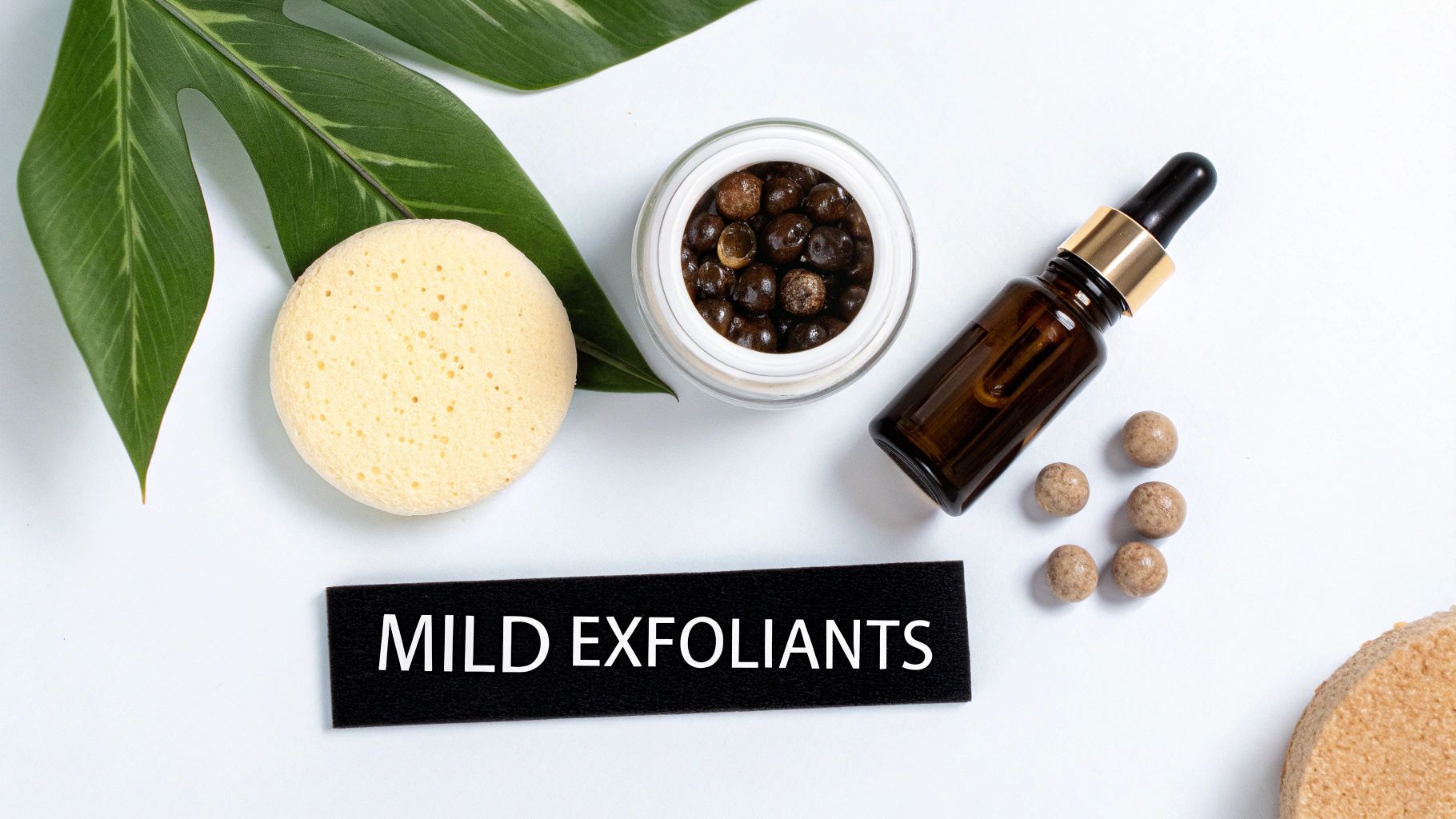
Finding an exfoliant that works with your sensitive skin, not against it, can feel like a real challenge. The market is flooded with options, but for a reactive complexion, the secret lies in knowing which ingredients and methods will respect your skin barrier.
At the end of the day, your choice comes down to two main camps: physical and chemical exfoliants. Let’s break down what that really means for you.
Reconsidering Physical Exfoliation
When you hear “physical exfoliant,” your mind probably jumps straight to those harsh, gritty scrubs we all used in our teens. While it’s absolutely true that anything with large, jagged particles (like crushed nut shells) is a hard pass for sensitive skin, that doesn’t mean all manual methods are out.
It’s all about finding modern, gentler alternatives. Look for products and tools that offer a mild, controlled buffing action instead of an aggressive scrub.
- Konjac Sponges: Made from a porous root vegetable, these soft sponges offer an incredibly gentle exfoliation when used with your go-to cleanser.
- Jojoba Beads: These are nothing like plastic microbeads. They are tiny, perfectly smooth spheres of hardened jojoba oil that simply roll across the skin to lift away dead cells without creating micro-tears.
- Powder Exfoliants: Formulations using rice bran or oat flour are fantastic. You just add a bit of water to turn the powder into a creamy paste, giving you a very subtle sloughing effect.
With these methods, you’re always in charge of the pressure and duration, which makes them a wonderfully safe gateway into exfoliation. It’s also important to remember that a healthy routine goes beyond one product; a key part is understanding and avoiding toxic beauty products across the board.
The Power of Gentle Chemical Exfoliants
For a more thorough and even result, chemical exfoliants are often the best bet for sensitive skin. Don’t let the word “chemical” scare you off. We’re not talking about harsh, stinging peels.
We’re talking about smart, sophisticated acids that work by dissolving the glue that holds dead skin cells together. This allows them to shed naturally, revealing a brighter, smoother complexion underneath.
The skincare industry has certainly taken note. The UK exfoliators market, which heavily features products for gentle exfoliation for sensitive skin, was valued at USD 6.85 billion in 2023 and is expected to climb to USD 11.5 billion by 2030. This boom is a direct result of consumers demanding barrier-friendly ingredients that deliver real results without the drama of irritation.
Meet Your New Best Friends: PHAs and Milder AHAs
When it comes to acids, not all are created equal. For reactive skin, the size of the acid’s molecule is a game-changer. Larger molecules can’t penetrate the skin as quickly or as deeply, which drastically lowers the risk of irritation. This is where a newer generation of acids truly shines.
Polyhydroxy Acids (PHAs) are the undisputed heroes for sensitive complexions. Thanks to their large molecular structure, they work almost exclusively on the very top layer of the skin. As a bonus, they also act as humectants, drawing moisture into the skin while they exfoliate.
To help you navigate ingredient labels with confidence, here’s a quick guide to the gentlest and most effective chemical exfoliants out there.
Gentle Chemical Exfoliant Profiles
| Ingredient | Type | Primary Benefit | Irritation Potential |
|---|---|---|---|
| Gluconolactone | PHA | Exfoliates, hydrates, and provides antioxidant protection. | Very Low |
| Lactobionic Acid | PHA | A powerful humectant and antioxidant that gently exfoliates. | Very Low |
| Mandelic Acid | AHA | Antibacterial and brightening, ideal for acne-prone skin. | Low |
| Lactic Acid | AHA | Exfoliates and hydrates; gentler than glycolic acid. | Low to Moderate |
As you can see, these ingredients offer more than just exfoliation; they come with hydrating and protective benefits, too.
Gluconolactone is a particular favourite. It doesn’t just refine texture; it actually helps strengthen the skin barrier over time, making your skin more resilient. If you’re curious about bringing a clinic-quality treatment into your home, learning about a PHA Gluconolactone Peel is a brilliant place to start.
Similarly, Mandelic Acid, an Alpha-Hydroxy Acid (AHA) from bitter almonds, has a much larger molecular size than its well-known cousin, glycolic acid. This makes it a fantastic AHA for those with sensitive skin who are also prone to breakouts, as it brings antibacterial properties to the table without the sting. By getting to know these key players, you can finally choose an exfoliant that will soothe and renew your skin, not stress it out.
How to Build Your Gentle Exfoliation Routine
Alright, so you’ve picked out your exfoliant. That’s a huge step, but how you introduce it to your skin is where the real magic happens. Building a routine, especially for sensitive skin, isn’t a race. It’s a slow, deliberate dance that always puts your skin’s comfort first.
The key here is to move with intention. Any new active ingredient needs to be introduced with a bit of patience, and that’s doubly true when your skin tends to be reactive. Let’s walk through how to get it right from day one.
The Non-Negotiable First Step: The Patch Test
Before you even dream of slathering a new exfoliant all over your face, you absolutely must do a patch test. Think of it as your skin’s bouncer—it’s a simple check that stands between you and a potential full-face reaction. It takes just a moment and tells you exactly how your unique skin is going to get on with the new formula.
It’s like a dress rehearsal for your skin. You wouldn’t wear a brand-new outfit to a big event without trying it on first, would you?
Here’s how to do it properly:
- Pick a discreet spot. Apply a tiny amount of the product somewhere out of the way, like just behind your ear or along a small section of your jawline.
- Apply it as you normally would. If it’s a toner, pat it on. If it’s a serum, smooth it over that little patch.
- Wait and watch. For a leave-on product, give it at least 24 hours. Keep an eye on the area for any signs of trouble.
You’re looking for the obvious red flags: major redness, itching, burning sensations, or little bumps. A slight, fleeting tingle can be normal with some acids, but anything that feels genuinely uncomfortable is a no-go. If the coast is clear after a day, you’re good to go.
Your First Application: The “Low and Slow” Approach
When it’s time for your first full-face application, treat it with the same caution as your patch test. The golden rule for gentle exfoliation for sensitive skin is always to start low and go slow. This applies to how much product you use and, crucially, how often you use it.
For that very first time, choose a night when you’re not using any other heavy-hitting actives, like retinoids or a strong Vitamin C serum. Keep your routine simple and let the exfoliant have the stage to itself.
Let’s imagine you’re using a PHA toner for the first time:
- Start by washing your face with your usual gentle, non-stripping cleanser.
- Pat your skin completely dry. This is important—applying acids to damp skin can make them penetrate more deeply and can sometimes ramp up the potential for irritation.
- Put just a few drops onto a cotton pad or into your palms.
- Gently sweep it across your face, making sure to avoid the delicate skin around your eyes and lips.
- Give it a minute to sink in before layering on your favourite soothing, hydrating serum and a good barrier-repairing moisturiser.
Remember, more isn’t better here. A thin, even layer is all you need. Over-applying won’t get you results any faster, but it’s a surefire way to invite sensitivity.
Finding Your Perfect Frequency
Now for the million-dollar question: “How often should I be doing this?” With sensitive skin, the answer is almost always less than you think. Pushing it too hard is the number one fast track to a damaged skin barrier, which leads to that tight, red, and irritated look nobody is aiming for.
Your initial goal is simply to let your skin get used to the product without freaking it out.
A Starting Guide to Frequency
| Your Skin’s Starting Point | How Often to Begin | The Ideal Goal |
|---|---|---|
| Very Sensitive / Reactive | Once every 7-10 days | Once or twice a week |
| Mildly Sensitive | Once a week | Two to three times a week |
| Fairly Resilient but Prone to Redness | Twice a week | Every other day (if tolerated well) |
For most people, starting with just once a week for the first two or three weeks is the sweet spot. This gives you plenty of time to see how your skin is really doing. Is it feeling smoother? Looking a bit brighter? Or is it feeling tight and unhappy the next day?
Listen to what your skin is telling you. If everything is calm and happy after a few weeks of once-weekly use, you can consider bumping it up to twice a week. But if you see any signs of stress, hold back. This gradual, observant approach is the safest way to find the rhythm that delivers glowing results without compromising your skin’s health.
Supporting Your Skin After Exfoliation
Getting that smooth, bright complexion from gentle exfoliation for sensitive skin is only half the battle. What you do right after is just as critical. Think of freshly exfoliated skin as a clean slate—it’s delicate, receptive, and ready to drink up whatever you put on it. This is your golden window of opportunity to calm, hydrate, and deeply nourish it.
If you skip this crucial aftercare, you risk undoing all your good work. Your skin can end up feeling tight, exposed, and easily irritated. By immediately following up with the right products, you’re not just moisturising; you’re actively reinforcing your skin barrier and ensuring your complexion stays calm and glowing.
Replenish and Soothe With the Right Ingredients
After exfoliating, your skin is crying out for more than just a basic moisturiser. It needs specific restorative ingredients to help it recover and build back its strength. The goal here is to drench it in hydration and give it the building blocks it needs to repair its natural defences.
This is the perfect time to reach for serums and creams packed with soothing actives that will quiet down any potential redness and replenish lost moisture.
Here are the heroes to look for on the ingredient list:
- Hyaluronic Acid: A true hydration superstar, this molecule can hold up to 1,000 times its weight in water. It pulls that moisture right into your newly revealed skin cells for a plump, dewy finish.
- Ceramides: These are the fatty acids that naturally make up your skin barrier. Applying them topically is like patching up any little holes in your skin’s protective wall, which stops moisture from escaping and keeps irritants out.
- Centella Asiatica (Cica): A staple in Korean skincare for a reason, Cica is brilliant for its calming abilities. It works wonders to reduce redness and soothe any sensitivity after an exfoliation session.
- Niacinamide: This is a fantastic all-rounder. Niacinamide strengthens the skin barrier, calms inflammation, and can even help with skin tone, making it a perfect partner for gentle exfoliants.
This simple infographic breaks down the core steps for safely introducing any new active product into your routine.
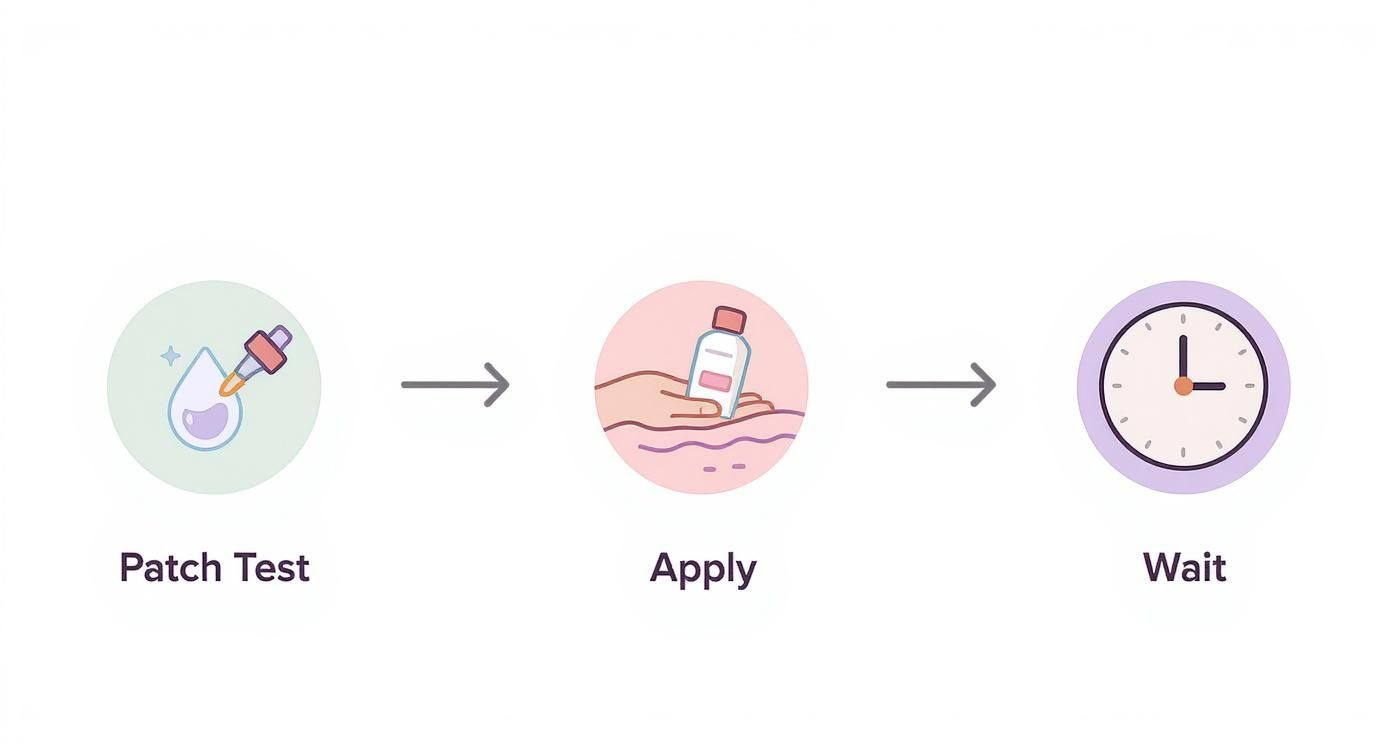
A disciplined approach—testing first, applying correctly, and then being patient—is the key to seeing real results from your skincare.
Layering Your Post-Exfoliation Products
The order you apply your products in really does matter. For the best results, you want to layer them from the thinnest consistency to the thickest. This simple rule ensures each product can penetrate the skin properly without being blocked by a heavier cream applied too soon.
So, let’s say you’ve just cleansed and used your PHA toner. Your skin is prepped and ready. The ideal next step is a hydrating serum to deliver a concentrated shot of moisture deep down. For that kind of deep replenishment, our Post-Peel Moisturising Hyaluronic Serum is specifically designed to give your skin that essential hydration boost.
Once the serum has had a minute to sink in, it’s time to seal everything in with a comforting moisturiser. A cream containing ceramides or shea butter is perfect for this, as it will lock in all that lovely moisture and support your barrier while you sleep.
Pro Tip: If your skin feels a little tingly after exfoliating, give the “moisture sandwich” a try. Spritz on a light hydrating toner or mist, apply your exfoliant, then spritz again before layering on your serum and moisturiser. This creates a gentle buffer for the acid and dials up the hydration.
The Non-Negotiable Final Step: Sunscreen
Listen, if you take only one thing away from this, let it be this: you must be diligent with sunscreen. Exfoliation, no matter how gentle, exposes a fresh, new layer of skin cells. These baby cells are much more vulnerable to damage from ultraviolet (UV) radiation.
Without proper sun protection, you’re leaving your skin wide open to sun damage, which can lead to dark spots, faster ageing, and a whole lot more sensitivity. This isn’t just a friendly tip; it’s a hard and fast rule for anyone who exfoliates.
Every single morning, without fail, you need to apply a broad-spectrum sunscreen with an SPF of 30 or higher. Yes, even on cloudy days. And yes, even if you’re mostly indoors. Those UV rays are sneaky. For sensitive skin, mineral-based sunscreens containing zinc oxide and titanium dioxide are often a great choice, as they tend to be less irritating than their chemical counterparts. Making daily sun protection a habit is the best way to protect your results and keep your skin healthy for the long run.
How to Troubleshoot Common Exfoliation Problems
Even when you take every precaution with gentle exfoliation for sensitive skin, things can sometimes go sideways. It’s totally normal! Your skin is always communicating with you, and learning to interpret its signals is the real secret to keeping it calm and happy. This guide will walk you through what your skin might be trying to tell you and how to get things back on track.
Navigating the world of exfoliation is all about knowing the difference between a temporary “getting used to it” phase and a genuine red flag. It’s about having a game plan for when things don’t go as expected, so you can act quickly and confidently.
Is It Purging or Irritation?
This is easily the most common question I hear. You’ve just started a new exfoliant, and suddenly, you’re breaking out. Is this the product working its magic, or is it a sign to run for the hills? Let’s break it down.
Skin purging is basically an adjustment period. The new active ingredient is speeding up your skin’s natural cell turnover, pushing all the gunk that was already brewing under the surface (think tiny, invisible clogs) up to the top all at once.
- What it looks like: You’ll likely see small, pimple-like bumps or whiteheads popping up in the areas where you typically get spots.
- How long it lasts: It’s a temporary phase. It should clear up within four to six weeks as your skin gets used to the new routine.
Irritation, on the other hand, is a flat-out negative reaction. Your skin is sending a clear signal that it does not like this new product.
- What it looks like: Think red, inflamed, itchy, or even painful spots. Crucially, they might appear in places you don’t normally break out.
- How long it lasts: This won’t get better on its own. The reaction will probably stick around or even get worse as long as you keep using the product.
If you even suspect it’s irritation, stop using the product immediately. Purging is an adjustment process you can work through; irritation is a clear sign to retreat and focus on soothing your skin.
Recognising and Recovering From Over-Exfoliation
It’s surprisingly easy to get a little too enthusiastic, even with the gentlest of products. We’ve all been there, thinking a little more will get faster results, but sensitive skin will quickly put you back in your place. The signs of a compromised skin barrier are pretty hard to miss once you know what to look for.
Keep an eye out for these tell-tale signs:
- A strange, tight or almost ‘waxy’ shine to your skin.
- Persistent redness and finding that your other skincare products suddenly sting.
- A ‘stripped’, tight feeling, even right after you’ve moisturised.
- New flaky patches or tiny, rough bumps.
If any of that sounds familiar, don’t panic. Just hit the pause button on all your exfoliating acids and other strong actives (like retinol or high-strength vitamin C). For at least the next two weeks, your one and only job is barrier repair. This means flooding your skin with calming, healing ingredients like ceramides, hyaluronic acid, and cica to help it rebuild its natural defences.
The UK skincare market, valued at USD 4.34 billion in 2024, is booming, largely because people are actively seeking out safer, more natural ingredients. This collective move away from harsh treatments shows a growing understanding that a healthy barrier is everything. You can learn more about how consumer preferences are shaping the UK skincare industry and see why gentle, supportive skincare is becoming the new gold standard.
When a Product Just Isn’t Working
So, what happens if there’s no irritation, but also… no results? It can be so frustrating when you’ve been using a product consistently for weeks and your skin’s texture and brightness haven’t changed at all.
Before you give up on it, just run through a quick checklist. Are you using it consistently at the right frequency? Have you given it enough time to work? Real, lasting change doesn’t happen overnight; it can often take six to eight weeks to see a noticeable difference from improved cell turnover.
But if you’ve been patient and still nothing’s happening, it might be time to move on. The product could be a little too gentle for your skin’s particular needs, or the formulation just might not be the right match for your skin’s chemistry. You could consider trying a different type of gentle acid. For example, if a PHA isn’t giving you that ‘wow’ factor, you might have better luck with a low-concentration mandelic or lactic acid.
Your Questions, Answered
When you’re just starting out with exfoliation, especially with sensitive skin, it’s completely normal to have a few questions. Getting it right can feel a bit daunting, so let’s clear up some of the most common concerns I hear from clients.
Can I Use Vitamin C or Retinol on the Same Night I Exfoliate?
For anyone with sensitive skin, the short answer is a firm no. Think of your skin as having a certain amount of energy to spend each day. Exfoliants, vitamin C, and retinol are all potent, ‘active’ ingredients that ask a lot of it.
Trying to use them all on the same night is a one-way ticket to overwhelming your skin’s protective barrier. That’s when you’ll see the very things you’re working to avoid – redness, stinging, and persistent irritation. The smartest way forward is to give them their own nights. Use your gentle exfoliant one evening and your vitamin C or retinol serum the next. Most importantly, learn to listen to your skin. If it feels even a little unhappy, skip the actives altogether and just focus on simple hydration.
Giving each active its own night in the spotlight lets your skin fully process the treatment and recover properly. This way, you get all the glowing benefits without tipping it into an inflammatory state.
How Do I Know if I’ve Over-Exfoliated My Skin?
Oh, your skin will definitely let you know when you’ve gone too far. It’s actually a great communicator, and the signs of over-exfoliation are quite distinct. If you see them, it’s a clear signal to hit the brakes immediately.
You’ve probably pushed it too far if you start noticing:
- That dreaded “stripped” or tight feeling, even right after you’ve put on a good moisturiser.
- An unusual, waxy or overly shiny look to your skin, almost like it’s stretched.
- Increased redness and sensitivity. Products that were once fine might suddenly start to sting.
- New breakouts or random dry, flaky patches popping up out of nowhere.
If any of these sound familiar, stop all exfoliating right away. For the next two weeks, at least, your new full-time job is barrier repair. Drench your skin in products loaded with ceramides, niacinamide, and fatty acids to soothe and rebuild. Only once your skin feels completely calm and back to its old self should you even think about reintroducing an exfoliant – and at a much lower frequency than before.
Are At-Home Exfoliants as Good as Professional Peels?
This is a brilliant question because it gets to the heart of how skincare works. The truth is, they aren’t competing with each other; they simply serve different purposes on your skincare journey.
Gentle at-home exfoliants, like the PHA toners or mandelic acid serums we’ve been talking about, are all about consistent, gradual improvement. Their purpose is to keep your skin texture smooth and bright over the long haul, with virtually no downtime. For the day-to-day care of sensitive skin, they are absolutely the best and safest choice, giving you the power to maintain a healthy glow from your own bathroom.
Professional peels performed in a clinic, on the other hand, are a different ball game. They use much higher, more potent concentrations of acids to deliver more dramatic, rapid results for specific issues like stubborn hyperpigmentation or deeper textural problems.
For anyone with sensitive skin, the journey should always start with well-formulated, high-quality at-home products. This approach lets you build up your skin’s strength and see fantastic, sustainable results safely. A professional can then help you decide if and when a more intensive, in-clinic treatment might be a good next step for you.
At Beauty Page, we create professional-grade formulas that bridge that gap between gentle daily care and powerful, visible results. Explore our range of gentle peels and supportive serums to build a routine that truly respects your sensitive skin. Discover your perfect solution at Beauty page.