Free shipping £150+ Orders
Finding the Best Serum for Sensitive Skin
When you have sensitive skin, the goal is to find a serum that does more than just sit on the surface. You need something that actively calms irritation, helps rebuild your skin’s natural protective barrier, and delivers a serious dose of hydration—all without triggering a reaction. The heroes of this story are ingredients like niacinamide, centella asiatica, and hyaluronic acid. These are the tried-and-true actives that work wonders to soothe redness and make your skin more resilient over time.
What Makes a Serum Best for Sensitive Skin
Choosing a serum for sensitive skin isn’t about searching for an overnight miracle; it’s about finding a reliable peacekeeper for your complexion. Think of your skin’s moisture barrier like the wall of a fortress. When it’s damaged, irritants can sneak in, and precious moisture escapes. This is what leads to that all-too-familiar redness, itching, and general discomfort.
A great serum acts like a skilled mason, patiently repairing the cracks in that wall. Its job is threefold: soothe current flare-ups, strengthen your skin’s defences against future attacks, and provide a deep, calming drink of moisture. This is why a simple, gentle, yet effective formula is absolutely essential.
Core Principles of a Soothing Serum
The very best formulas are built on a few non-negotiable principles. They must be deeply hydrating, restorative for the skin barrier, and incredibly calming. This triple-threat approach ensures you’re not just papering over the cracks but actively improving your skin’s health and strength for the long haul.
Here’s what to look for:
- Deep Hydration: Ingredients like hyaluronic acid are your best friend. It acts like a powerful magnet for moisture, pulling it deep into the skin to keep it plump and comfortable, never heavy or greasy.
- Barrier Support: Look for actives like niacinamide and ceramides. They help rebuild and fortify your skin’s protective layer, making it far less vulnerable to whatever the environment throws at it.
- Anti-Inflammatory Properties: Soothing botanicals such as Centella Asiatica (often called Cica) or chamomile are brilliant for dialling down visible redness and taking the heat out of irritation.
The demand for products that get this right is surging. In 2023, the UK sensitive skincare market was valued at around USD 1.86 billion and is projected to almost double by 2030. This isn’t just a trend; it’s a clear signal that people are looking for gentle formulas that deliver real, powerful results.
A truly effective serum for sensitive skin doesn’t just put out fires; it fireproofs the skin. Its goal is to make your skin stronger and more self-sufficient, reducing the frequency and intensity of reactions over time.
Quick Guide to Choosing a Sensitive Skin Serum
I get it—reading an ingredients list can feel like trying to decipher a secret code. To make it easier, I’ve put together a simple reference guide that lays out the ‘dos’ and ‘don’ts’ for picking your next serum. Keeping these pointers in mind will help you spot a winner on the shelf. For example, our own Post-Peel Moisturizing Hyaluronic Serum was formulated with these exact principles at its core.
| What to Look For (The ‘Do’s’) | What to Avoid (The ‘Don’ts’) |
|---|---|
| Soothing Actives: Niacinamide, Centella Asiatica, Green Tea | Synthetic Fragrances & Dyes: The leading cause of allergic reactions |
| Hydrators: Hyaluronic Acid, Glycerin, Panthenol | Drying Alcohols: SD Alcohol, Denatured Alcohol, Isopropyl Alcohol |
| Minimalist Formulas: Shorter ingredient lists with proven actives | Harsh Exfoliants: High-concentration Glycolic or Salicylic Acid |
| Barrier Repair: Ceramides, Peptides, Fatty Acids | Essential Oils: Can be highly sensitising for reactive skin types |
Think of this table as your cheat sheet. By focusing on the ‘Do’s’ and steering clear of the ‘Don’ts’, you’re giving your skin the best possible chance to feel calm, strong, and comfortable.
Decoding What’s Causing Your Skin Sensitivity

Before you can find a lasting solution for your skin, you have to get to the root of the problem. Skin sensitivity isn’t just about random flare-ups; it’s a clear signal that your skin’s natural defences are down.
Imagine your skin barrier is a sturdy brick wall. Its job is to keep moisture locked in and harmful irritants out. When that wall gets damaged, little cracks start to appear. Suddenly, environmental aggressors like pollution and allergens can sneak in, while essential hydration escapes.
This vulnerability is what sparks the redness, stinging, and that tight, uncomfortable feeling we associate with sensitivity. Figuring out what’s causing those cracks in your wall is the first real step towards rebuilding it.
A great starting point is understanding your unique skin type and its typical reactions. This helps you figure out if your skin has always been this way, or if something has recently made it reactive.
Is Your Skin Sensitive or Sensitised?
This is a common point of confusion, but there’s a crucial difference between having a sensitive skin type and having sensitised skin. One is down to your genetics, while the other is a temporary condition brought on by your lifestyle and environment.
- Sensitive Skin (The Type): This is the skin you were born with. It’s often linked to genetic traits or underlying inflammatory conditions like eczema, rosacea, or psoriasis. If you have this skin type, your protective barrier is likely naturally thinner, making you more prone to reactions your whole life.
- Sensitised Skin (The Condition): This is a state any skin can fall into, no matter its original type. It’s a direct reaction to specific triggers that have damaged an otherwise healthy skin barrier. The good news? Because it’s a condition, you can often reverse it by simply identifying and removing the trigger.
The key takeaway here is that anyone can experience sensitised skin. Even the toughest, most resilient complexion can become reactive if it’s pushed too far by harsh products, stress, or difficult conditions.
Common Triggers for UK Skin
Living in the UK brings its own unique set of challenges. The mix of unpredictable weather and city life can create the perfect storm for sensitivity, making the hunt for a calming serum all the more important.
Environmental Stressors
- Unpredictable Weather: That classic British jump from a damp, windy day outside to dry central heating inside forces your skin into a constant cycle of stress and dehydration. All that adjusting can weaken its structure over time.
- Urban Pollution: Daily exposure to traffic fumes and other pollutants in the air generates free radicals. These are nasty little molecules that attack your skin cells, causing inflammation and breaking down collagen, leaving your skin exposed and vulnerable.
- Hard Water: A lot of the UK has hard water, which is high in minerals like calcium and magnesium. These can leave a film on the skin that throws off its natural pH balance, leading straight to dryness and irritation.
Lifestyle Factors
- Stress: We all know it’s bad for us, and the skin is no exception. High levels of the stress hormone, cortisol, are proven to weaken the skin barrier and fire up inflammation, making things like rosacea and eczema much worse.
- Over-Exfoliation: In the quest for that perfect ‘glow,’ it’s easy to go overboard with strong acids and harsh scrubs. This strips away the skin’s protective oils, leaving it raw and defenceless against irritants.
- Ingredient Overload: Sometimes, a complex, 10-step routine packed with potent actives is just too much for the skin to handle. When it comes to sensitive skin, simplicity is often your best friend.
Once you start pinpointing your personal triggers—whether it’s the daily commute, that new face cream, or a particularly stressful week—you can make targeted changes. This knowledge is power. It lets you move beyond just managing the symptoms and start truly healing and strengthening your skin from the inside out.
Hero Ingredients That Soothe and Strengthen
When you’re trying to find the right serum for sensitive skin, the ingredients list is your best friend. A truly effective formula isn’t about packing in dozens of trendy components; it’s about a few gentle, hard-working powerhouses that know how to calm, repair, and hydrate.
Think of these ingredients as a specialist team for your skin, each with a clear job to do in bringing back a sense of peace and balance. Getting to know them helps you move past the marketing hype and choose products with real confidence. The goal isn’t just to cover up redness, but to build up your skin’s resilience from the inside out.
And it’s clear that people are catching on to this targeted approach. In the UK, face serums now make up around 25% of the entire sensitive skincare market. This shift shows a real demand for potent, concentrated formulas that deliver results without the fluff.
Centella Asiatica: The Ultimate Skin Soother
You might have heard of this one as Cica, or even “tiger grass.” That name comes from the legend that tigers would roll in the plant to help heal their wounds, which tells you everything you need to know about its restorative powers.
Centella Asiatica is a true champion for calming down distressed skin. It’s absolutely packed with compounds that get to work fast, reducing inflammation and encouraging healing. Think of it as your skin’s emergency service—when a flare-up strikes, Cica steps in to cool the heat, soothe the irritation, and kick-start the repair process.
It’s an absolute must-have in any serum for reactive skin, tackling the immediate problem while helping your skin recover for the long haul.
Niacinamide: The Barrier-Building Specialist
Niacinamide, a form of Vitamin B3, is one of the most reliable and well-loved ingredients in skincare today. For sensitive complexions, its most important job is strengthening the skin’s protective barrier. A healthy barrier is everything; it’s what keeps moisture locked in and irritants firmly locked out.
It works by encouraging your skin to produce more ceramides—the natural lipids that act like the ‘mortar’ holding your skin cells together. In doing so, Niacinamide helps patch up the tiny cracks in a weakened barrier, making your skin far less vulnerable to whatever the day throws at it.
Niacinamide doesn’t just put out fires; it teaches your skin how to be more self-sufficient. By strengthening the barrier, it helps reduce sensitivity at its source, leading to a complexion that is visibly calmer and less reactive over time.
Beyond barrier repair, Niacinamide is a real multi-tasker:
- Soothes Redness: Its anti-inflammatory nature helps to dial down blotchiness and visible irritation.
- Balances Oil: It helps regulate sebum, making it a brilliant choice for skin that’s both sensitive and oily or combination.
- Refines Texture: With regular use, it can help make pores look smaller and give the skin a smoother overall appearance.
Hyaluronic Acid: The Master Hydrator
Sensitive skin is almost always thirsty skin. That’s where Hyaluronic Acid (HA) comes in. This molecule is a humectant, which means it acts like a powerful moisture magnet. It’s famous for its ability to hold up to 1,000 times its weight in water, pulling hydration into the skin to leave it plump and comfortable.
Unlike heavy creams that can sometimes feel suffocating, Hyaluronic Acid delivers this intense moisture in a super-lightweight, non-irritating way. It gives your skin a flood of hydration, softening fine lines and getting rid of that tight, dry feeling that often goes hand-in-hand with sensitivity. This hydration boost not only feels great but also helps your barrier function at its best.
Low-Dose AHAs: The Gentle Refiners
The thought of putting “acid” on sensitive skin can sound scary, I know. But not all exfoliants are the same. While strong acids like glycolic can be too much for reactive skin, gentler Alpha Hydroxy Acids (AHAs) in small doses can work wonders.
Mandelic Acid is the perfect example. Derived from bitter almonds, its molecules are larger than those of other AHAs. This means it sinks into the skin more slowly and evenly, which dramatically lowers the chance of irritation. It works right on the surface, gently lifting away the dead skin cells that can cause dullness and a rough texture. To get a better feel for how it works, you can check out our guide on how to use Mandelic Acid.
By encouraging this gentle renewal, Mandelic Acid helps to even out skin tone and improve clarity without upsetting the skin’s delicate balance. When it’s included in a well-formulated soothing serum, it can even help your other products work more effectively. Choosing formulas with these trusted ingredients is the surest way to guide your skin back to a state of calm, resilient health.
Choosing the right serum when you have sensitive skin isn’t just about finding the good stuff; it’s equally about knowing what to avoid. Think of it as being a bouncer for your skin’s barrier. You want to let the calming, supportive ingredients in, while keeping the known troublemakers out.
When your skin’s defence system is already a bit fragile, the last thing you want to do is throw harsh ingredients at it. Learning to spot these on an ingredients list is one of the most powerful skills you can develop for keeping your skin happy and calm.
The Problem with Fragrance and Essential Oils
This is a big one. That lovely floral or fruity scent in a product might seem like a bonus, but for sensitive skin, synthetic fragrance is often the number one culprit behind irritation. The term “fragrance” or “parfum” on a label is a catch-all that can hide hundreds of different chemicals, any of which could trigger a reaction.
Don’t be fooled by “natural” scents, either. While essential oils come from plants, potent oils like lavender, peppermint, and citrus can be incredibly sensitising for reactive skin. They can easily lead to redness and that awful itchy feeling. Your safest bet? Always look for products that are explicitly fragrance-free.
When you see “parfum” or “fragrance” on a label, you’re looking at a potential minefield. It’s an umbrella term that can hide dozens of undisclosed chemical compounds, making it impossible to know what you’re actually putting on your skin.
Drying Alcohols That Weaken Your Barrier
Not all alcohols in skincare are bad news, but a few specific types are particularly harsh on sensitive skin. We’re talking about the simple, drying alcohols that often appear high on an ingredients list to give a product that fast-absorbing, weightless feel.
Keep an eye out for these names:
- SD Alcohol or Alcohol Denat. (Denatured Alcohol)
- Isopropyl Alcohol
- Ethanol
These alcohols strip away your skin’s natural oils, leaving it feeling tight and dry. Over time, this constant stripping action damages your protective moisture barrier, which ironically makes your skin even more sensitive and prone to irritation. It’s a vicious cycle.
Harsh Exfoliants and Overwhelming Actives
Everyone wants that smooth, glowing skin that comes from good exfoliation, but for sensitive complexions, the “go hard or go home” approach is a recipe for disaster. High concentrations of certain acids can cause severe irritation and set your skin back.
For example, a professional peel can work wonders, but trying to replicate those results with an aggressive at-home product is risky. It’s all about using the right tool for the job. Understanding the benefits of a gentle chemical peel for sensitive skin is a much smarter move than grabbing the strongest acid you can find.
To make things easier, here’s a quick cheat sheet for spotting common irritants and knowing what to look for instead.
Common Irritants and Their Gentle Alternatives
| Common Irritant to Avoid | Why It’s a Problem | Gentle Alternative to Look For |
|---|---|---|
| Synthetic Fragrance/Parfum | A leading cause of allergic contact dermatitis and skin irritation. | Fragrance-Free Formulas |
| Drying Alcohols (SD, Denatured) | Strips the skin’s natural oils, damaging the moisture barrier. | Fatty Alcohols (Cetyl, Stearyl, Cetearyl Alcohol) |
| High-Strength Glycolic Acid | Small molecule size allows deep penetration, often causing irritation. | Mandelic or Lactic Acid (in low concentrations) |
| Most Essential Oils | Can be highly allergenic and cause photosensitivity or redness. | Soothing Botanical Extracts (Green Tea, Chamomile) |
Committing these few ingredients to memory will transform you into a confident label-reader. This simple act of avoidance is genuinely one of the most effective things you can do to protect your skin. It ensures the products you choose are allies in your skincare journey, not secret enemies. Your calm, comfortable skin will thank you for it.
How to Introduce a New Serum to Your Routine
When you have sensitive skin, bringing a new serum into your routine is a bit like introducing a new food to a picky eater. You have to go slow. A little bit of patience at the start can save you from a full-blown tantrum later on.
It’s all too easy to get excited and slather a new product all over your face, only to wake up to redness and irritation. A more measured, methodical approach is the secret to finding out if a product is a true friend to your skin, not a foe in disguise.
Always Start with a Patch Test
This is the golden rule, and for sensitive skin, it’s non-negotiable. A patch test is your safety net, your first line of defence. It lets you see how your skin will react to a new formula on a small, hidden patch of skin before you commit to using it on your entire face.
Think of it as a dress rehearsal. It takes just a minute to do but can save you days—or even weeks—of dealing with a reaction.
Here’s how to do it right:
- Choose Your Spot: Find a discreet area, like behind your ear or on the side of your neck. The inner wrist works too.
- Apply and Wait: Dab a small amount of the serum onto the spot and leave it be. Don’t layer anything else on top in that specific area.
- Monitor for 24-48 Hours: Keep an eye on it. If you see any redness, feel any itching, or notice bumps forming, wash the product off immediately and steer clear. If everything looks calm after two days, you’re probably in the clear.
Master the Art of Layering
So, your new serum passed the patch test with flying colours. Now, where does it fit into your routine? The cardinal rule of skincare is to apply products from the thinnest texture to the thickest. This simple logic ensures that your lightweight, potent serum can actually sink into the skin before a heavier cream seals everything off.
It’s just like getting dressed in winter. You wouldn’t put your big coat on before your jumper, would you? Your serum is that essential base layer, packed with the good stuff that needs to get absorbed first.
The correct order of application is critical for maximum efficacy. Applying a serum after cleansing but before moisturising allows its active ingredients to penetrate clean, receptive skin. Moisturiser then acts as a protective seal, locking in the serum and hydrating the surface.
This whole process relies on a gentle, supportive routine from start to finish. This infographic gives a quick visual rundown of how to sidestep common irritants.
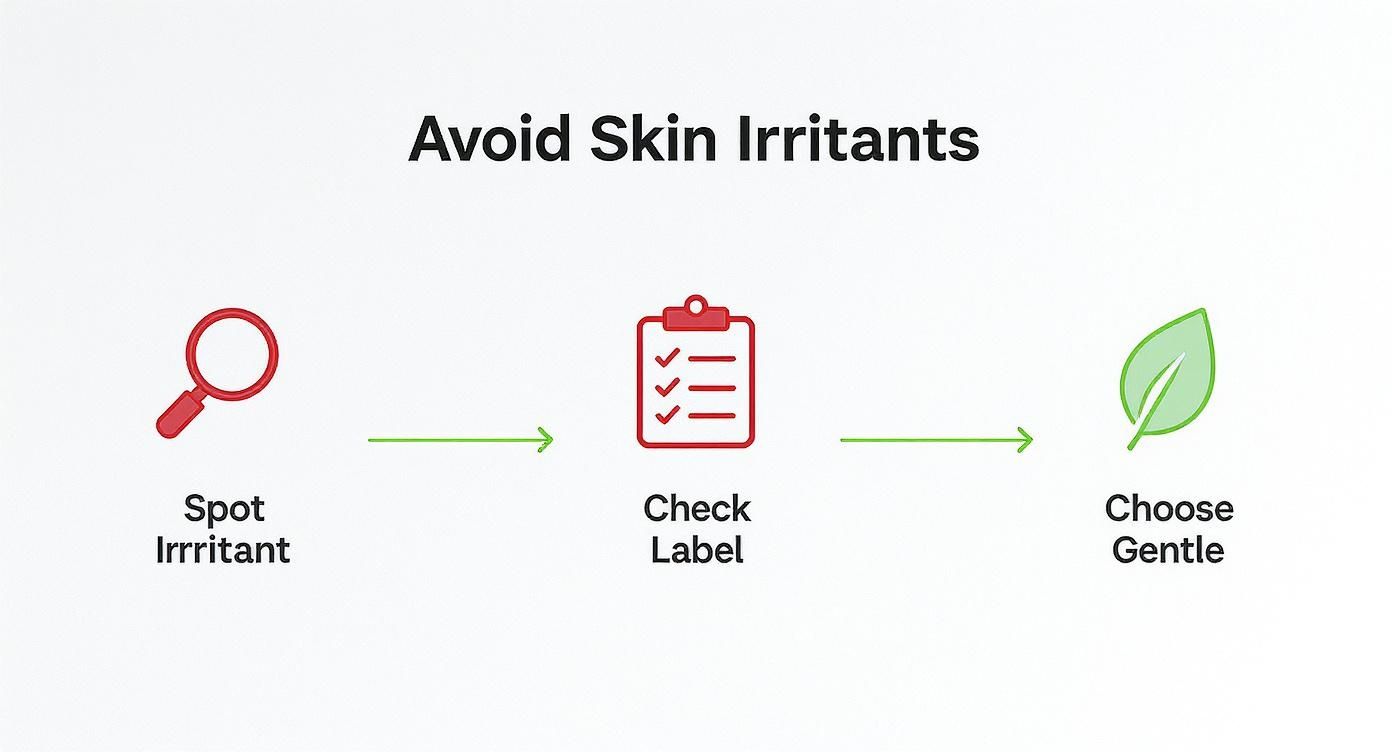
This visual guide helps you spot potential troublemakers on the label and choose calmer alternatives, keeping your skin happy and safe.
Common Mistakes to Avoid
Even with the best intentions, it’s easy to make a few missteps when you’re excited about a new product. Knowing what to watch out for will help you get the best results without accidentally triggering your skin.
- Using Too Much Product: With serums, a little goes a long way. More is definitely not better here. A pea-sized amount is usually plenty for your entire face and neck. Overdoing it can overwhelm your skin and is just a waste of a great formula.
- Combining Incompatible Ingredients: Pay attention to what else you’re using. For example, if your new serum contains a gentle acid, you probably don’t want to use it on the same night as another strong active. If you’re curious about this, you can learn more about gentle exfoliation for sensitive skin in our detailed guide.
- Introducing Too Many Products at Once: This is a classic mistake. If you start three new products and your skin flares up, how will you know which one was the culprit? Give each new product at least a week or two to settle in before you think about adding something else to the mix.
By taking these simple precautions—patch testing, layering correctly, and sidestepping common errors—you can confidently welcome a new serum into your skincare family. This thoughtful approach is the smartest way to achieve the calm, resilient skin you’re aiming for.
The Avera Cosmetic Philosophy for Sensitive Skin
Understanding the science behind soothing ingredients is one thing, but finding products that actually put that knowledge into practice is another challenge altogether. Here at Avera Cosmetic, our whole approach is built on a deep respect for the complexities of sensitive skin. We formulate professional-grade solutions that don’t just put a temporary plaster on irritation, but work to restore your skin’s own strength and balance.
Our philosophy is simple: effective care must be gentle care. We believe that repairing your skin’s protective barrier is the most important job. That’s why we use clinically-proven actives that work with your skin, not against it. This isn’t about jumping on the latest trend; it’s about a solid commitment to ingredients that deliver real, lasting results for reactive complexions.
Formulated with Purpose
We’re not the only ones who see the need for more thoughtful skincare. In 2024, the UK facial skincare market saw a 7.9% increase in value sales, and products for sensitive skin were a huge part of that growth. It’s clear people are looking for formulas they can truly trust. Learn more about the UK skincare market trends.
This commitment shows up in every ingredient we choose:
- Hero Actives: We build our serums around calming powerhouses like Centella Asiatica to dial down redness and Niacinamide to strengthen your skin’s natural defences.
- Deep Hydration: Every formula is packed with superior hydrators that top up moisture reserves without feeling heavy or overwhelming your skin.
This focus carries through to our meticulous development process. Part of our philosophy means appreciating the specialized environments of cosmetic labs, where safety and precision are non-negotiable in creating the best serum for sensitive skin.
At Avera Cosmetic, we believe the best serum for sensitive skin doesn’t just mask the symptoms. It helps your skin become more resilient on its own, building a foundation of health that makes it less reactive over time. Our goal is to give you the tools to find lasting comfort and confidence in your own skin.
We also make a conscious choice about what we leave out. You will never find synthetic fragrances, harsh drying alcohols, or unnecessary colourants in our products. This dedication ensures every single drop is focused on healing and strengthening, making Avera Cosmetic your go-to partner for achieving a calm, healthy, and balanced complexion.
Your Sensitive Skin Serum Questions Answered
Trying to find the right products for sensitive skin can feel like walking through a minefield. You do your research, pick a serum, and then a whole new set of questions pops up. We get it.
This section is here to give you straightforward answers to the most common queries we hear. Think of it as a go-to guide for troubleshooting and building confidence in your routine.
How Long Until I See Results from a Soothing Serum?
This is the big one, and the answer requires a bit of patience. While powerhouse hydrators like Hyaluronic Acid can offer an almost instant feeling of plumpness and relief, the real magic happens over time. Your skin didn’t become sensitised in a day, and it needs a little while to heal.
When you’re using barrier-supporting ingredients like Niacinamide or Centella Asiatica, consistency is everything. You’ll typically need to use them daily for four to eight weeks before you see a real, lasting reduction in redness and reactivity. Remember, the goal is building long-term resilience, not just a temporary fix.
Can I Use Vitamin C Serums with Sensitive Skin?
Absolutely, but the type of Vitamin C you choose makes all the difference. The most common form, L-Ascorbic Acid, is notoriously potent and acidic, which can be a recipe for stinging and irritation on reactive skin.
The trick is to opt for gentler, more stable derivatives that are much better tolerated. Keep an eye out for these on the ingredients list:
- Sodium Ascorbyl Phosphate
- Tetrahexyldecyl Ascorbate (THDA)
- Magnesium Ascorbyl Phosphate (MAP)
Always start with a low concentration—around 5% is a good starting point—and never skip a patch test before applying it all over your face.
Your skin’s tolerance is unique. Introducing a gentle Vitamin C derivative slowly allows you to reap the brightening and antioxidant benefits without overwhelming your skin’s delicate balance. Listen to your skin and adjust as needed.
Why Has My Skin Suddenly Become Sensitive?
If your skin has gone from calm to reactive seemingly overnight, you’re likely dealing with sensitised skin. This is a temporary condition, not a permanent skin type, and it almost always points to a compromised skin barrier.
So what caused it? Common triggers include going overboard with exfoliation, harsh weather conditions, stress, or a reaction to a new product. The good news is that because it’s a condition, you can absolutely nurse your skin back to health. Pare your routine back to the essentials, focus on gentle, barrier-repairing serums, and try to identify and remove the culprit.
For more in-depth answers, you can also explore our comprehensive list of frequently asked questions.
At Avera Cosmetic, we specialise in professional formulations that deliver gentle yet effective results. Our serums are designed from the ground up to calm, restore, and strengthen your complexion. Discover the right fit for your skin today at https://beautypage.co.uk.