Free shipping £150+ Orders
Exosomes for Hair Loss a Breakthrough Guide
Exosomes are making serious waves in the world of regenerative medicine, particularly as a non-surgical way to kick-start hair regrowth. For millions, hair loss isn’t just a cosmetic annoyance; it’s a deeply personal challenge that can really knock your confidence. Here in the UK, the hunt for effective, non-invasive solutions has led people to the cutting edge of science, and exosomes for hair loss are one of the most exciting developments out there. This is a treatment that gets right down to the cellular level to awaken sleeping follicles and encourage thicker, healthier hair.
Tackling the Widespread Issue of Hair Loss in the UK
Hair loss is an incredibly common experience across the United Kingdom, affecting a huge number of adults. It doesn’t discriminate by age or gender, which has created a massive demand for treatments that can deliver real results without resorting to old-school methods. The emotional weight of hair loss can be heavy, pushing many to seek professional help for something that feels so visible and personal.
This shared struggle has fuelled a growing interest in advanced aesthetic solutions. As clients become more knowledgeable, they’re actively seeking out scientifically-backed treatments that promise real, lasting results without the downtime and risks of surgery. It’s this very shift that’s bringing regenerative therapies into the spotlight.
The Scale of the Problem
The numbers on hair loss in the UK really tell the story. We’re talking about over 15 million adults dealing with some form of it, which breaks down to roughly 8 million women and 6.5 million men. The main culprit is androgenetic alopecia (pattern baldness), and it affects up to 85% of men and around 40% of women by the time they hit 50.
What’s surprising, though, is that only a tiny fraction—about 11% of men—actually talk to a professional when they first spot the signs of thinning. This highlights a huge gap in the market for accessible, clear information and advanced treatments that can tackle the problem head-on, and early.
A New Era of Regenerative Solutions
In response to this clear need, aesthetic medicine is embracing powerful, cell-based therapies. The whole idea is to repair and regenerate tissue from the inside out, offering a much more foundational approach to hair restoration. And right at the front of this movement is exosome therapy.
Unlike traditional treatments that just manage the symptoms, regenerative therapies like exosomes work to restore the biological environment needed for healthy hair growth. They send signals to dormant follicles, telling them to wake up and get back into the growth phase, while also calming scalp inflammation and boosting overall follicle health.
This approach is a world away from temporary fixes. Instead of just papering over the cracks, it gets to the root of the problem by addressing the cellular processes that lead to thinning hair. For clinics and practitioners, getting to grips with these powerful new options is essential for giving clients the results they’re looking for.
To support these clinical treatments, products like an advanced Xtra Hair Restorer lotion can be a fantastic way to maintain scalp health between appointments. By explaining exosomes as a direct and sophisticated answer to a very common and personal problem, you can help clients see the genuine difference it can make.
How Exosomes Revitalise Hair Follicles
To really get to grips with how exosomes for hair loss work, it helps to think of them as tiny, highly efficient couriers for your cells. Picture your dormant hair follicles as little factories, perfectly capable of producing hair but currently offline. Exosomes are the special delivery packages, sent from stem cells, carrying the precise instructions and raw materials needed to kickstart production.
These microscopic vesicles are absolutely packed with a powerful cocktail of growth factors, proteins, and genetic signals. When they’re applied to the scalp, they don’t just hang around on the surface. They dive deep down to communicate directly with the follicular cells, essentially telling them it’s time to wake up and get back to work.
It’s this direct, targeted communication that makes exosome therapy so precise. It’s not a sledgehammer approach; it’s a specific biological signal sent right where it’s needed most.
The Three-Pronged Attack on Hair Thinning
Exosomes don’t just tackle one single cause of hair loss. They launch a coordinated, multi-front effort to restore the scalp’s health and reboot the entire hair growth cycle. Their mechanism really boils down to three key actions that work in synergy to produce visible results.
This diagram shows you the basic structure of an exosome, with the lipid bilayer that protects its precious cargo.
This protective outer shell is absolutely vital. It allows the exosome to travel safely and deliver its growth factors and genetic instructions intact to the target cells—in this case, the hair follicles.
Here are the key actions:
- Awakening Dormant Follicles: Exosomes deliver a payload of growth factors that signal dormant follicles to re-enter the anagen (growth) phase of the hair cycle. This is the most direct way they spur on new hair growth where thinning has started to show.
- Reducing Scalp Inflammation: Chronic inflammation is a known enemy of healthy hair, creating a hostile environment that can damage follicles. The signalling molecules within exosomes have powerful anti-inflammatory properties, calming the scalp and creating the right conditions for growth to thrive.
- Improving Blood Flow: The contents of exosomes also help to encourage angiogenesis—the formation of new blood vessels. Better blood flow means more oxygen and vital nutrients can actually reach the hair follicles, nourishing them from within to support the production of stronger, thicker hair.
In essence, exosome therapy isn’t just about stimulating growth; it fundamentally improves the entire ecosystem of the scalp. It helps repair the cellular environment, laying the groundwork for sustainable, long-term hair health and regeneration.
Extending the Hair Growth Phase
Perhaps one of the most important effects of exosomes is their ability to prolong the anagen, or growth, phase of the hair cycle. In common conditions like androgenetic alopecia (pattern baldness), this growth phase gets progressively shorter, leading to finer, weaker hairs that fall out much sooner than they should.
By delivering specific signalling proteins, exosomes help to keep follicles in that active growth phase for longer. What does this mean in practice? Not only do new hairs begin to grow, but the hairs you already have are given more time to grow thicker, stronger, and longer before they naturally enter the resting and shedding phases.
This mechanism is a real game-changer because it addresses one of the core biological problems behind hair thinning. The result isn’t just more hair, but hair with noticeably improved quality, texture, and density. This same restorative power is being explored in other aesthetic fields too; for instance, you can learn more about how exosomes work for facial rejuvenation to appreciate their broader regenerative potential.
For practitioners, explaining this process to clients is key. It helps set realistic expectations, framing the treatment not as a quick fix, but as a gradual and profound restoration of their natural hair cycle.
Comparing Exosomes, PRP and Mesotherapy
When you’re advising clients on the best way forward for hair restoration, it’s crucial to have a solid grasp of the differences between the top regenerative treatments. Exosome therapy, Platelet-Rich Plasma (PRP), and Mesotherapy are all talked about constantly, but they work in very different ways. Let’s move past the marketing buzz and break down how they actually stack up in terms of mechanism, patient experience, and real-world results.
While all three aim to kick-start sluggish hair follicles, their starting points couldn’t be more different. One uses powerful, lab-purified cellular messengers, another relies on the patient’s own blood, and the third is all about giving the scalp a direct nutritional hit.
This infographic gives a great visual summary of how exosomes get to work on a cellular level—revitalising follicles, calming inflammation, and encouraging hair to stay in its growth phase for longer.
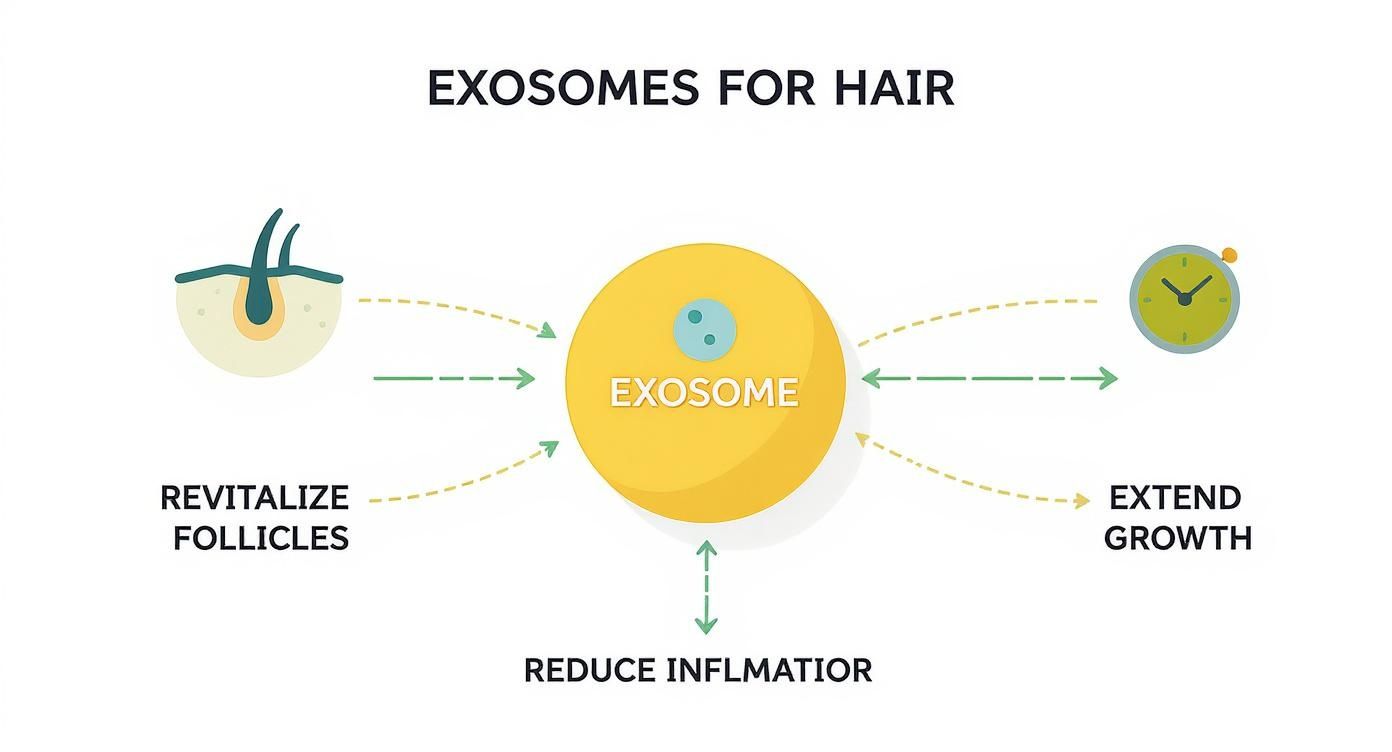
As you can see, the real strength of exosome therapy is how it tackles scalp health from multiple angles to get the natural hair cycle back on track.
Core Mechanism: The Source of Power
The biggest difference between these treatments is what’s actually being administered to the scalp. This single factor has a knock-on effect on everything, from the potency of the treatment to what the client experiences in your clinic.
- Exosome Therapy: This method uses exosomes that have been derived from mesenchymal stem cells and purified in a lab. They are acellular, meaning they’re not cells themselves but pure signalling packages loaded with a high concentration of growth factors and proteins, ready to go.
- PRP Therapy: Here, we’re drawing the patient’s blood, spinning it in a centrifuge to isolate the platelets, and then re-injecting that concentrated plasma. The results are entirely dependent on the quality and quantity of growth factors present in that specific person’s blood on that particular day.
- Mesotherapy: This technique is more of a supportive treatment. It involves injecting a bespoke cocktail of vitamins, minerals, amino acids, and other nourishing compounds directly into the skin’s middle layer (the mesoderm). It’s a fantastic nutritional boost, but it doesn’t send the same powerful regenerative signals as exosomes or PRP. You can get a deeper look into the fundamentals in our guide on what Mesotherapy is and how it works.
Patient Experience and Procedure
From a practical point of view, the procedures themselves are quite different, which can often be the deciding factor for a client. The main point of contention? The blood draw.
Because exosome products are created in a controlled laboratory environment, they offer a standardised, potent dose in every vial. This eliminates the patient-to-patient variability seen in PRP and removes the need for any blood collection, making the procedure quicker and more comfortable.
Exosomes have really made their mark as a major therapeutic option for hair loss, thanks to their regenerative and anti-inflammatory properties. Both international clinical studies and early UK dermatological research show that exosomes from mesenchymal stem cells can wake up dormant hair follicles by creating a healthier scalp environment.
While specific UK-wide statistics on exosome treatments are still being gathered, the wider market for these advanced biologics is growing fast. Projections point to an expected compound annual growth rate of about 10.3% from 2025 to 2030, with the market value predicted to be close to 98 million USD by 2030.
Comparing Exosomes, PRP and Mesotherapy for Hair Loss
Ultimately, clients just want to know what works. While all three treatments can bring about positive changes, their underlying mechanisms mean there are clear differences in their potency and consistency. This table lays it all out.
| Feature | Exosome Therapy | PRP (Platelet-Rich Plasma) | Mesotherapy |
|---|---|---|---|
| Primary Source | Lab-purified stem cell exosomes | Patient’s own blood platelets | Custom vitamin & mineral cocktail |
| Mechanism | Direct cellular signalling and regeneration | Growth factor release from platelets | Nutritional support for follicles |
| Blood Draw | Not required | Required | Not required |
| Consistency | Standardised, high concentration | Varies based on patient’s health | Standardised formula |
| Inflammation | Highly anti-inflammatory | Can be pro-inflammatory initially | Neutral |
| Patient Suitability | Broad, especially for inflammation | Good for general rejuvenation | Best for nutritional deficiencies |
The acellular nature of exosomes is a massive plus. It dramatically lowers the risk of an immune response and actively helps to reduce inflammation at the treatment site. PRP, on the other hand, can sometimes trigger a short-term inflammatory reaction because you’re injecting platelets and other blood components.
This makes exosomes for hair loss a particularly strong choice for clients who have sensitive scalps or whose hair thinning is linked to underlying inflammatory conditions.
A Practical Guide to the Exosome Hair Treatment Protocol
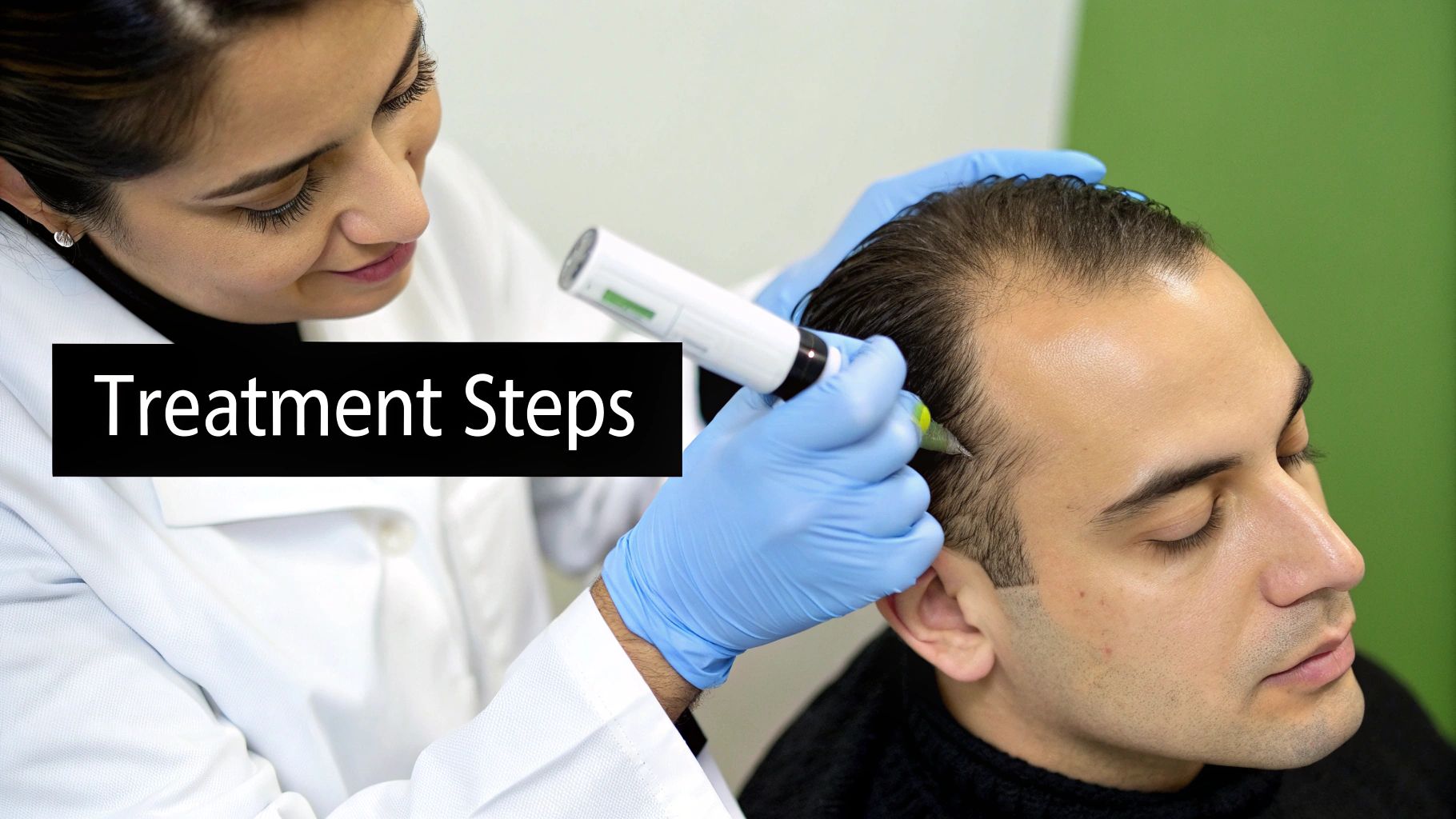
To get the best results from exosomes for hair loss, you need a solid plan. Knowing the practical steps, from the first chat with a client to their aftercare, is the key to managing their expectations and ensuring the treatment works as it should. Think of it as a carefully mapped-out journey designed to be methodical, comfortable, and ultimately, effective.
This protocol gives you a clear framework, making sure every client gets the same high standard of professional care. It all starts with a proper assessment to see if they’re a good fit for this advanced therapy in the first place.
The Initial Consultation and Candidacy
The first step, always, is a detailed consultation. This is your chance to really dig into the client’s hair loss pattern, talk through their medical history, and understand what they hope to achieve. The ideal person for this treatment is usually someone in the early to moderate stages of androgenetic alopecia (pattern baldness) or experiencing general thinning.
Your job is to pinpoint who will benefit most. The treatment works best on people who still have active, even if dormant, hair follicles that can respond to the regenerative signals sent by the exosomes. On the flip side, it’s unlikely to work for someone with complete baldness or in areas where the follicles have died off completely.
This initial meeting is more than just a quick assessment. It’s your prime opportunity to educate the client and set realistic expectations. Explaining how the process works and the likely timeline for seeing results builds trust and gets them fully on board with the plan.
This is also the time to check for any red flags. The treatment generally isn’t suitable for:
- People with active scalp infections or severe skin conditions like psoriasis in the treatment area.
- Clients who are currently undergoing chemotherapy.
- Those with certain autoimmune conditions that might interfere with the treatment’s effectiveness.
Treatment Application and Delivery
Once you’ve confirmed a client is a good candidate, you can move on to the treatment itself. The application is surprisingly straightforward and minimally invasive. It typically takes less than an hour, making it a brilliant service to add to your clinic’s offerings without causing major disruption.
First, you’ll need to prep the scalp. The area is cleaned thoroughly to get rid of any oils or product build-up, creating a sterile surface. Many practitioners apply a topical anaesthetic to numb the scalp, ensuring the client is comfortable from start to finish.
The most popular and effective way to deliver the exosomes is by combining a topical serum with microneedling. By using a professional tool to create tiny micro-channels in the scalp, you dramatically boost the absorption of the exosomes, helping them get right down to the hair follicles in the dermis where they can do their work. Perfecting this technique is much easier when you understand the ins and outs of a quality microneedling device like a derma pen.
Timelines and Post-Treatment Care
Managing expectations around how long it takes to see results is absolutely crucial for client satisfaction. Exosome therapy kick-starts the body’s natural hair growth cycle, and that’s a gradual process. Nothing is going to change overnight.
Here’s a general timeline you can share with your clients:
- First 2-3 Months: The first whispers of progress usually appear here. This often starts with a noticeable drop in hair shedding. Some people might even spot the first fine, new ‘vellus’ hairs starting to sprout.
- 4-6 Months: This is when the real, more obvious results start to show. Clients often report their hair feels denser and thicker, with a much healthier overall look.
- Ongoing Maintenance: The results need a little help to stick around. A typical plan might start with up to six sessions, followed by top-up sessions every three to six months to keep the follicles healthy for the long haul.
Aftercare is simple but so important for getting the most out of the treatment. Advise clients to avoid washing their hair or using any harsh chemical products on their scalp for at least 24 hours. It’s also wise to skip any strenuous exercise or activities that cause a lot of sweating for a day or two. This gives the exosomes the best chance to be fully absorbed. A bit of mild redness or tenderness is totally normal and usually disappears within 48 hours.
Navigating Safety and Sourcing in the UK
When you’re bringing a sophisticated treatment like exosomes for hair loss into your UK clinic, your top priorities have to be patient safety and doing your homework on the regulations. The market for these regenerative therapies is growing at a phenomenal pace, but with that growth comes a very real responsibility for practitioners to source products carefully. Your reputation, and more importantly, your clients’ well-being, are on the line.
The quality of an exosome product is only as good as its source and the process used to make it. These aren’t like standard pharmaceuticals; their biological nature means quality can vary dramatically from one brand to another. Any reputable supplier will have no problem providing you with detailed paperwork that spells out where the stem cells came from, how the exosomes were purified, and what the final concentration is.
Choosing the right supplier for these advanced biologics is one of the most important decisions you’ll make. It’s about more than just the vial in your hand—it’s about the support, transparency, and quality assurance that stand behind it.
Verifying Product Authenticity and Purity
Before you even think about adding an exosome product to your services, you need to vet it thoroughly. The risks of counterfeit or low-grade aesthetic products are huge, ranging from simply not working to causing serious adverse reactions. Telling the real deal from a convincing fake is a major headache for professionals in our industry.
To protect your practice, there are a few documents you must insist on seeing from any potential supplier. Consider this your bare minimum checklist:
- Certificate of Analysis (CoA): This is non-negotiable. It’s a detailed report on the specific product batch, confirming its purity, sterility, and the all-important exosome concentration.
- Source Verification: You need to know exactly what kind of cells the exosomes came from (like mesenchymal stem cells) and the conditions they were grown in.
- Sterility Testing: For any treatment involving injections or microneedling, you need absolute proof that the product is free from any bacterial or fungal contamination.
If a supplier hesitates or flat-out refuses to provide this basic documentation, walk away. It’s an immediate red flag. Genuinely professional products are always backed by transparent data that proves their safety and quality.
Understanding the UK Regulatory Landscape
The rules around exosome therapies can feel a bit murky. In the UK, products that are meant for therapeutic use fall under very strict oversight. It’s absolutely essential that you only use products that comply with the standards for aesthetic and cosmetic use, and that you avoid making any unapproved medical claims.
The demand for real, effective hair loss solutions is undeniable, especially among women. We know that in the UK, stress is a massive trigger for hair loss, with women being 11 times more likely to suffer from it when under intense pressure. And when you realise that women make up around 90% of hair loss treatment requests, the need for safe and reliable options like exosomes becomes crystal clear.
Keeping yourself informed and working only with suppliers who know and follow UK regulations is the best way to protect your clinic and your clients. This diligence also makes it much easier to spot fakes. For more tips on this, take a look at our guide on how to identify authentic cosmetic products. By putting safety and ethical sourcing first, you can offer this amazing treatment with full confidence, knowing you’re delivering the highest standard of care.
Answering Your Clients’ Top Questions About Exosome Therapy
When you introduce a new treatment like exosomes for hair loss, questions are a good sign. It means your clients are engaged and interested. Being ready with clear, confident answers is crucial for building trust. Here are some of the most common queries you’re likely to hear, along with straightforward responses to help you guide the conversation.
Think of these as conversation starters for your consultations. They’ll help you manage expectations and give clients the reassurance they need to feel good about starting their journey.
How Long Until I See a Difference?
This is always one of the first questions, and it’s important to set realistic expectations. Exosome therapy works with the body’s own rhythms, waking up the natural hair growth cycle. It’s a gradual process, not an overnight fix.
Most people start to see the first encouraging signs—less hair in the brush, some fine new growth—within two to three months. The real magic, however, tends to happen around the six-month mark. That’s when you’ll notice more obvious improvements in density and thickness, as the follicles have had time to fully respond and cycle through a few phases of growth.
Does the Treatment Hurt?
Your clients will be relieved to know that comfort is a big plus here. If you’re using microneedling to apply the exosomes, the sensation is typically just a light prickling on the scalp.
To make it a truly comfortable experience, we always recommend applying a topical numbing cream to the scalp before you begin. Afterwards, there’s virtually no downtime. Clients might see a bit of redness for 24-48 hours, but they can head right back to their daily routine.
Who Is This Treatment Best For?
Exosome therapy really shines for clients in the early to moderate stages of hair loss. It’s a fantastic option for those dealing with androgenetic alopecia (male or female pattern baldness) or just a general thinning of the hair.
The key is that the person needs to have hair follicles that are still alive but dormant. Exosomes are all about revitalisation. For areas where baldness is complete and the follicles are gone, it’s unlikely to have an effect. This is why a thorough consultation is the essential first step to determine if someone is a good candidate.
Can Exosomes Be Used with Other Hair Loss Treatments?
Yes, and this is where you can create some truly impressive results. Exosome therapy doesn’t work in isolation; it plays beautifully with other treatments as part of a comprehensive plan to fight hair loss from all sides.
It can be safely combined with:
- Low-Level Laser Therapy (LLLT)
- Topical treatments like minoxidil
- Oral medications like finasteride
Creating a stack of treatments like this often leads to a powerful synergistic effect, boosting the overall outcome for your clients.
At Beauty Page, we equip aesthetic professionals with the high-quality, reliable products needed to deliver exceptional results. Discover our handpicked selection of advanced regenerative solutions by visiting our official website.