Free shipping £150+ Orders
body brushing cellulite: quick techniques for smoother skin
Tackling cellulite at home often feels like an uphill battle, but the simple ritual of body brushing cellulite can make a noticeable difference to your skin’s texture. While it’s not a magic wand, this technique uses vigorous, targeted strokes to exfoliate and stimulate the skin, leaving it looking smoother and feeling plumper. Think of it as a powerful, hands-on tool in your skincare arsenal.
Why Body Brushing for Cellulite Is Gaining Traction
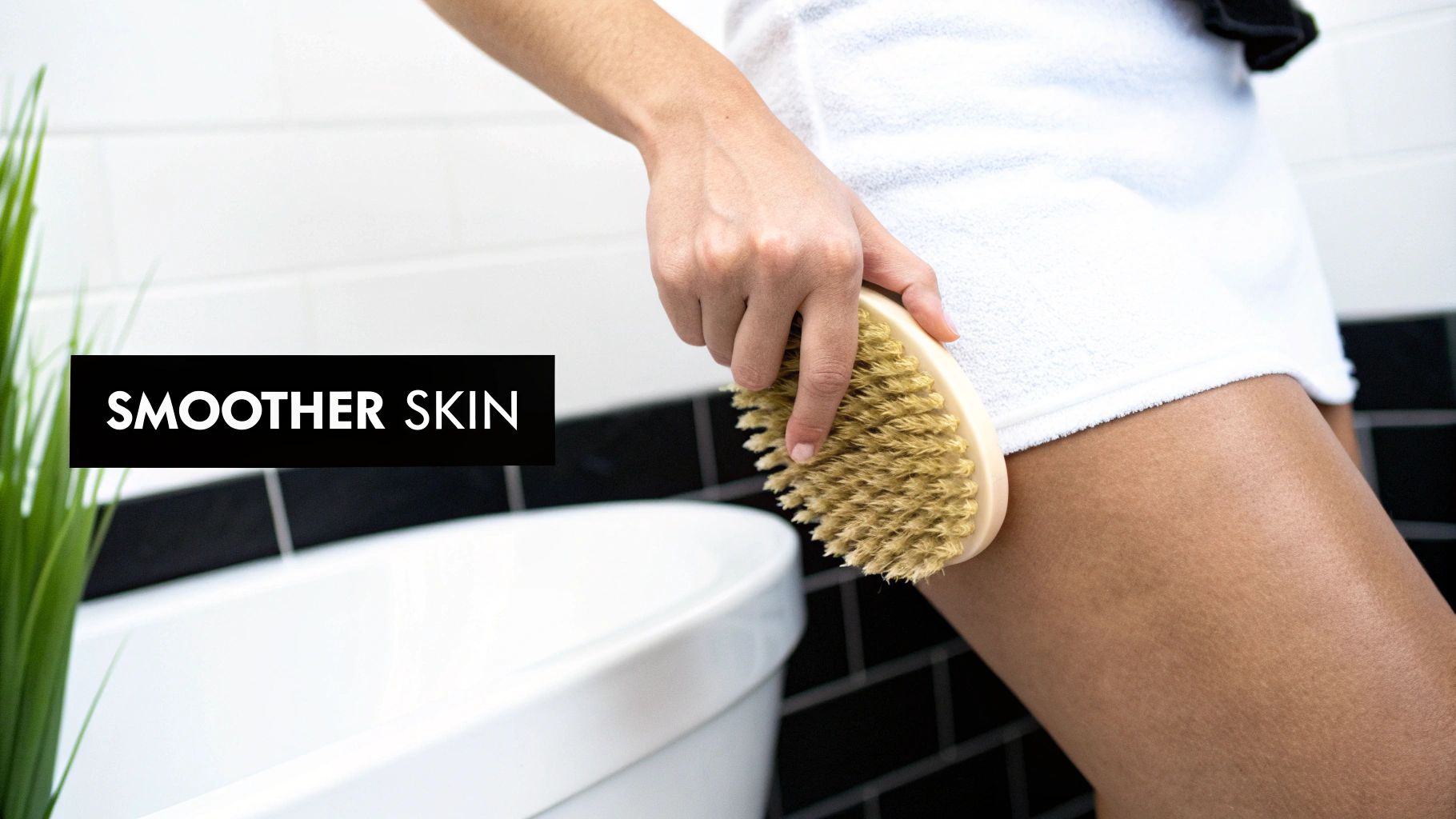
The real beauty of body brushing for cellulite is how simple and accessible it is. It’s a wonderfully empowering, non-invasive method you can easily fit into your daily routine, no expensive equipment or clinic visits required. It’s no surprise it’s become so popular here in the UK; the anti-cellulite care market, which includes tools like body brushes, is predicted to soar to USD 5.9 billion by 2031.
But what’s the secret behind its loyal following? The benefits go more than skin deep, tapping into several of the body’s essential systems.
The Science Behind the Strokes
At its heart, body brushing is all about mechanical stimulation. Those firm, sweeping motions get to work in a few different ways to temporarily improve how your skin looks and feels.
- Exfoliation: First and foremost, brushing physically buffs away the dull, dead cells clinging to the skin’s surface. This instantly reveals a softer, more radiant layer underneath and helps even out the skin’s texture.
- Increased Blood Flow: The friction from the bristles creates a rush of circulation to the top layers of your skin. This brings a temporary plumping effect that can help soften the appearance of dimples, making the skin look firmer for a few hours after your session.
- Lymphatic Support: It’s also widely believed that body brushing helps give your lymphatic system a gentle nudge. This system is key for flushing toxins and reducing fluid retention, which can sometimes contribute to puffiness. For a much deeper dive into this, you might find learning about a professional lymphatic drainage massage really insightful.
Setting Realistic Expectations
Let’s be clear: body brushing feels fantastic and delivers visible, short-term results, but it’s not a permanent cure for cellulite. Cellulite is a structural issue, caused by fat deposits pushing up against the fibrous connective tissue under the skin.
Think of body brushing as a brilliant surface treatment. It enhances your skin’s appearance and supports the systems just beneath it, but it doesn’t change the underlying structure of cellulite itself. Consistency is where you’ll see the most impressive, albeit temporary, improvements.
For best results, view this technique as one part of a bigger wellness picture. When you pair it with other healthy habits and practices, like those you’d find in exploring the benefits of full body massage therapy, you’re contributing to healthier, more vibrant-looking skin overall.
Choosing the Right Tools for Your Routine
Getting started with body brushing means picking the right equipment, and that’s your first real step to seeing results. The market is flooded with options, but they’re not all the same. The best brush for you really boils down to your own skin and what feels right.
Bristles: Natural vs. Synthetic
The biggest choice you’ll make is the bristles. For tackling cellulite, most experts I’ve spoken to and my own experience point towards natural bristles. Things like boar, sisal, or cactus fibre have that perfect balance of firmness to get the circulation going without being harsh.
Synthetic bristles, which are usually nylon, can sometimes be a bit too aggressive. If you’re not careful, you can end up with tiny scratches on the skin. If you know you have sensitive skin, your best bet is to find the softest natural bristle brush you can get your hands on to start.
Finding the Perfect Brush
To help you decide, here’s a quick breakdown of what to look for.
Your Body Brush Selection Guide
This quick comparison should help you choose the best body brush based on your skin type and specific needs.
| Feature | Natural Bristles (e.g., Boar, Sisal) | Synthetic Bristles (e.g., Nylon) | Best For |
|---|---|---|---|
| Feel & Firmness | Firm yet flexible, softens slightly over time. | Can be very firm and uniform. | Natural is great for effective exfoliation and stimulation. |
| Skin Type Suitability | Excellent for most skin types, with softer options available for sensitive skin. | Better suited for non-sensitive, resilient skin. | If you’re new to this or have delicate skin, start with natural. |
| Longevity & Care | Durable with proper care (air drying is key). | Very durable and easy to clean. | Both are long-lasting, but natural bristles require more careful drying. |
| Effectiveness | The varied texture is brilliant for stimulating circulation and lymphatic flow. | Effective for exfoliation but can be too abrasive for some. | For the specific goal of improving cellulite appearance, natural often has the edge. |
Ultimately, picking the right brush comes down to what feels effective yet comfortable for you to use regularly.
Bristle Firmness and Handle Length
You’ve got to get the firmness just right. A brush that’s too soft just won’t create enough friction to make a difference. On the other hand, one that’s too hard will just leave you red and irritated. A good test is to press it against your palm – you want it to feel firm but have a bit of flex.
The handle is another thing to think about. A long-handled brush is a lifesaver for reaching your back and the backs of your legs, making sure you don’t miss a spot. But a smaller, handle-less brush fits right in your palm and gives you much better control for applying pressure on areas like your thighs and bum. Honestly, having both is probably the best setup.
Your perfect brush should feel like a natural extension of your hand—effective but comfortable. It’s a tool you’ll be using several times a week, so it’s worth investing in one that feels right and is made from high-quality, durable materials.
Beyond the Brush: Complementary Care
The brush does the main job, but what you do afterwards can really boost your results. While most people do this on dry skin, if your skin is particularly dry, using a tiny bit of light body oil can help the brush glide more smoothly.
After you’ve brushed and showered, your skin is primed and ready to soak up whatever you put on it. This is the ideal time to apply a targeted treatment. Look for products designed to hydrate and firm, like Beauty Page range of professional-grade body gels and wraps. While the body brush prepares the skin, a dedicated tool like the Simildiet fan brush for peels ensures you get a perfectly even layer of your chosen treatment, making sure none of it goes to waste.
It’s clear this is a routine people are getting behind. The UK cellulite treatment market is projected to hit USD 169.7 million by 2030, and a huge chunk of that is from exfoliating tools like body brushes. It just shows how many of us are looking for smoother, firmer skin. You can discover more insights on the UK cellulite treatment market from Grand View Research.
Mastering the Body Brushing Technique
Alright, let’s get down to the practical side of things. Knowing how to body brush correctly is what separates an invigorating, skin-smoothing ritual from just another chore. The details really matter here. Your goal is to stimulate your skin, not scrub it raw, and the most important part of getting it right is the direction of your strokes.
The golden rule is beautifully simple: always brush towards your heart. This technique is designed to follow the natural flow of your lymphatic system, giving it a gentle nudge in the right direction. Imagine you’re helping guide everything towards the body’s main drainage points.
Your Brushing Routine, From Head to Toe
I always suggest starting at your feet. It’s a great way to wake up your entire system. From there, use long, smooth, sweeping strokes up your legs, working from your ankles right up to your thighs. Make sure your strokes overlap slightly so you don’t miss any spots.
When you get to your thighs and buttocks—the areas where cellulite often shows up most—you can change things up. Switch to firmer, circular motions. It’s okay to apply a bit more pressure here, but it should never, ever be painful. Your skin might turn a healthy pink, which is just a sign of increased blood flow, but it shouldn’t look red or feel scratched.
Next, move onto your arms. Begin at your hands and brush upwards towards your shoulders. For your stomach, gentle, clockwise circles are best. This motion actually follows the path of your colon, so you might even notice a benefit to your digestion. Finally, tackle your back by brushing from the bottom up and from your neck down, always sweeping towards the centre of your body.
You don’t need a lot of time for this. A full session should only take three to five minutes. Think of it as a quick, caffeine-free energy boost to kickstart your morning.
Getting the Pressure and Timing Just Right
How much pressure should you use? That’s really up to you and your skin. Thicker skin, like on the soles of your feet, can handle a bit more firmness. But for more delicate areas like your chest or stomach, a much lighter touch is needed. If your skin is very sensitive, you might want to look into other options for gentle exfoliation for sensitive skin before diving in.
The best time to do it? On completely dry skin, right before you step into the shower. There are a couple of great reasons for this. First, you get the best possible exfoliation on dry skin. Second, you can immediately wash away all those dead skin cells, leaving your skin perfectly prepped and ready to soak up your body lotion or oil.
Choosing the right tool is just as important as the technique. This quick guide breaks down what to look for in a great body brush.
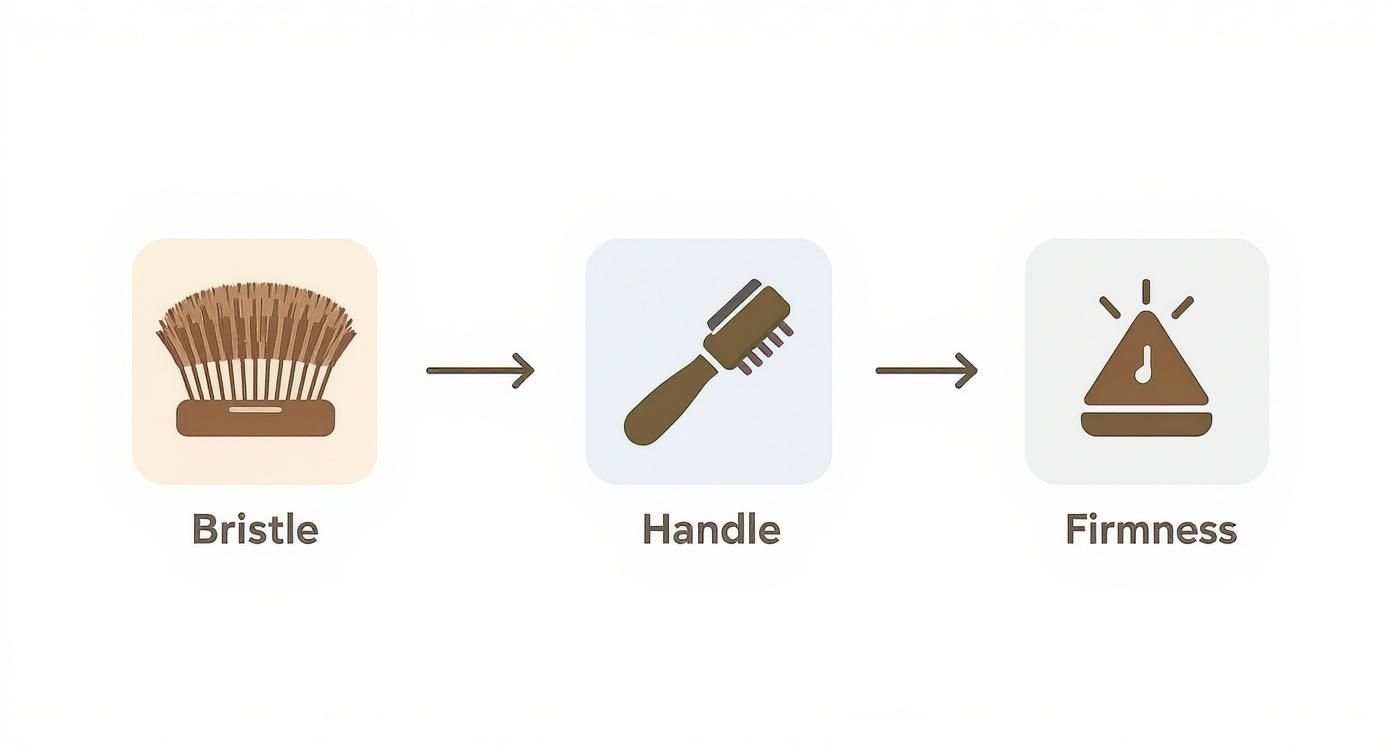
As you can see, finding the right balance between the bristle type, handle, and firmness level will make your routine much more comfortable and effective.
Common Questions on Technique
One of the most common questions I hear is, “Can I do this in the shower?” While some natural brushes can be used wet, dry brushing is widely considered better for tackling cellulite. The friction against dry skin is what really gets the circulation going and creates that temporary plumping effect.
What about those awkward spots, like the inner thighs or the backs of your knees?
- Inner Thighs: The skin here is quite thin and sensitive. Use very light, upward strokes and skip the vigorous circular motions.
- Behind the Knees: This is a key lymphatic point. Gentle, upward flicks are all you need to stimulate the area without causing any irritation.
- Stomach: Remember to stick with those clockwise circles. If your skin is a bit loose, just use your free hand to hold it taut while you brush.
By tuning into your body and mastering these simple movements, you can turn body brushing into a truly purposeful ritual. You’ll feel refreshed, revitalised, and a little bit closer to smoother-looking skin every single time.
How to Get the Most Out of Your Body Brushing Routine
https://www.youtube.com/embed/vgI9Uifj-kI
Nailing the technique is a great start, but the real secret to seeing results from body brushing is turning it into a consistent ritual with smart aftercare. It’s less of a one-off treatment and more of a long-term commitment to your skin’s health. When it comes to body brushing cellulite, creating a routine you can actually stick to is where the magic happens.
So, how often should you do it? I’ve found the sweet spot is around three to four times per week. Brushing every single day can be a bit much, potentially leading to irritation and over-exfoliation. Giving your skin a day off in between sessions allows it to recover, ensuring the practice stays beneficial.
Your Post-Brushing Skincare Ritual
What you do right after you put the brush down is just as important as the brushing itself. Your main goals here are to cleanse, hydrate, and nourish your freshly stimulated skin.
- Rinse and Refresh: Jump into a cool or lukewarm shower immediately after your session. This is key for washing away all the dead skin cells you’ve just loosened up. Try to avoid really hot water, as it can strip your skin of its natural oils, which you want to avoid right after a good exfoliation.
- Lock in Moisture: After gently patting your skin dry with a towel, it’s prime time to apply a high-quality moisturiser or body oil. Your skin is incredibly receptive at this moment, ready to drink up whatever you put on it. This step is non-negotiable for keeping your skin barrier healthy and happy.
To really target those specific areas, I always recommend following up with a product designed for firming. A professional formula like Beauty Page Anti-Cellulite Aromatic Oil works beautifully when applied to warm, freshly brushed skin. It helps to amplify that smooth, toned look you’re aiming for.
Supporting Your Results from the Inside Out
While body brushing does its work on the surface, you can seriously enhance the effects by supporting your body from within. This is where a holistic approach really pays dividends.
First up, hydration is crucial. Drinking plenty of water helps your lymphatic system—the very thing you’re stimulating with the brush—do its job properly and flush out toxins. Think of it as giving the system the fluid it needs to keep things flowing.
Remember, that temporary plumping effect you see after brushing comes from increased blood flow. By supporting your circulation through your lifestyle, you can help make those visible results last longer.
A balanced diet packed with antioxidants and regular exercise also play a huge role in improving skin elasticity and overall circulation. If you want to take it a step further, you can look into other simple tips for improving circulation in legs, as this is often a major area of concern.
By combining consistent brushing with thoughtful aftercare and healthy habits, you’re creating the perfect environment for achieving that smoother, healthier-looking skin you want.
Common Mistakes and Safety Precautions to Know
While body brushing is a wonderfully simple ritual, it’s easy to get a bit overenthusiastic and make mistakes that do more harm than good. To get the results you’re after without damaging your skin, it’s crucial to understand the common slip-ups. Remember, the goal here is gentle stimulation, not an aggressive scrub-down.
One of the most frequent errors I see is people applying way too much pressure. Your skin should turn a healthy pink, a sign of increased circulation, but never an angry red. If it feels painful or looks scratched, you’re being far too harsh. This can lead to micro-tears in the skin and even post-inflammatory hyperpigmentation, especially if you’re repeating this vigorous approach.
Another common pitfall is brushing too often. Daily brushing simply isn’t necessary for most people and can actually strip the skin’s protective barrier, leaving it sensitive and dry. My advice? Stick to three or four times a week. This gives your skin plenty of time to recover and regenerate between sessions.
When to Avoid Body Brushing Entirely
Body brushing isn’t for everyone, and it certainly isn’t for every situation. It’s absolutely vital to know when to put the brush down to avoid making a skin issue worse. As a golden rule, you should never brush over compromised skin.
This means you need to avoid any areas with:
- Open wounds, cuts, or scrapes: Brushing can introduce bacteria and seriously delay the healing process.
- Sunburn or rashes: This skin is already inflamed and needs to be treated with extreme gentleness, not friction.
- Varicose veins: The direct, firm pressure can be painful and is not recommended for these delicate areas.
- Active skin conditions: If you have eczema, psoriasis, or active acne breakouts, brushing over them is a sure-fire way to cause a flare-up.
For those with very sensitive or reactive skin, a cautious approach is always best. The friction might just be too intense, leading to irritation. You may find that developing a dedicated skincare routine for sensitive skin is a much better starting point before considering exfoliation methods like this.
Finally, don’t neglect your tools. Using a brush that is still damp from your last session can create a perfect breeding ground for bacteria and mould. Always let your brush dry completely in a well-ventilated spot, preferably with the bristles facing down, to keep it clean and safe for your next use.
Of course, here is the rewritten section with a more natural, human-written tone.
Your Body Brushing Questions, Answered
Once you start body brushing, you’ll probably have a few questions. Are you doing it right? When will you actually see a difference? These are things we all wonder about, so let’s clear up some of the most common queries.
How Long Until I See Results from Body Brushing Cellulite?
Ah, the million-dollar question. The honest answer? It comes down to patience and sticking with it. You’ll feel an immediate difference – your skin will be softer and smoother right after the very first time you brush. That’s the instant gratification of a good exfoliation.
But for the deeper changes, you need to give it a little more time. Most people start to see a real improvement in their skin’s firmness and overall tone within four to six weeks. That’s assuming you’re consistently brushing three or four times a week. It’s important to think of body brushing as ongoing maintenance to help manage how cellulite looks, rather than a one-and-done cure.
Can I Use My Body Brush on My Face?
That’s a definite no. The skin on your body is much tougher than the delicate skin on your face. A body brush has coarse, firm bristles that are just too aggressive for your face; you could easily cause irritation, redness, and even tiny scratches. For your face, always stick to a tool specifically designed for that area.
The same logic applies to certain parts of your body. You’ll want to be careful and avoid brushing over sensitive or compromised skin to prevent making things worse.
- Never brush over sunburnt skin or active rashes.
- Avoid areas with varicose veins.
- Steer clear of any cuts, scrapes, or broken skin.
- Don’t brush over eczema or psoriasis flare-ups.
What Is the Real Difference Between Wet and Dry Brushing?
The key differences really boil down to when you do it and how intense the exfoliation is. Both have their benefits, but when you’re specifically targeting cellulite, one method definitely has the edge.
Dry brushing is done, as the name suggests, on dry skin before you hop in the shower. This creates more friction against the skin, giving you a much more vigorous exfoliation and really gets your circulation and lymphatic system going. It’s this stimulating effect that makes it the go-to choice for improving the appearance of cellulite.
On the other hand, wet brushing happens in the shower on wet skin, usually with a bit of body wash. The water softens your skin and the bristles of the brush, which makes for a much gentler experience. It’s lovely for a light polish, but it just doesn’t deliver that same invigorating boost you get from dry brushing.
A good way to think about it is this: dry brushing is your focused treatment, while wet brushing is more of a gentle, daily maintenance step. Both are great for your skin, but if your main goal is to reduce the look of cellulite, dry brushing is where you’ll want to focus your efforts.
Ready to take your body care to the next level? Beauty Page offers a curated selection of professional-grade body gels, wraps, and oils designed to firm and nourish your skin after every brushing session. Discover the perfect post-brushing treatments to maximise your results today.