Free shipping £150+ Orders
Best Skincare for Sensitive Skin UK Your Ultimate Guide
Finding the best skincare for sensitive skin in the UK isn’t just about avoiding irritation. It's a proactive strategy: choosing gentle, barrier-fortifying products packed with ingredients like ceramides while steering clear of common troublemakers like fragrance and harsh sulphates. The real goal is to calm reactivity and rebuild your skin's own defences from the ground up.
What Does 'Sensitive Skin' Actually Mean?
Before you can start picking the right products, you need to get to grips with what ‘sensitive skin’ really is. It’s far more than a bit of occasional redness. At its core, sensitivity is a sign that your skin's protective barrier—its first line of defence—isn't functioning properly.
A great way to think about your skin barrier is like a sturdy brick wall. Your skin cells are the bricks, and the mortar holding everything together is a crucial mixture of natural fats, such as ceramides and lipids. This wall does two vital things: it locks precious moisture in and, just as importantly, keeps irritants like pollution, allergens, and harsh chemicals out.
When this barrier gets damaged, it’s as if the mortar has started to crumble, leaving tiny, invisible gaps in your wall. This is often what experts call a 'leaky' or compromised barrier. Suddenly, irritants can sneak through into the deeper layers of your skin, which triggers your body’s inflammatory alarm bells.
The result? That all-too-familiar and frustrating quartet of sensitivity symptoms: redness, stinging, itching, and a feeling of tightness. Your skin isn't just being dramatic; it's overreacting because its primary defence system is down.
Sensitive vs. Sensitised Skin: Knowing the Difference is Key
It’s incredibly important to figure out whether your skin is truly sensitive by nature or has just become temporarily sensitised. This distinction will shape your entire skincare philosophy.
-
Truly Sensitive Skin: This is usually a long-term, genetic trait. You might also have a personal or family history of conditions like eczema, rosacea, or psoriasis. Your skin simply has a naturally thinner or less robust barrier, leaving it consistently prone to reacting to a whole host of triggers.
-
Sensitised Skin: This, on the other hand, is a temporary condition brought on by external factors, and it can happen to anyone. The most common culprits? Going overboard with strong exfoliating acids, piling on too many potent active ingredients at once, sun damage, or even just harsh weather. In this case, your 'brick wall' has been weakened by something you've done, rather than being inherently fragile.
The good news is that sensitised skin can almost always be brought back to health. It usually involves stripping your routine back to basics, ditching the offending products, and focusing entirely on gentle, barrier-repairing care. For those with truly sensitive skin, the focus is more on long-term management and consistent fortification.
This isn't just a niche concern, either. The growing demand for gentle formulas has completely reshaped the beauty industry. The UK's sensitive skincare market generated a staggering USD 1,856.7 million in 2023 alone. It's projected to climb to USD 3,421.0 million by 2030, which just goes to show how many of us are on the hunt for calmer, happier skin. You can explore the UK market growth for sensitive skincare to see the data for yourself.
Learning to read your skin's signals is the first and most powerful step you can take. Once you can tell whether your barrier is naturally vulnerable or has been temporarily knocked off-kilter, you can choose the best skincare for sensitive skin in the UK with real confidence, finally moving from a state of constant reaction to one of calm resilience.
Decoding Labels: Ingredients to Love and to Leave
Stepping into the skincare aisle can feel like preparing for a chemistry exam you didn't study for. An endless wall of lotions and potions, each with an ingredients list longer than your arm, can make finding the best skincare for sensitive skin in the UK a seriously daunting task. But here's the secret: understanding what’s inside the bottle is the most powerful tool you have.
Think of it like tending a delicate garden. You need to know which ingredients are the nurturing compost and which are aggressive weeds that will only cause chaos. Once you learn to spot the key players on an ingredients list, you'll go from confused shopper to a confident curator of your skin’s health.
The visual guide below breaks down the core issue: a compromised skin barrier, which is the root cause of both sensitive and sensitised skin conditions.
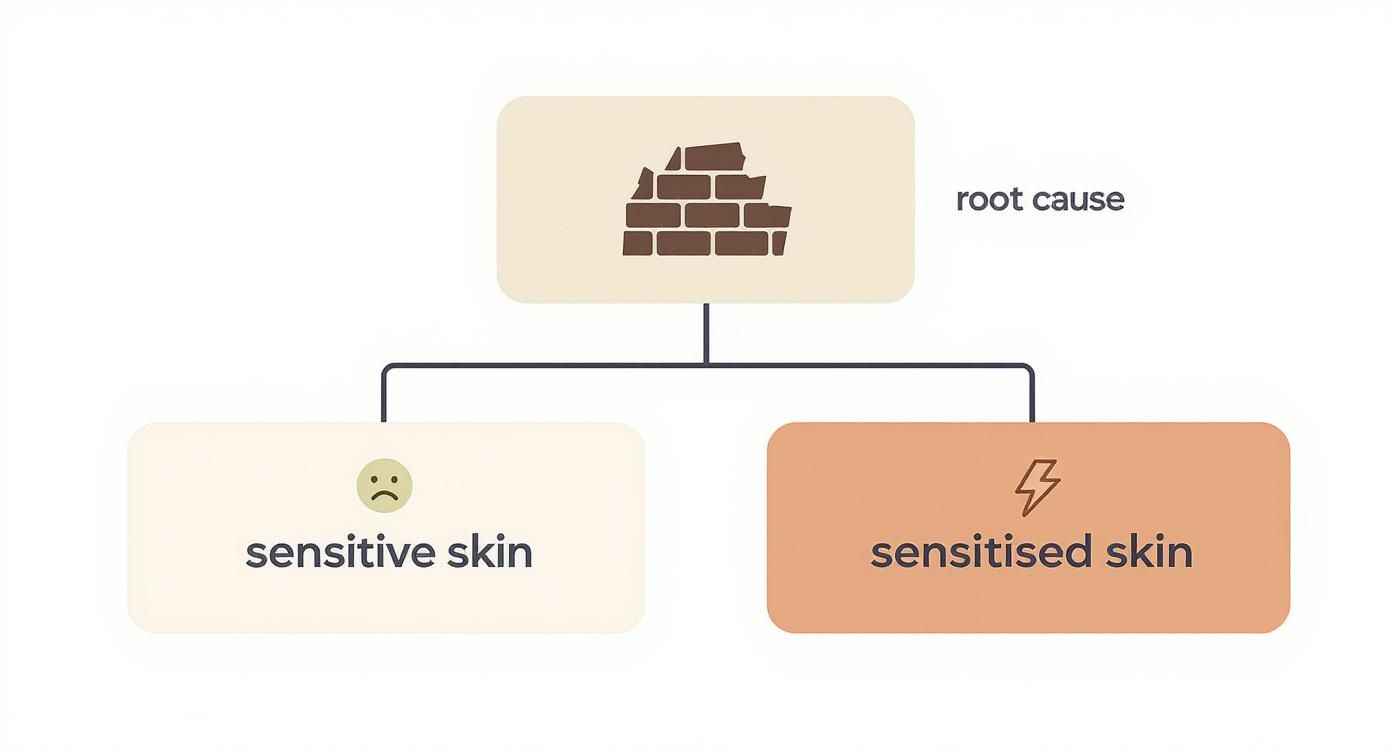
As the infographic shows, a broken barrier is the real problem, leading to distinct yet related issues that all need careful, gentle management.
The Calming Crew: Ingredients to Seek Out
When your skin barrier is struggling, your mission is simple: rebuild and soothe. Thankfully, certain ingredients are the undisputed heroes of this job, working to repair your skin’s natural defences and calm down inflammation. These are the names you want to see high up on the label.
-
Ceramides: Think of these as the 'mortar' holding your skin's 'brick wall' together. These natural fats (lipids) fill in the gaps in a damaged barrier, helping to lock in moisture and make your skin more resilient.
-
Hyaluronic Acid: This molecule is like a tiny sponge that can hold up to 1,000 times its weight in water. It pulls moisture from the air right into your skin, delivering deep, lightweight hydration without clogging pores.
-
Niacinamide (Vitamin B3): A true workhorse, niacinamide is brilliant at calming redness and inflammation. It also encourages your skin to produce more of its own ceramides, strengthening the barrier from the inside out.
-
Centella Asiatica (Cica): Often called 'tiger grass', this botanical extract is a powerhouse for soothing angry, irritated skin. It’s packed with antioxidants and has potent anti-inflammatory properties that help speed up skin healing.
For sensitive complexions, the goal isn't complexity; it's targeted support. A simple routine featuring ingredients like these provides the fundamental building blocks your skin needs to repair itself and function optimally.
Finding products that combine these calming ingredients is a major win. For a deeper dive, our guide on finding the best serum for sensitive skin shows how these elements can work together in one targeted treatment.
The Irritation Instigators: Ingredients to Avoid
Just as important as knowing what to look for is knowing what to leave on the shelf. Some very common ingredients are notorious for stripping the skin's natural oils, disrupting its delicate pH balance, and triggering a full-blown inflammatory response.
These are the primary culprits you'll want to watch out for:
-
Fragrance (Parfum): This is probably the number one irritant for sensitive skin. The single word 'fragrance' can hide a cocktail of hundreds of undeclared chemicals, many of which are known allergens. This includes both synthetic perfumes and many natural essential oils, which can be just as problematic.
-
Sulphates (SLS/SLES): Sodium Lauryl Sulfate and Sodium Laureth Sulfate are the harsh detergents that create that satisfying lather in many cleansers. Unfortunately, they're a little too good at their job, stripping away your skin’s protective oils and leaving it feeling tight, dry, and vulnerable.
-
Drying Alcohols: Now, not all alcohols are bad for your skin. But the simple, short-chain ones like Alcohol Denat, SD Alcohol, and Isopropyl Alcohol can be incredibly dehydrating and irritating. They give products a quick-drying feel but can seriously compromise your skin barrier over time.
This isn't just insider knowledge; UK shoppers are catching on. A 2025 report revealed that a massive 81% of UK skincare consumers now actively seek out fragrance-free products. This shows a clear shift towards gentle, non-irritating formulas. Learning to spot these potential troublemakers is a crucial step toward building a routine that brings calm, not chaos.
Sensitive Skin Ingredient Cheat Sheet
To make things easier, here’s a quick-reference table to help you distinguish the friends from the foes when you're scanning an ingredients list.
| Ingredient Category | Embrace (Soothing & Repairing) | Avoid (Potential Irritants) |
|---|---|---|
| Moisturisers & Humectants | Hyaluronic Acid, Glycerin, Squalane, Panthenol (B5) | Drying Alcohols (Alcohol Denat, SD Alcohol) |
| Barrier Repair | Ceramides, Cholesterol, Fatty Acids, Niacinamide (B3) | Harsh Sulphates (SLS, SLES) |
| Soothing & Anti-Inflammatory | Centella Asiatica (Cica), Allantoin, Green Tea, Colloidal Oatmeal | Fragrance (Parfum), Essential Oils (e.g., Lavender, Citrus) |
| Cleansing Agents | Gentle surfactants (e.g., Coco-Glucoside, Decyl Glucoside) | Abrasive physical scrubs (e.g., walnut shells) |
Keep this cheat sheet in mind next time you're shopping. It’s all about focusing on ingredients that actively heal and avoiding those that are known to cause trouble for reactive skin.
Building Your Gentle UK Skincare Routine
When it comes to sensitive skin, building a routine isn’t about cramming your shelf with dozens of products. It's about being selective and choosing a handful of gentle, effective essentials that work together. In the UK, the best approach for sensitive skin is almost always a "less is more" philosophy, focusing on consistently calming, supporting, and protecting your skin's delicate barrier.
Forget those complicated, 10-step regimens you see online—they often do more harm than good by overwhelming reactive skin. Instead, stripping it back to just four core pillars can deliver far better, more predictable results. Think of it as building a strong foundation for your house before you even think about decorating.
This foundational routine has four non-negotiable steps: cleanse, treat, moisturise, and protect. Each one plays a critical role in nurturing your skin back to health and resilience.
Step 1: Cleanse with Care
This first step is arguably the most important. The wrong cleanser can strip away your skin's natural oils in an instant, compromising your barrier and setting you up for a day of irritation. For sensitive skin, the goal is to clean your face thoroughly without that tight, "squeaky clean" feeling—that's not a sign of clean, it's a sign of distress.
Cream, milk, or gentle gel-based cleansers are your best friends here. Unlike foaming formulas, which often rely on harsh sulphates, these textures lift away dirt and impurities while respecting your skin's natural moisture. Always look for cleansers that are soap-free and pH-balanced to keep your skin calm right from the get-go.
Step 2: Treat with a Barrier Repair Serum
After cleansing, it's time to "treat" your skin with a concentrated dose of active ingredients. For sensitive complexions, the number one priority is always barrier repair. This is where a targeted serum becomes the hero of your routine.
A good serum can penetrate deeper than a moisturiser, delivering ingredients like ceramides, niacinamide, and hyaluronic acid exactly where they're needed most. These ingredients are the building blocks that help rebuild your skin’s defences, calm down inflammation, and seriously boost hydration. Over time, this makes your skin stronger and much less reactive.
Our detailed guide on creating a full skincare routine for sensitive skin dives deeper into how these treatments fit into a complete regimen.
Step 3: Moisturise to Lock in Hydration
A moisturiser has two key jobs: to add hydration and, just as importantly, to lock it all in, along with the benefits of your serum. It forms a protective seal on your skin's surface, acting as a shield against pollution and other environmental triggers while preventing precious moisture from escaping.
For sensitive skin, the ideal moisturiser is simple, soothing, and fragrance-free. Look for formulas packed with comforting ingredients like shea butter, squalane, or colloidal oatmeal. The texture should feel nourishing without being heavy or greasy, providing lasting comfort day and night.
Key Takeaway: A brilliant moisturiser for sensitive skin doesn't need a laundry list of fancy ingredients. Its main job is to provide a comforting, protective blanket, giving your skin the space it needs to heal and function without stress.
Step 4: Protect with a Mineral Sunscreen
Sunscreen is the most important step in any skincare routine, but for sensitive skin, it's completely non-negotiable. UV radiation is a massive trigger for inflammation and can weaken an already fragile skin barrier.
Mineral sunscreens are the gold standard here. They use physical blockers—namely zinc oxide and titanium dioxide—to create a physical shield on top of your skin that literally reflects UV rays away.
Here’s why they’re the superior choice for reactive skin:
- Less Irritating: Chemical sunscreens work by absorbing UV light and converting it to heat, a process that can easily cause stinging and redness. Mineral formulas sit on the surface and are far less likely to cause a reaction.
- Broad-Spectrum Protection: Zinc oxide, in particular, offers fantastic protection across the entire UVA and UVB spectrum.
- Calming Properties: As a bonus, zinc oxide is naturally anti-inflammatory and soothing, making it a perfect match for skin prone to redness.
By sticking to this four-step framework, you give your skin everything it needs to thrive. Using professional-grade formulations, like those from Avera Cosmetic, can elevate this routine even further. These products typically contain higher, more stable concentrations of active ingredients and are formulated without common irritants, ensuring you get maximum results with minimal risk. A simple, consistent approach is truly the most reliable path to achieving calm, healthy, and resilient skin.
How to Exfoliate Sensitive Skin Without Irritation
The mere mention of "exfoliating sensitive skin" can feel like a contradiction. If your skin is prone to redness, stinging, and general upset, the idea of sloughing off its top layer sounds like a one-way ticket to a flare-up. But here's the thing: even the most reactive skin benefits from shedding dull, dead cells to reveal a healthier, more radiant complexion.
The secret isn't to skip it, but to completely change your mindset and method. Step away from those harsh, gritty physical scrubs—they can create micro-tears in the skin and just make inflammation worse. The modern, skin-kind solution lies with a group of ingredients known as chemical exfoliants.
Think of the 'glue' that holds dead skin cells together on the surface. Instead of violently scrubbing them off, these clever acids gently dissolve that glue. This allows old cells to lift away naturally, revealing the smoother, brighter skin hiding underneath. It’s a much more controlled, elegant way to exfoliate, and it's perfect for skin that needs a little extra care.
Choosing Your Gentle Exfoliant
When you dip your toe into the world of chemical exfoliants, you'll meet three main 'families': Alpha-Hydroxy Acids (AHAs), Beta-Hydroxy Acids (BHAs), and the incredibly gentle Poly-Hydroxy Acids (PHAs). They all work a bit differently, and picking the right one is absolutely crucial for sensitive complexions.
-
AHAs (like Glycolic and Lactic Acid): These are water-soluble, so they work on the surface of your skin. They’re great for tackling dullness, but glycolic acid has a tiny molecule size, meaning it gets to work very quickly and deeply. For many with sensitive skin, this can be too much, too soon. Lactic acid is a gentler AHA with a larger molecule, making it a better option.
-
BHAs (like Salicylic Acid): This one is oil-soluble, which is a fancy way of saying it can get right down into your pores to clear out blockages. It’s a brilliant choice if your sensitive skin is also prone to breakouts or blackheads, as it has natural anti-inflammatory properties that help calm things down.
-
PHAs (like Gluconolactone and Lactobionic Acid): Meet the true heroes for sensitive skin. PHAs have a much larger molecular structure compared to AHAs. This means they can't penetrate as deeply and work much more slowly, focusing only on the very top layer of skin. This slow-and-steady approach gives you all the brightening benefits without the typical risks of irritation.
For anyone feeling nervous, starting with a PHA is your safest bet. It delivers that sought-after radiance and smoother texture with a significantly lower chance of upsetting your skin.
How to Introduce an Exfoliant Safely
Success here is all about patience. So many people cause their own skin issues by going in too hard and too fast with a new active ingredient. The golden rule is to start low and go slow.
Follow this simple, step-by-step process to get your skin comfortable:
-
Choose Your Product Wisely: Begin with a formula that has a very low percentage of a PHA or maybe Mandelic Acid (another gentle, large-molecule AHA). Look for products specifically labelled as some of the best skincare for sensitive skin UK customers can find.
-
Always Patch Test: Never skip this step. Apply a small amount of the product to a hidden area, like behind your ear or on your inner arm. Wait a full 24-48 hours to see if any redness, itching, or irritation pops up.
-
Start with Once a Week: Seriously, just one night a week is plenty to begin with. This gives your skin ample time to adjust and allows you to properly observe how it's responding.
-
Apply to Dry Skin: After cleansing, pat your face completely dry. Applying an acid to damp skin can increase its penetration, which also increases the risk of irritation.
-
Always Follow with Hydration: Once the exfoliant has fully absorbed, layer on a soothing, barrier-supporting moisturiser. This is key to calming the skin and locking in moisture, keeping your protective barrier happy and intact.
After a few weeks of this routine with no issues, you might consider slowly increasing the frequency to twice a week, but only if you feel your skin truly needs it. To explore this cautious approach in more detail, Avera Cosmetic provides a fantastic guide on gentle exfoliation for sensitive skin that walks you through every step. Just remember, consistency will always beat intensity when it comes to long-term skin health.
Shopping Smarter for Skincare in the UK
Trying to find the right skincare can feel like navigating a minefield, especially when one wrong step means waking up to redness and irritation. For anyone searching for the best skincare for sensitive skin UK brands have to offer, the key isn't just picking a product off the shelf. It’s about developing a smart, strategic eye. Let's walk through some practical ways to become a more confident and discerning buyer.
The single most important habit you can build is patch testing. It's a brilliantly simple, zero-risk way to see how your skin will react to a new product before you commit to slathering it all over your face. Think of it as a dress rehearsal—you get a sneak peek of the performance, letting you spot any potential drama before it takes centre stage. After all, a small red patch on your jawline is a whole lot easier to deal with than a full-blown facial flare-up.
The Art of the Patch Test
Getting the hang of patch testing is easy, and it really should be a non-negotiable part of your routine.
- Choose a Discreet Spot: Dab a small amount of the new product onto a clean patch of skin. Behind your ear, on the inside of your wrist, or along your jawline are all great spots.
- Wait and Observe: Now, play the waiting game. Leave the product on for at least 24 hours, keeping an eye on how your skin is behaving. If you’re testing something with potent actives, pushing it to 48 hours is even better.
- Check for Reactions: Look for any tell-tale signs of irritation—we’re talking redness, itchiness, stinging, or even tiny bumps. If your skin looks and feels perfectly happy, you're good to go.
This simple safety check is your first line of defence against a bad reaction, making it an absolutely essential skill for anyone with a sensitive complexion.
How to Read UK Ingredient Lists
Next up, let's decode the label. In the UK, ingredient lists follow the International Nomenclature of Cosmetic Ingredients (INCI) system. It's a standardised format that lists everything in descending order of concentration. The first five or six ingredients usually make up the vast majority of the formula.
This is where you can do some real detective work. Keep an eye out for common culprits like fragrance (Parfum) or certain drying alcohols (Alcohol Denat). If you spot them high up on the list, there’s a greater chance they could cause trouble. On the flip side, seeing your hero ingredients like Niacinamide or Ceramides near the top is a fantastic sign. And don't be swayed by marketing fluff like 'dermatologically tested'—the term isn't legally regulated. It just means a dermatologist supervised a trial, not that the product is guaranteed to be gentle.
Your best tool is knowledge. By learning to read an INCI list, you move beyond marketing slogans and can make choices based on the actual formulation, giving you control over what you put on your skin.
Investing in Professional-Grade Formulas
While high-street brands are convenient, investing in professional-grade skincare can be a game-changer for the long-term health of your skin. Brands like Avera Cosmetic pour their resources into creating formulas with higher concentrations of stable, top-quality active ingredients. This usually means a lot more research and development has gone into making sure the product is both effective and as gentle as possible. When you’re ready to introduce gentle but powerful actives, understanding the science is key; our guide on how to use mandelic acid is a great place to start.
The UK skincare market is booming, and it’s projected to hit USD 612.3 million by 2035. This growth is fantastic news for consumers, as it's driven by a demand for more personalised and effective solutions. When you're shopping online, it also pays to be savvy about the logistics—understanding things like how beauty products are safely shipped can give you extra peace of mind. By choosing well-formulated products, you're not just buying a temporary fix; you're investing in the resilience and future of your skin.
Your Sensitive Skincare Questions Answered
Stepping into the world of sensitive skincare can feel like you’re constantly walking on eggshells. Even when you think you’ve got it figured out, new questions always seem to pop up. To help you along, I’ve put together answers to some of the most common queries I hear, all aimed at taking the mystery out of the process and giving you back a sense of control.
Think of this section as your personal cheat sheet, tackling everything from decoding product labels to safely using those powerhouse active ingredients you thought were off-limits. The goal is to arm you with the right knowledge so you can stop reacting to your skin and start proactively caring for it.
Is My Skin Truly Sensitive or Just Reacting?
This is the big one, and honestly, the answer comes down to spotting patterns. A one-off flare-up, like some sudden redness after you’ve tried a new face mask, is usually just that—a reaction. We call this sensitised skin, where an external trigger has temporarily thrown things off balance.
True sensitivity, on the other hand, is a more permanent state of affairs. It’s defined by a consistent pattern of reactivity. Your skin gets upset by a whole host of things, from different skincare products and makeup to environmental shifts like a windy day, a bit of sun, or even the central heating kicking in. If your skin often feels tight, itchy, or flushed, no matter what you do, it’s a pretty safe bet you have a genuinely sensitive skin type.
Let’s break it down:
- A Reaction: An isolated incident you can tie to a new or harsh product. The problem usually vanishes once you stop using it.
- Sensitivity: An ongoing condition where your skin is easily irritated by multiple factors, pointing to a chronically compromised barrier.
Does Hypoallergenic Mean It Is Safe for My Skin?
I wish it were that simple, but unfortunately, no. In the UK and Europe, the term 'hypoallergenic' is a marketing claim, not a regulated scientific standard. It just means the brand has tried to create a formula that’s less likely to cause an allergic reaction, usually by leaving out common culprits like fragrance.
But that’s no guarantee it’s safe for your skin. A product slapped with a 'hypoallergenic' label can still contain an ingredient that your specific skin just doesn't get on with. It’s a helpful signpost, but it’s certainly not the final word.
Your best line of defence is to become an ingredient detective. Always ignore the big promises on the front of the bottle, flip it over, and get familiar with the full INCI list. Check it against the ingredients we’ve flagged to avoid, and most importantly, always patch test before slathering a new product all over your face.
Can I Use Potent Actives Like Vitamin C or Retinol?
Yes, you absolutely can! But you have to be smart about it. The golden rule is to go low and slow. So many people with sensitive skin think they’re barred from using game-changing ingredients like Vitamin C and retinoids, but that’s a complete myth. It’s all about choosing the right type of ingredient and introducing it with a huge amount of caution.
For Vitamin C:
Pure L-Ascorbic Acid is the most famous form, but it can be notoriously unstable and irritating. Instead, look for its gentler, more stable cousins that are much kinder to reactive skin.
- Sodium Ascorbyl Phosphate (SAP)
- Magnesium Ascorbyl Phosphate (MAP)
- Tetrahexyldecyl Ascorbate (THDA)
Start with a really low concentration, something around 5%, and just use it a few times a week in the morning, right before your sunscreen.
For Retinoids:
Don't even think about jumping straight to prescription-strength tretinoin. Your journey should start with the mildest members of the retinoid family.
- Granactive Retinoid (HPR)
- Bakuchiol (a brilliant plant-based alternative with similar effects)
- Retinyl Palmitate
When you first start, use the "sandwich method" to buffer any potential irritation. It’s simple: apply a layer of moisturiser, let it sink in, apply your retinoid, and then pop another layer of moisturiser on top. Start with once a week and only very, very slowly build up how often you use it over several months. If you’re also dealing with breakouts, our guide on skincare for sensitive acne-prone skin has more specific advice.
Where Can I Find Professional-Grade Skincare in the UK?
While the high-street chemists and department stores have upped their game, finding truly advanced, professional-grade formulas often means looking in more specialised corners. For those of us after the best skincare for sensitive skin, UK shoppers have some fantastic options.
Specialised online retailers, dermatology clinics, and direct-to-consumer brands like Avera Cosmetic are usually your best bet. These places tend to focus on formulas backed by proper research. They care about things like ingredient stability and effective delivery systems, creating products that get you visible results without relying on cheap fillers and common irritants.
When you're choosing a brand, look for these signs of quality and trustworthiness:
- Full Ingredient Transparency: They should make it dead simple to find the complete INCI list for every single product.
- Detailed Product Information: Look for clear explanations of what the active ingredients do and, ideally, at what percentage.
- Positive Customer Reviews: Check out what other people with sensitive skin are saying. Their real-world experiences can be incredibly helpful.
By opting for high-quality, professionally formulated products, you’re doing more than just buying a quick fix. You're making a long-term investment in your skin's health and resilience, giving it the sophisticated, gentle support it needs to really thrive.
At Avera Cosmetic, we specialise in providing professional-grade skincare that balances potent, effective ingredients with the gentle touch required by sensitive skin. Discover our advanced formulations designed to calm, repair, and strengthen your skin barrier. Explore the Avera Cosmetic collection today.