Free shipping £150+ Orders
Finding the Best Products for Skin Blemishes
When you’re staring down a blemish, what you really want is a product that works. The secret isn’t some magical, one-size-fits-all solution, but a strategic approach using powerhouse ingredients like Salicylic Acid, Niacinamide, and Retinoids. These aren’t just buzzwords; they’re proven actives that get to the root of the problem by unclogging pores, calming inflammation, and getting oil production under control.
The key to unlocking clear skin is playing matchmaker—pairing the right ingredient with your specific type of blemish. That’s when you’ll start seeing real, lasting results.
Your Guide to Tackling Skin Blemishes
That feeling of seeing a new breakout in the mirror is all too familiar. It’s frustrating and often sends you down a rabbit hole of product research, leaving you wondering what will actually make a difference this time.
But clear skin isn’t about finding a miracle cure; it’s about understanding what’s really going on. Picture your pores as tiny tunnels. When they get clogged with a mix of excess oil (sebum), dead skin cells, and bacteria, you’ve got a traffic jam. This blockage is what leads to the different types of spots we all dread.
From simple blackheads to deep, painful cysts, every blemish tells a unique story about what’s happening just beneath the surface. Once you can read those signals, you can choose the right tool for the job. This becomes even more important if you have sensitive skin, where a gentle but effective approach is everything. For more on that balancing act, take a look at our complete guide to skincare for sensitive acne-prone skin.
Matching Blemish Types to Top Ingredients
To cut through the confusion and find the best products for skin blemishes, it’s incredibly helpful to connect the blemish type directly to the ingredient best equipped to handle it. This targeted strategy means you’re addressing the root cause, not just throwing random products at your face and hoping for the best.
The most effective skincare routine is one that is both targeted and consistent. By understanding the ‘why’ behind your blemishes, you can choose ingredients that act like precision tools rather than using a sledgehammer approach that can lead to irritation.
Think of the table below as your cheat sheet for making smarter skincare choices. It breaks down the most common types of blemishes, what causes them, and which hero ingredient is your best bet.
Matching Blemish Types to Top Ingredients
| Blemish Type | Primary Cause | Most Effective Ingredient | Product Type Example |
|---|---|---|---|
| Blackheads & Whiteheads | Clogged pores from oil and dead skin cells | Salicylic Acid (BHA) | Exfoliating Toner or Serum |
| Papules (Red Bumps) | Bacteria and inflammation | Benzoyl Peroxide or Niacinamide | Spot Treatment or Calming Serum |
| Pustules (Pus-filled) | Bacterial infection within the pore | Sulphur or Azelaic Acid | Drying Lotion or Clarifying Mask |
| Cystic Acne | Deep inflammation and infection | Retinoids (e.g., Retinol) | Prescription Cream or Night Serum |
Use this as your starting point for building a routine that truly works for you. With this foundational knowledge, you can pick your products with confidence, knowing that every step in your routine has a clear and powerful purpose.
The Science Behind Blemish-Fighting Ingredients
If you want to find products that genuinely work on blemishes, you first need to get familiar with the active ingredients inside the bottle. Think of them as tiny, highly skilled specialists, each with a specific job to do when it comes to tackling what causes a breakout in the first place. Once you understand what they do, reading a product label becomes less about marketing hype and more about knowing exactly how it’s going to help your skin.
At its heart, a blemish is often just a traffic jam inside a pore. This map breaks down how things like excess oil and bacteria team up to create a clog, which is ground zero for most spots.
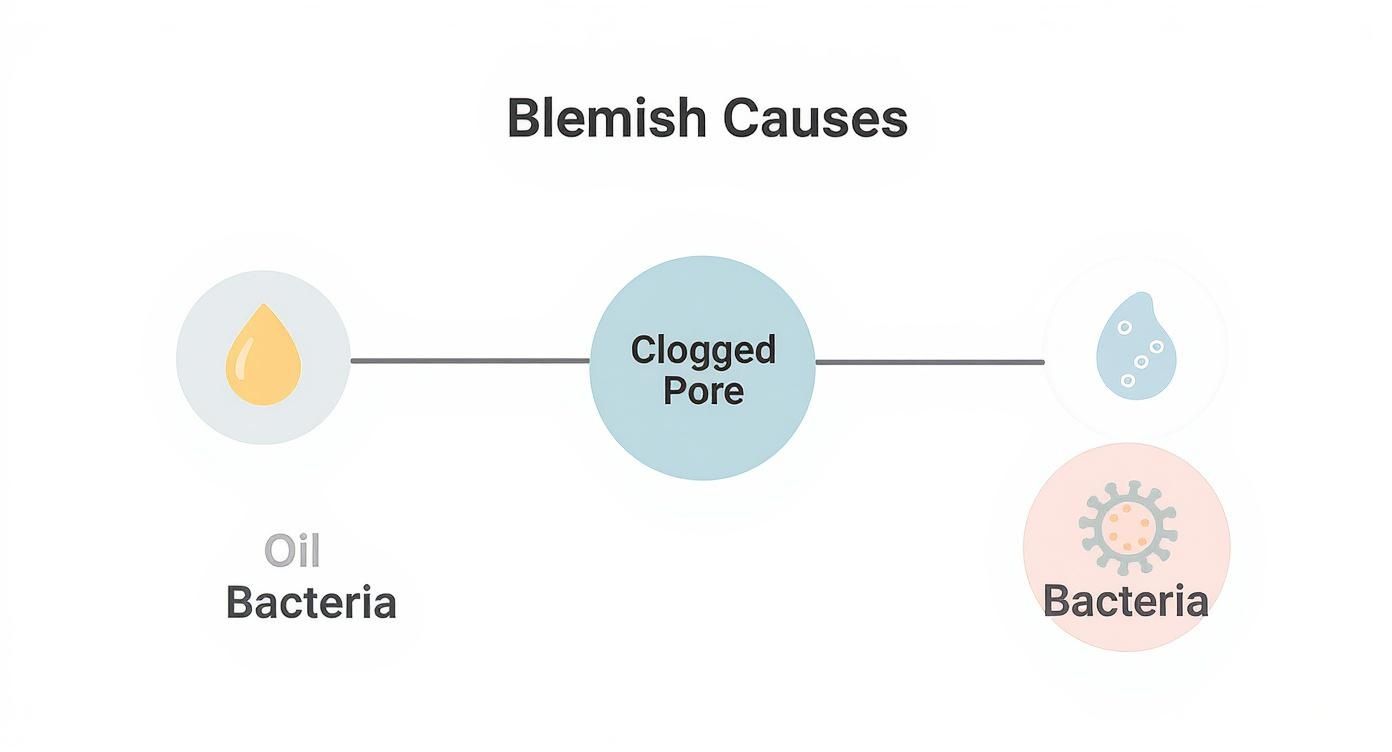
It’s a simple visual, but it makes one thing crystal clear: the best way to stop breakouts is to manage oil and keep bacteria in check. Let’s meet the key players that do this brilliantly.
The Pore Decongestant: Salicylic Acid
Salicylic acid is a beta-hydroxy acid (BHA), and its superpower is that it’s oil-soluble. Picture your pores as tiny pipes clogged up with a stubborn, waxy mix of oil and dead skin. Water-based ingredients just wash over the top, but salicylic acid can dive right into that oily gunk and start dissolving the blockage from the inside.
This makes it incredibly effective for clearing out blackheads and whiteheads. It’s a true deep-cleaning specialist, getting into places other ingredients simply can’t reach to stop congestion before it turns into a full-blown spot.
The Master Regulator: Niacinamide
Niacinamide, a form of vitamin B3, is the ultimate multitasker for skin that’s prone to blemishes. It doesn’t just focus on one issue; it helps bring your whole complexion back into balance. You can think of it as a thermostat for your skin, turning down oil production to stop things getting greasy, but without ever stripping or drying your skin out.
At the same time, it’s a brilliant anti-inflammatory, calming the redness and soreness that always seems to come with a breakout. This one-two punch makes it a fantastic supporting act in any routine, as it strengthens the skin’s defences while actively making it look and feel calmer.
An ingredient’s effectiveness isn’t just about its power, but its precision. A great formulation delivers targeted action to the source of the blemish while respecting the health and balance of the surrounding skin.
Other Key Blemish Fighters
Beyond those two powerhouses, a few other actives play a vital role in keeping skin clear. Each one works a little differently, which is why they’re suited to different kinds of blemishes.
- Benzoyl Peroxide: This is the go-to for angry, red spots. It works by releasing oxygen deep inside the pore, which kills off the acne-causing bacteria fuelling the inflammation.
- Retinoids: These vitamin A derivatives are like supervisors for your skin cells. They speed up cell turnover, pushing out old, dead cells that can cause clogs, and they even help boost collagen. This makes them ideal for stubborn bumps and for smoothing out skin texture over time.
- Azelaic Acid: A gentler but seriously effective exfoliant. Azelaic acid helps to kill bacteria and reduce inflammation, but its real claim to fame is its ability to stop pigment production in its tracks. This makes it a star for fading those stubborn red or brown marks that spots often leave behind.
- Alpha-Hydroxy Acids (AHAs): Think Glycolic, Lactic, and Mandelic Acid. These work on the skin’s surface, dissolving the ‘glue’ that holds dead skin cells together. By sweeping them away, they reveal a brighter, smoother complexion and stop those cells from ever getting a chance to block a pore. If you want to dive deeper, our guide on how to use mandelic acid is a great place to start.
When you understand what each of these specialists brings to the table, you can stop guessing and start choosing products for your skin blemishes with real confidence. You’ll be building a routine that’s not just effective, but smart.
Navigating the Most Effective Product Categories
Knowing the key ingredients for tackling blemishes is half the battle; figuring out where they fit into your routine is the other. The skincare aisle can feel overwhelming, a maze of bottles and jars all promising the same clear-skin results. But the secret isn’t about buying more products—it’s about choosing smarter within a few essential categories.
Think of it like building a specialist team. Each product type has a very specific and vital role to play, from prepping the canvas to delivering the final, protective layer. Get this structure right, and you ensure every active ingredient can get to work effectively without causing unnecessary irritation.
This strategic approach is catching on. In the UK, demand for targeted skincare has soared, with facial skincare sales climbing by 7.9%. This isn’t just a fleeting trend; it’s driven by savvy consumers actively hunting for proven ingredients. In fact, nearly 60% of UK adults aged 18-34 now specifically look for products with actives like salicylic acid and niacinamide to get real results.
The Foundation: Gentle Cleansers
The first step in any routine is, without a doubt, the most crucial. A great cleanser for blemish-prone skin has one job: to remove dirt, excess oil, and grime without stripping the skin’s natural moisture barrier. Using a harsh, stripping cleanser can backfire spectacularly, kicking your oil glands into overdrive to compensate.
My advice? Always look for gentle, sulphate-free formulas. A cleanser containing a low concentration of salicylic acid is a fantastic starting point, offering a touch of daily exfoliation to help keep pores clear right from the get-go. This step perfectly preps your skin, making it far more receptive to the targeted treatments that follow.
The Power Players: Targeted Serums and Treatments
This is where the real work happens. Serums are the specialists on your team—lightweight, fast-absorbing liquids designed to deliver a high concentration of active ingredients deep into the skin. They are your problem-solvers, tasked with tackling specific issues like clogged pores, inflammation, or the stubborn marks left behind by old blemishes.
- For Clogged Pores: A serum with Salicylic Acid (BHA) is your best friend. It gets right into the pores to dissolve oil and debris.
- For Redness and Oil Control: Niacinamide is a true powerhouse. It calms inflammation, helps regulate sebum production, and strengthens your skin barrier over time.
- For Stubborn Blemishes and Texture: A Retinoid serum is brilliant for accelerating cell turnover, which helps clear existing congestion and stop new clogs from forming.
For a more intensive reset, you might look to at-home exfoliants. If you’re ready for something more powerful to resurface your skin and fade stubborn marks, our complete guide to chemical peels explains how these professional-grade treatments can be a genuine game-changer.
The Protectors: Moisturisers and SPF
It’s one of the biggest myths in skincare: that oily or blemish-prone skin doesn’t need a moisturiser. The truth is, skipping this step can make everything worse. Dehydrated skin often panics and overproduces oil to protect itself, leading to even more breakouts.
A well-formulated moisturiser for blemish-prone skin isn’t about adding oil; it’s about providing essential hydration and locking in the benefits of your serums.
Always choose a non-comedogenic (meaning it won’t clog your pores) and lightweight moisturiser. Formulas with ingredients like hyaluronic acid are perfect, as they deliver hydration without feeling heavy, while a dash of niacinamide can help fortify the skin barrier.
And finally, the non-negotiable final step every single morning: sunscreen. Sun exposure can darken post-blemish marks, making them hang around for months longer than they need to. A broad-spectrum SPF of 30 or higher is your daily shield, protecting your skin from UV damage and helping your complexion heal evenly. Don’t skip it
Building Your Personalised Blemish Control Routine
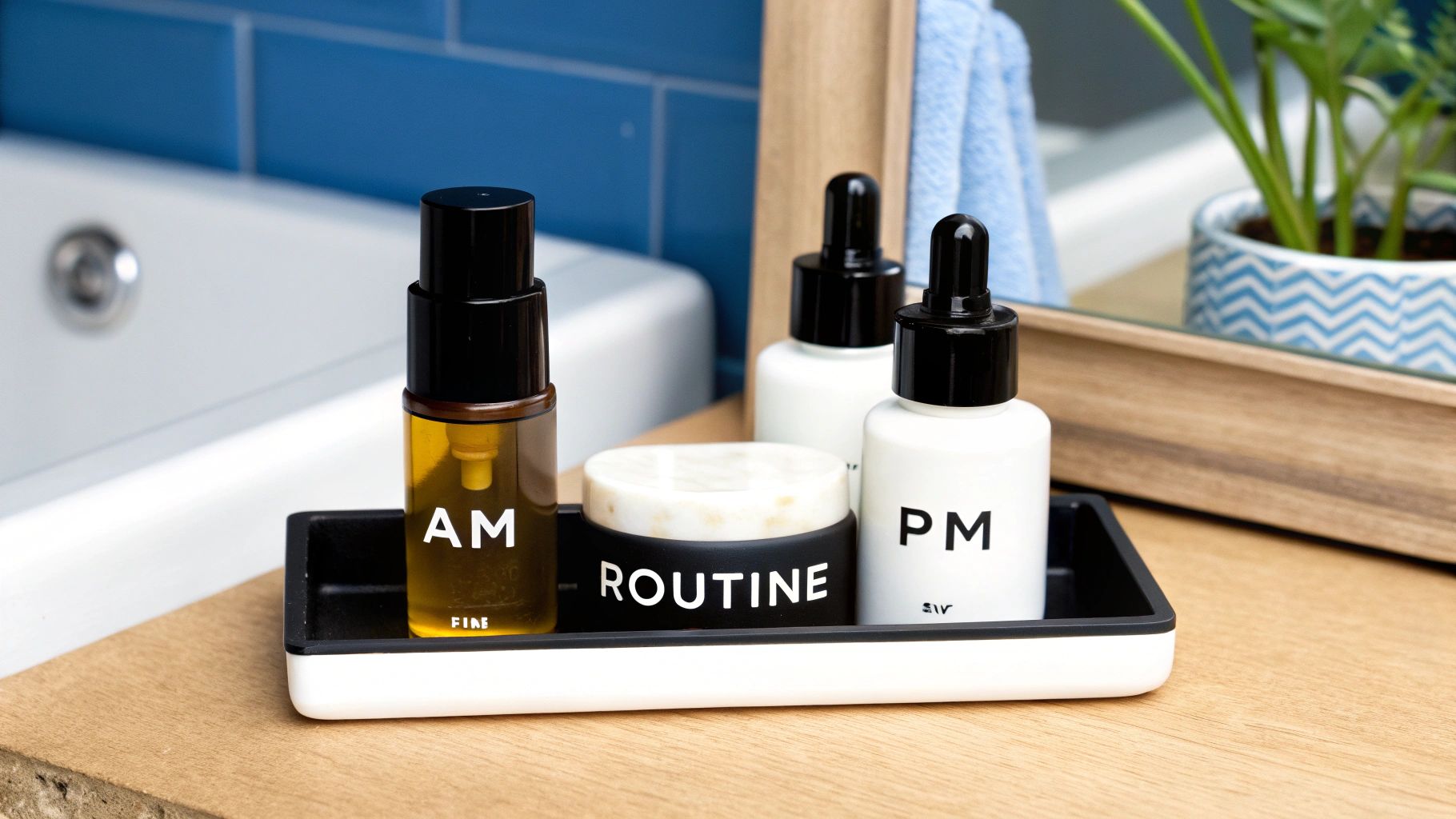
A great skincare routine isn’t about having a shelf full of products; it’s about using the right ones in the right order. Think of it like baking a cake. Each ingredient plays a specific role, and the sequence you add them in makes all the difference to the final result. Layering your skincare properly gives each active ingredient the best chance to do its job without being blocked or causing unnecessary irritation.
The simplest way to think about it is a split routine: your morning (AM) routine is all about protection, while your evening (PM) routine focuses on repair and treatment. Stick with it, because consistency is genuinely the secret to seeing changes that last.
Your Morning Shield: The AM Routine
The goal for the morning is straightforward: cleanse away any impurities from overnight and arm your skin with everything it needs to face the day. We want to keep it simple and effective, focusing on defending against daily aggressors like UV rays and pollution.
Here’s a solid blueprint to get you started:
- Gentle Cleanse: Kick things off with a mild, sulphate-free cleanser. You want to wash away oil and sweat without stripping your skin’s natural moisture barrier. A clean canvas is crucial for everything that comes next.
- Targeted Serum: This is your moment to apply a lightweight, protective serum. An antioxidant like Vitamin C is a brilliant choice for shielding skin from environmental damage, while Niacinamide can help keep oil in check throughout the day.
- Lightweight Moisturiser: Yes, even oily skin needs hydration! Opt for a non-comedogenic moisturiser to lock in moisture and support your skin barrier. A healthy barrier keeps irritants out and precious hydration in.
- Broad-Spectrum SPF: This is the most important step, hands down. Using a sunscreen with an SPF of 30 or higher is non-negotiable. It prevents sun damage, which can darken post-blemish marks and make inflammation worse.
The Nightly Reset: The PM Routine
Your skin naturally switches into repair mode while you sleep, which makes your evening routine the perfect time for more potent, corrective treatments. This is when you can bring out your heavy-hitting blemish fighters to unclog pores, calm inflammation, and speed up healing.
The PM routine is a little more involved, but it’s where the real magic happens:
- First Cleanse (if you wear makeup/SPF): Start with an oil-based cleanser or micellar water to melt away makeup, sunscreen, and daily grime. This step is essential for allowing your second cleanse to really get to work on your pores.
- Second Cleanse: Follow up with your gentle, water-based cleanser to get a deeper clean and remove any leftover impurities.
- Exfoliating Treatment (2-3 times per week): This is where you’ll introduce active ingredients like Salicylic Acid (BHA) or an AHA such as Glycolic or Lactic Acid. These treatments work by dissolving the ‘glue’ that holds dead skin cells together, clearing out congestion from within the pore.
- Targeted Serum: Now apply a treatment serum that hones in on your main concerns. This could be a retinoid to encourage cell turnover or perhaps a calming serum to dial down redness.
- Moisturiser: Always finish with your non-comedogenic moisturiser. It hydrates the skin and seals in all those active ingredients, supporting your skin’s natural recovery process overnight.
Building a routine is really about creating a consistent, supportive system for your skin’s health. It’s far better to use a few well-chosen products correctly than to overwhelm your skin with too many steps.
Adapting The Routine To Your Skin Type
The core principles of cleansing, treating, and protecting apply to everyone, but the specific products you reach for should be tailored to your skin’s individual personality.
To give you a clearer picture, here are some sample routines that show how you might adjust the steps based on your skin type.
Sample AM and PM Routines by Skin Type
| Skin Type | AM Routine Steps | PM Routine Steps | Key Product Focus |
|---|---|---|---|
| Oily/Congested | Gentle Foaming Cleanser, Salicylic Acid Toner, Niacinamide Serum, Oil-Free Gel Moisturiser, SPF 50. | Oil Cleanse, Salicylic Acid Cleanser, Retinoid Serum (on alternate nights to exfoliation), Lightweight Moisturiser. | Salicylic Acid to deeply cleanse pores and a retinoid to regulate cell turnover and oil production. |
| Combination | Hydrating Cleanser, Vitamin C Serum, Lightweight Lotion (focus on dry areas), Gel SPF 30. | Micellar Water, Hydrating Cleanser, AHA/BHA Toner (focus on T-zone 2-3x/week), Hyaluronic Acid Serum, Moisturiser. | Targeted exfoliation on oily areas and hydration-focused products for balance across the entire face. |
| Sensitive/Blemish-Prone | Cream Cleanser, Soothing Serum (e.g., Centella), Calming Moisturiser, Mineral SPF 30. | Oil Cleanse, Cream Cleanser, Azelaic Acid or PHA Serum (2x/week), Barrier-Repair Moisturiser. | Gentle actives like PHAs or Azelaic Acid, with a strong emphasis on barrier support and anti-inflammatory ingredients. |
For sensitive skin, exfoliation needs an especially careful touch. We’ve put together some expert advice on gentle exfoliation for sensitive skin to help you find methods that deliver results without causing irritation.
Ultimately, someone with very oily skin might love a salicylic acid cleanser and an oil-free gel moisturiser. In contrast, a person with combination skin could get better results by using a BHA serum only on their T-zone and a richer cream on their cheeks. The real key is to pay attention to your skin and adjust as you go, creating a truly personal routine that brings you clarity and balance.
How to Choose Products When Shopping Online
Let’s be honest, finding the right products for blemishes has completely shifted from browsing pharmacy aisles to clicking through online stores. While having endless choice at our fingertips is brilliant, it also means we need a solid game plan to cut through the noise and find treatments that are both effective and genuine.
The great thing about shopping online, though, is the sheer amount of information available. You’re no longer just relying on a pretty box. Instead, you get to play detective, piecing together clues from ingredient lists, real customer feedback, and expert advice to make choices you can feel confident about.
This move to digital isn’t a small trend. Online retailers now account for a staggering 45.61% of the UK skincare market, and that number is only climbing. This is especially true for blemish treatments, where people are doing their homework online, researching ingredients and comparing what really works. For more on this, check out the UK’s growing online skincare market on mordorintelligence.com.
Decoding Digital Product Pages
Landing on a product page can sometimes feel like you’re being hit with a wall of information. The trick is to know exactly where to look and what matters most when you’re hunting for the best blemish solutions.
Here’s a simple checklist to keep in your back pocket:
- Scrutinise the INCI List: This is the official list of ingredients, often tucked away in a separate tab. You want to see the hero ingredients we’ve talked about—like Salicylic Acid or Niacinamide—somewhere near the top. Ingredients are listed from highest to lowest concentration, so if that key active is buried at the end of a long list, it’s probably not in there at a high enough percentage to make a real difference.
- Read Reviews with a Critical Eye: Don’t just scan the star rating. Look for detailed reviews where people mention their skin type and the specific changes they noticed. A vague “it’s great!” isn’t nearly as helpful as a thoughtful account of someone’s journey. Be a little sceptical if a product has thousands of five-star ratings but no one has written more than a sentence—it can be a red flag.
- Check Who You’re Buying From: Is it the brand itself, a well-known department store, or a random third-party seller? Sticking to authorised retailers like Beauty Page is the only surefire way to know you’re getting the real deal. Counterfeit cosmetics are a serious problem, so you have to be careful. We’ve put together a guide on how you can learn to spot fake cosmetics and protect your skin.
A truly great online product page doesn’t just sell; it educates. It should give you clear, straightforward information on who the product is for, what it actually does, and how its key ingredients get the job done.
Leveraging Expert and Community Insights
Your research shouldn’t stop at the product page. There’s a whole world of information out there that can help steer you in the right direction.
Many trusted skincare influencers and dermatologists share incredibly detailed video reviews and tutorials. Watching someone with a skin type similar to yours actually use and talk about a product gives you a level of insight that photos and text just can’t provide.
Thinking this way turns online shopping from a gamble into a well-researched, confident process. Every click gets you that much closer to the clear, healthy skin you’re aiming for.
Skincare Safety and When to See a Professional
Getting your hands on powerful active ingredients can feel like a huge win for blemish-prone skin, but it’s crucial to handle them with care. Think of it less like a battle and more like a negotiation with your skin. You want to introduce these potent new products smartly to avoid upsetting its natural balance and causing more problems than you solve.
Before you even think about slathering a new product all over your face, patch testing is an absolute must. This simple step is your best defence against a full-blown reaction. Just dab a tiny amount on a hidden spot—the inside of your arm or behind your ear works well—and give it 24-48 hours. No redness, itching, or irritation? Great, you’re clear to proceed.
Introducing Actives and Avoiding Clashes
When you’re bringing in the heavy hitters like retinoids or strong AHA exfoliants, remember that slow and steady is the name of the game. Your skin needs a chance to get used to them. Start by applying the product just two or three nights a week, and only increase the frequency once you know your skin is handling it well. This is the best way to sidestep that dreaded peeling, dryness, and sensitivity.
It’s also vital to know which ingredients are friends and which are foes. Mixing the wrong actives can cause serious irritation or, in some cases, make them completely useless.
- Steer clear of mixing Retinoids with Benzoyl Peroxide, as they can effectively cancel each other out.
- Be careful using Retinoids and AHAs/BHAs together, as the combination can be intensely drying and compromise your skin barrier.
- Don’t pair Vitamin C with most AHAs/BHAs, as the acids can destabilise the Vitamin C, making it far less effective.
The aim is to build a routine where every product supports the others—not one that creates a chemical war on your face. A well-thought-out routine works with your skin, not against it, giving you those clear, healthy results you’re after.
Knowing When to Call in the Experts
A solid at-home routine is fantastic for managing most common blemishes, but there are times when it’s simply not enough. Over-the-counter products have their limitations, and trying to force them to work on severe issues can often make things worse. It’s time to book in with a GP or dermatologist if you’re facing any of these issues:
- Severe or Painful Acne: This means deep, painful cysts or nodules that just won’t budge with standard treatments.
- Stubborn Blemishes: Your acne hasn’t improved after 3-4 months of consistently using a good quality, targeted routine.
- Significant Scarring: You’re noticing that spots are leaving behind pitted scars or stubborn dark marks.
- Impact on Your Wellbeing: Your skin is causing you real distress and knocking your self-confidence.
For those moments when you need professional backup, specialised services like the Clarifyme Facial treatment are designed to tackle blemishes with an expert touch. A professional can offer prescription-strength creams, oral medications, or advanced in-clinic procedures that go far beyond what you can achieve at home. Listening to your skin and seeking help when you need it is always the smartest move.
Your Blemish Questions Answered
When you’re trying to get a handle on blemishes, it’s natural to have a lot of questions. From wondering how long you have to wait for real results to worrying you might be doing too much, getting clear answers is the first step towards feeling good about your skincare routine. Let’s tackle some of the most common ones I hear.
One of the biggest questions is always: how long until I see a difference? We all want that overnight fix, but when it comes to skin, consistency is what really counts. You might see some initial improvements, like less angry redness, within the first week. For the big stuff—like a real shift in texture and fewer breakouts—you need to give your routine a solid 4 to 6 weeks. That’s when the real magic starts to happen.
Can I Use Too Many Products at Once?
Oh, this is a big one. It’s so easy to get carried away and throw every blemish-fighting ingredient you can find at your skin, but this often does more harm than good. Piling on potent actives like salicylic acid, a retinoid, and benzoyl peroxide all at once can completely overwhelm your skin. The result? A damaged skin barrier, which means more redness, peeling, and sensitivity.
A much smarter way to go is to introduce one new active ingredient at a time. The goal isn’t to use more products; it’s to use the right products, effectively.
The best strategy is to alternate. You could use an exfoliating acid one night and a retinoid the next. And always, always make sure you’re backing them up with a gentle, non-comedogenic moisturiser to keep your skin happy and balanced.
Does My Diet Really Affect My Skin?
The link between what we eat and how our skin looks is a pretty hot topic. While your diet isn’t the single cause of blemishes, the evidence is pretty clear that it can play a part. High-glycaemic foods—think sugary sweets and white bread—can cause your insulin levels to spike. For some people, this can ramp up oil production and inflammation, which isn’t great news for breakouts.
Some studies also suggest a link between dairy and acne for certain individuals. The most important thing is to listen to your own body. If you notice your skin flares up after eating specific things, it’s worth paying attention. At the end of the day, a balanced diet full of antioxidants and healthy fats is always going to be a win for your skin’s overall health.
At Beauty Page, we focus on creating professional-grade formulas that help you build a routine that actually works. You can explore our targeted treatments in the Beauty Page skincare range.