Free shipping £150+ Orders
Amla Powder for Hair Growth and Natural Shine
For centuries, Ayurvedic tradition has championed amla powder for hair as a go-to for strengthening roots, encouraging growth, and bringing back a natural, healthy shine. This potent ingredient, which comes from the Indian gooseberry, is a fantastic natural conditioner and scalp treatment, offering a real solution for everything from hair fall to premature greying.
The Timeless Secret to Healthier Hair
If you’re looking for a genuine hair hero, let’s talk about amla. It’s a true powerhouse, celebrated for its incredible hair benefits. This isn’t some fleeting trend; it’s a time-tested way to tackle common hair concerns like sluggish growth, thinning, and a frustrating lack of lustre. For good reason, it has moved from niche health shops to become a staple in modern beauty routines across the UK.
Think of this guide as your starting point for transforming your hair’s health with a potent, natural ingredient that actually delivers results. We’ll get into its core benefits, which are all rooted in its rich nutritional profile.
Why Amla Is So Popular Right Now
The move towards natural, effective ingredients is a huge part of amla’s rising fame. People are tired of harsh chemical treatments and are actively looking for solutions that nourish hair from the inside out. This growing confidence is clear when you look at the market.
The global amla extract market was valued at roughly USD 47.00 billion and is projected to climb to USD 101.2 billion by 2035. This massive growth reflects a widespread consumer shift toward natural and scientifically-backed hair care.
Amla’s real appeal is its versatility. You can use it as a simple mask, infuse it into your favourite oils, or mix it with other herbs to create custom treatments that target your specific needs—all without damaging your hair.
What You Can Expect to Achieve
By adding amla powder to your routine, you can start working towards several key hair goals. Unlike some treatments that offer a temporary fix, amla works on a deeper level to build a stronger, healthier foundation for your hair. For anyone exploring more intensive solutions, it’s worth comparing natural remedies with clinical options and understanding the truths about hair mesotherapy.
Here are some of the main benefits we’ll be covering:
- Stronger Hair Roots: Amla gets right to the source, nourishing follicles to help reduce hair fall.
- Enhanced Natural Shine: It acts as a brilliant natural conditioner, smoothing the hair cuticle for a glossy finish.
- Better Scalp Health: Its natural properties help to tackle dandruff and soothe an irritated scalp.
- Support for Hair Growth: By boosting circulation and delivering vital nutrients, it creates the perfect environment for healthier growth.
Understanding What Makes Amla So Powerful
To really get why amla powder is such a game-changer for hair, we need to look past its ancient reputation and dive into its incredible nutritional profile. It’s not magic, but pure science—a potent cocktail of vitamins, antioxidants, and essential nutrients working in harmony to bring hair back to life, right from the scalp.
At its core, amla’s standout feature is its off-the-charts Vitamin C content. We all know it’s great for immunity, but for hair, it’s a non-negotiable. Vitamin C is essential for synthesising collagen, the very protein that gives our hair its strength and structure. When you have enough collagen, your hair follicles are stronger, which means less shedding and breakage. Simple as that.
But it doesn’t stop there. Amla is also packed with powerful antioxidants, which act like a personal security detail for your hair, shielding it from the daily onslaught of environmental damage.
The Science Behind the Shine
So, what’s actually in this stuff? Amla is a nutritional powerhouse, loaded with vitamin C, tannins, phosphorus, iron, and antioxidants like emblicanin and gallic acid. Its high vitamin C concentration is key for boosting scalp collagen, which helps kickstart new hair growth. Meanwhile, other compounds get to work boosting melanin production, which is your best defence against premature greying.
This potent mix also protects your hair follicles from free radical damage—a major culprit behind hair loss. You can find more detailed information on how amla powder benefits hair on healthline.com.
Think of free radicals as tiny aggressors from pollution, UV light, and even stress, all attacking your hair at the root and causing it to weaken and fall out. The antioxidants in amla, especially tannins like emblicanin, step in to neutralise these threats before they can do any real damage.
This protective shield does more than just prevent damage. By safeguarding the pigment-producing cells in your follicles, amla can genuinely help delay the onset of premature greying, keeping your natural hair colour vibrant for longer.
This is exactly where that incredible shine and strength come from. When a follicle is healthy and protected, it can produce a stronger, smoother strand of hair. Of course, nourishing your hair from the inside out is just as important. If you want to take a holistic approach, learning how supplements can support your goals is a great next step. Ultimately, it’s the synergy of all these nutrients that makes using amla powder for hair so incredibly effective.
Amla’s Nutrient Profile and Hair Benefits
Let’s take a closer look at the active compounds in amla and how each contributes to healthier, stronger hair.
| Nutrient or Compound | Primary Benefit for Hair | How It Supports Your Hair |
|---|---|---|
| Vitamin C | Strength & Growth | The MVP for collagen synthesis, it reinforces the hair shaft and follicle, drastically reducing breakage. |
| Tannins | Lustre & Volume | These antioxidants bind to hair’s keratin proteins, creating a protective layer that adds strength and shine. |
| Essential Fatty Acids | Scalp Health | Deeply nourishing and moisturising, they’re brilliant for combating the dryness and flakiness linked to dandruff. |
| Phytonutrients | Improved Circulation | These plant-based compounds boost blood flow to the scalp, ensuring follicles get the oxygen they need to thrive. |
| Iron & Phosphorus | Follicle Health | These minerals are vital for cell growth and repair within the hair follicle, promoting a healthy growth cycle. |
Each of these components plays a crucial, specific role. It’s their combined effort that delivers the remarkable improvements in hair health that amla is known for.
Easy DIY Amla Hair Mask Recipes
So, you understand the science behind amla’s power for hair. Now for the fun part: putting it into practice. Making your own hair mask is hands-down one of the best ways to get all those incredible nutrients straight to your scalp and hair. What I love most is how you can tweak the recipes to tackle whatever your hair is throwing at you, whether it’s frustrating dryness or a flaky scalp.
Let’s dive into a few of my favourite, tried-and-tested recipes. We’ll start with a super simple paste for anyone just starting out, then get a bit more creative with blends designed for specific hair goals.
The Simple Starter Paste for All Hair Types
If you’re new to using amla powder for hair, this is your perfect starting point. It’s a beautifully simple recipe that lets you see and feel amla’s conditioning magic without any fuss.
All you’ll need is your amla powder and some warm water. The trick is to aim for a smooth, yoghurt-like consistency—thick enough to stick to your hair but not so thick that it’s clumpy.
- Ingredients: 2-4 tablespoons of amla powder (use less for short hair, more for long) and just enough warm water to make a paste.
- Method: Don’t just dump the water in! Add it bit by bit to the amla powder, stirring constantly to get rid of any lumps. Once it’s mixed, let it sit for 10-15 minutes. This little rest helps the powder fully activate and release its goodness.
This simple mask is a brilliant weekly treatment to keep your hair strong and shiny. It gives your scalp a gentle cleanse and leaves the hair feeling incredibly smooth.
A Deeply Conditioning Mask for Dry Hair
When your hair is feeling parched, brittle, or just looking a bit lacklustre, it’s crying out for moisture. By combining amla powder with a rich, nourishing oil like coconut oil, you create a deeply hydrating treatment that brings back softness and life.
Coconut oil is full of fatty acids that actually get inside the hair shaft to moisturise from within. Amla comes in to strengthen and add that beautiful, glossy finish. It’s a perfect partnership that tackles dryness at its source.
Pro Tip: Gently warm your coconut oil before mixing it in. The warmth helps open up the hair’s cuticle, allowing the mask to penetrate much more deeply for a truly intensive conditioning session.
To whip this up, mix about 3 tablespoons of amla powder with 4 tablespoons of organic coconut oil and 2 tablespoons of water. Play with the amounts until you get a creamy, easy-to-spread paste.
The Amla and Fenugreek Mask for Dandruff
Dandruff and an itchy scalp are often signs of a microbial imbalance. This is where the dynamic duo of amla and fenugreek (methi) really shines. Fenugreek is a powerhouse, well-known for its potent anti-inflammatory and antifungal properties.
- Amla’s Role: It gets to work cleansing the scalp, clearing away excess oil, and its high Vitamin C content helps to calm any irritation.
- Fenugreek’s Role: This directly tackles the microbes that cause flaking and itchiness, all while conditioning your hair.
For this targeted treatment, mix 2 tablespoons of amla powder with 1 tablespoon of fenugreek powder. Add warm water until you have a smooth paste, apply it right onto your scalp, and let it work its magic for about 30 minutes before rinsing it out completely.
This infographic gives a great visual of how amla’s Vitamin C directly helps build stronger hair follicles.
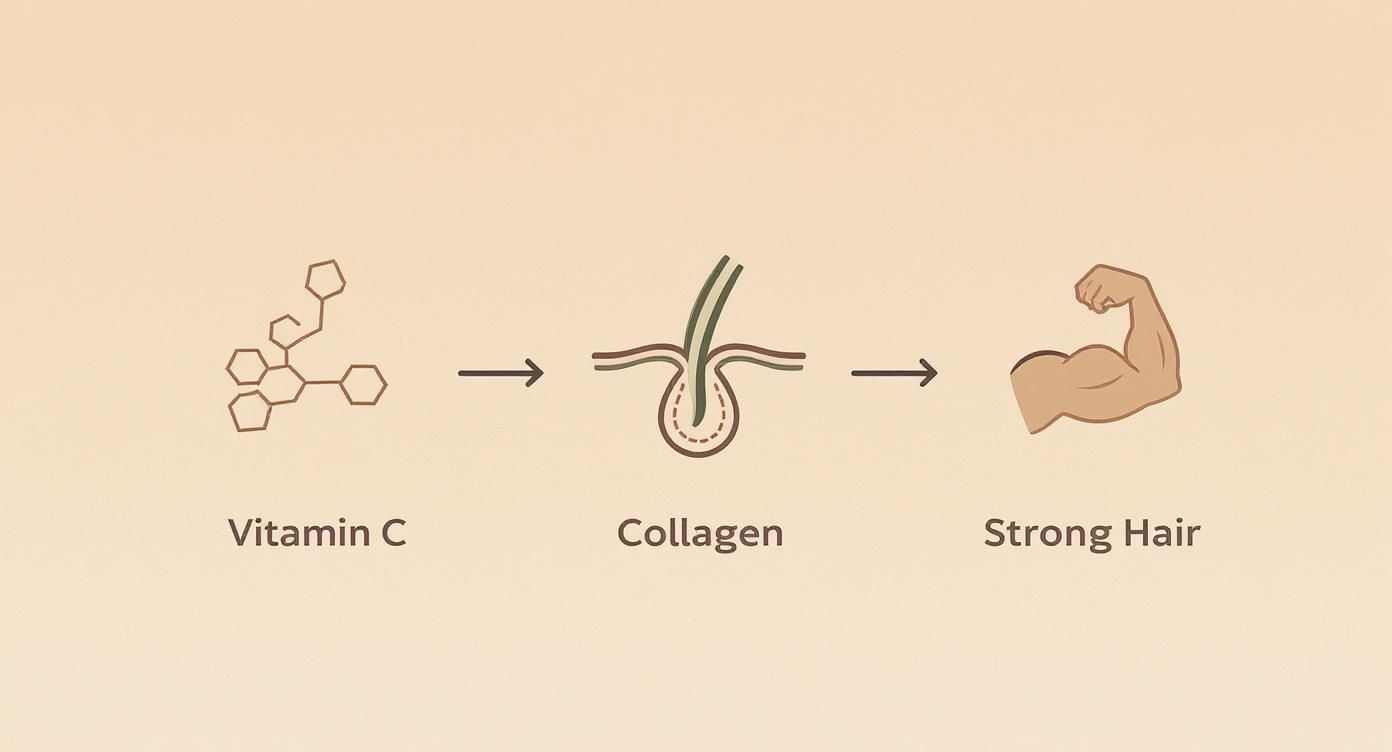
You can see how it all starts at a cellular level—that Vitamin C is essential for producing the collagen that forms the foundation for healthy hair.
A Cleansing Trio for Promoting Growth
For a truly traditional Ayurvedic treatment that encourages growth, you can’t beat the combination of amla, reetha (soapnut), and shikakai. This blend is often called a “natural shampoo” for good reason—it cleanses, conditions, and strengthens in one go, creating the ideal environment for your hair to thrive.
- Amla: The nourisher, feeding and strengthening the hair follicles.
- Reetha: Nature’s own cleanser, it lathers gently to clean your scalp without stripping away its protective oils.
- Shikakai: The conditioner, brilliant for detangling and adding a silky softness.
Simply mix equal parts of each powder—for example, 2 tablespoons of amla, 2 of reetha, and 2 of shikakai—with warm water. Work this potent mixture from root to tip, taking a few extra minutes to really massage it into your scalp to get the blood flowing. If you’re keen to explore other natural remedies, this guide on how to use henna for hair health provides a similar hands-on approach to plant-based hair care.
Getting the Most Out of Your Amla Mask: Application Tips

So, you’ve mixed up the perfect amla paste. Now comes the part that really counts: the application. Getting this right is what separates a decent treatment from a truly brilliant one. The aim is to make sure every single strand—and, more importantly, your scalp—gets a chance to soak up all that goodness.
First things first, should you apply it to clean or dirty hair? For the best results, you’ll want to work with dry or slightly damp hair that’s been detangled and is mostly clean. A little bit of natural scalp oil is perfectly fine, but too much product build-up can create a barrier, stopping the amla from getting to the hair follicles where it needs to be.
Setting Up for a Mess-Free Mask
Let’s be honest, applying an amla powder for hair mask can get a little messy. It’s a good idea to get your space ready before you start. Drape an old towel around your shoulders and pop on a t-shirt you don’t mind getting a few splatters on. Keep some hair clips within reach to make sectioning your hair a breeze—this is the secret to even coverage.
- Section Your Hair: Start by parting your hair down the middle and then split it into four or more sections. Clipping them up will keep you organised and ensure you don’t accidentally miss a spot, especially around the back.
- Protect Your Skin: A little trick I’ve learned is to rub a thin layer of coconut oil or Vaseline along your hairline and over your ears. It acts as a barrier and stops the amla from temporarily staining your skin.
Applying Your Mask for Maximum Impact
Begin at the roots, focusing on one section at a time. You can use your fingertips or a hair dye brush to work the paste directly onto your scalp. This is where the real magic for growth and scalp health happens, so don’t be stingy!
The most important part of the application is the scalp massage. As you apply the paste to each section, take a minute or two to gently massage it in using small, circular motions. This simple step is fantastic for boosting blood circulation, which helps your follicles drink up all those powerful nutrients.
This isn’t just anecdotal advice. A clinical study found that a serum containing amla extract brought about significant improvements in hair growth and density after just 90 days. It really drives home how vital consistent, direct scalp application is for seeing real, measurable results. You can find the full details in this research on amla’s effect on hair growth.
Once your scalp is completely covered, smooth the rest of the paste down the lengths of your hair right to the ends. Then, pile your hair up on top of your head and cover it with a shower cap. This traps heat, keeping the mask moist and helping it penetrate deeper. Let it work its wonders for 30 to 45 minutes.
If you’re looking for an even more intensive routine, you could incorporate a product like the Xtra Hair Restorer Lotion on the days you aren’t masking to really support your hair goals. When the time is up, simply rinse your hair with lukewarm water until it runs clear. You can follow up with a light conditioner if your hair feels like it needs it.
Finding Quality Amla Powder and Using It Safely
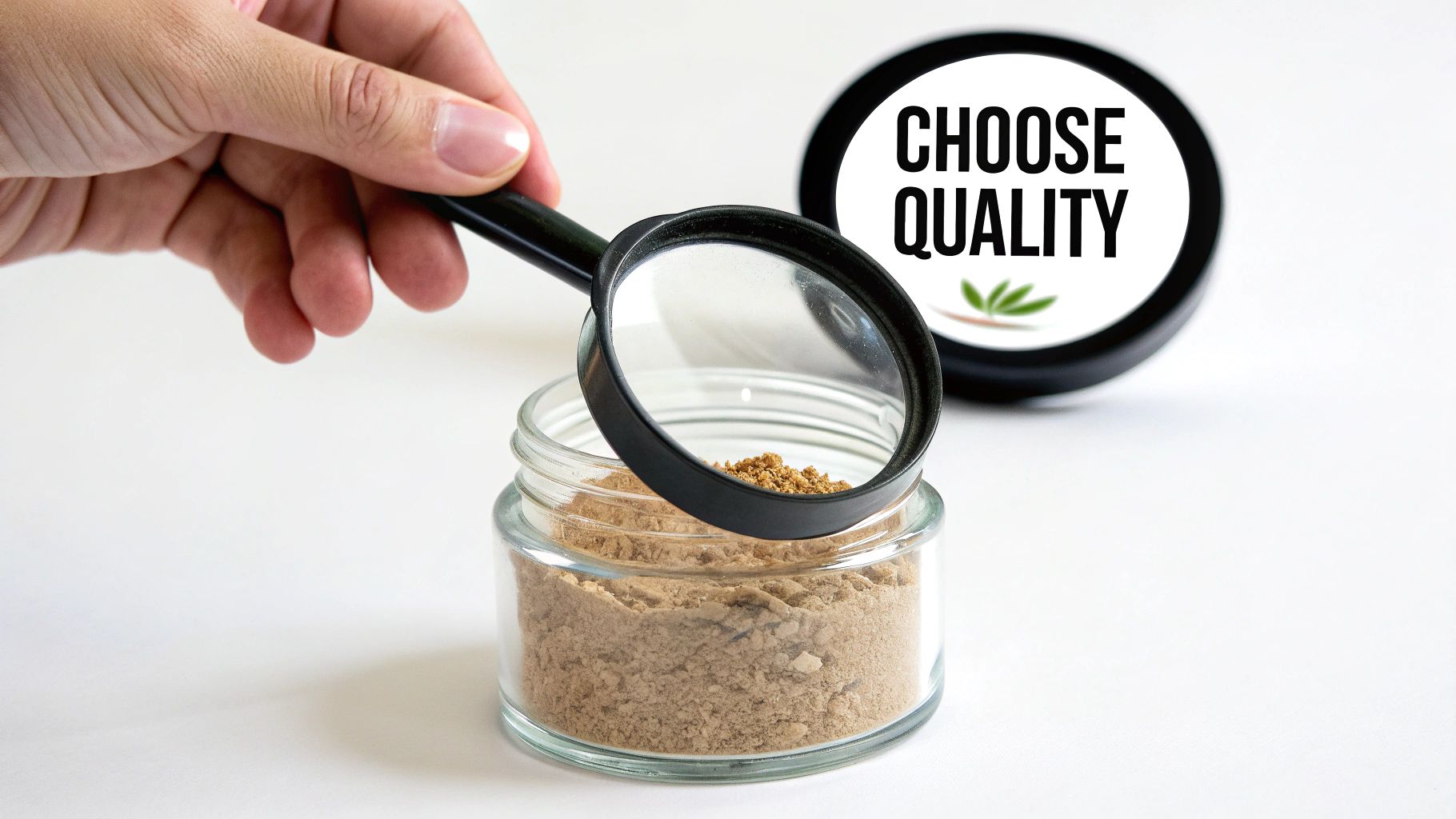
As more people discover the benefits of amla powder for hair, the market has exploded with options. But here’s the thing: not all powders are created equal. The difference between a fresh, potent product and a stale, low-grade one is night and day when it comes to results. Getting this first step right is probably the most important part of the entire process.
So, what should you be looking for? A top-quality amla powder will have a vibrant, greenish-brown hue and a really fine, clump-free texture. If you open a bag and the powder looks dull, greyish, or just plain brown, it’s a red flag. That usually means it’s old or was poorly processed, and most of its amazing nutrients have likely degraded.
The smell is another dead giveaway. Fresh amla has a distinctively tangy, almost fruity scent that’s quite pleasant. If it smells dusty or has no aroma at all, leave it on the shelf.
What to Look For on the Label
Think of yourself as a label detective when you’re shopping around. The very best amla powders are just that—100% pure amla with nothing else added.
Here are the non-negotiables I always look for:
- Organic Certification: This is your best guarantee that the amla was grown without synthetic pesticides or fertilisers. The last thing you want is to be putting those chemicals on your scalp.
- No Additives: Scan that ingredients list. It should be short and sweet, saying only “amla” or “emblica officinalis.” Steer clear of anything with added preservatives, artificial fragrances, or other fillers.
- Fine Sift: Look for terms like “finely milled” or “triple-sifted.” This matters more than you might think. A finer powder mixes into a beautifully smooth paste, which is not only easier to apply but, crucially, rinses out cleanly without leaving a gritty mess in your hair.
It’s worth noting that even the natural products market isn’t immune to fakes. Knowing how to tell the real deal from a dud is a crucial skill. For a deeper dive, our guide on spotting fake cosmetics offers some great tips that are surprisingly relevant here, too.
To make things even easier, here’s a quick reference guide to help you choose the best amla powder for your hair care routine.
Spotting High-Quality Amla Powder
| Quality Check | What to Look For (High Quality) | What to Avoid (Low Quality) |
|---|---|---|
| Colour | Vibrant, fresh greenish-brown. | Dull grey, dark brown, or faded appearance. |
| Texture | Very fine, silky, and clump-free. | Coarse, gritty, or full of hard clumps. |
| Scent | Tangy, slightly fruity, and fresh. | Dusty, musty, or no discernible smell at all. |
| Ingredients | 100% pure amla (Emblica officinalis). | Added fillers, preservatives, or anti-caking agents. |
Ultimately, taking a moment to check these details ensures the product you bring home is potent and effective, not just a jar of green dust.
The Importance of a Patch Test
This is the step that nobody should ever skip. Before you slather any new product all over your scalp, a quick patch test is an absolute must. Even with a completely natural ingredient like amla, sensitivities or allergic reactions can happen, although they are rare.
It’s simple to do. Just mix a tiny amount of the amla paste, maybe the size of a 5p coin. Dab it onto a discreet patch of skin, like behind your ear or on the inside of your elbow.
Leave the paste on for about 30 minutes, then rinse it off completely. Now, you wait. Keep an eye on the area for the next 24-48 hours. If you see any signs of irritation—like redness, itching, or swelling—amla isn’t for you. If your skin is perfectly happy, you’re good to go.
This simple check takes just a few minutes of your time but gives you total peace of mind. It’s the best way to ensure your experience with amla is a positive and safe one right from the start.
Common Questions About Using Amla for Hair
Whenever you start using a new natural ingredient, it’s normal to have a few questions. When it comes to something as potent as amla powder for hair, getting the details right can make a huge difference. Let’s walk through some of the most common queries I hear, so you can start using it with total confidence.
How often you should use an amla treatment really comes down to what you’re trying to achieve with your hair.
For general upkeep—to maintain shine, boost strength, and keep your hair feeling great—a weekly amla mask is a perfect routine. But if you’re dealing with something more specific, like significant hair fall or a flaky scalp that just won’t quit, you might want to be more intensive. Try using it twice a week for the first month to really give your scalp and follicles the support they need. After that initial boost, you can pull back to once a week.
Will Amla Powder Darken My Hair Colour?
This is a big one, especially for anyone with fair hair. The simple answer is: yes, it can. Amla contains natural pigments that can gradually deepen your hair’s shade over time. It’s one of the reasons it’s so prized for helping to naturally blend away the first signs of greys.
If you have blonde, light brown, or chemically treated light hair, you might notice amla gives it a slightly darker, sometimes ashier, tone with regular use.
This is why a strand test is absolutely non-negotiable. Before you commit to a full-head application, mix up a tiny bit of the paste. Apply it to a small, hidden section of your hair—the underneath layer at the back of your neck is perfect. Let it sit for 30 minutes, rinse it out, and wait for it to dry completely to see the final colour. It’s a simple step that prevents any unwanted surprises.
Can I Mix Amla Powder Into My Shampoo?
You can, but it’s not the best way to use it. You’ll get much better results by mixing it into your conditioner instead. A conditioner is designed to sit on your hair for a few minutes, which gives the amla just enough time to deliver all its goodness to your hair shaft and scalp.
It’s easy to do. Just add about a teaspoon of amla powder to the dollop of conditioner you’d use for a single wash. Mix it together in your palm until it’s smooth and then apply as usual. Think of it as a mini-treatment to tide you over between your main weekly masks.
How Long Until I See Results?
With any natural remedy, consistency is everything. Amla is powerful, but it’s not an overnight miracle. You’ll definitely notice some lovely immediate effects after your very first mask—your hair will likely feel softer, look shinier, and be less frizzy.
For those bigger, long-term goals, you need to give it a bit more time.
- Reduced Hair Fall: You should begin to see a real difference in how much hair you’re shedding after about 4-6 weeks of consistent, weekly applications.
- Improved Thickness & Growth: Seeing visible changes in hair density and new growth usually takes around 2-3 months. This is the time it takes for your follicles to get stronger and for that new, healthier hair to start coming through.
While amla is a fantastic natural ally for better hair, it’s important to have realistic expectations. For those dealing with more advanced hair loss, it may be worth looking into clinical-grade treatments. To see how these newer technologies work, you can learn more about exosomes for hair restoration and what they offer.
At Beauty Page, we are committed to providing high-quality, effective solutions for your hair and skin. Explore our range of professional-grade products designed to deliver visible results. Find your perfect hair care solution at https://beautypage.co.uk.